


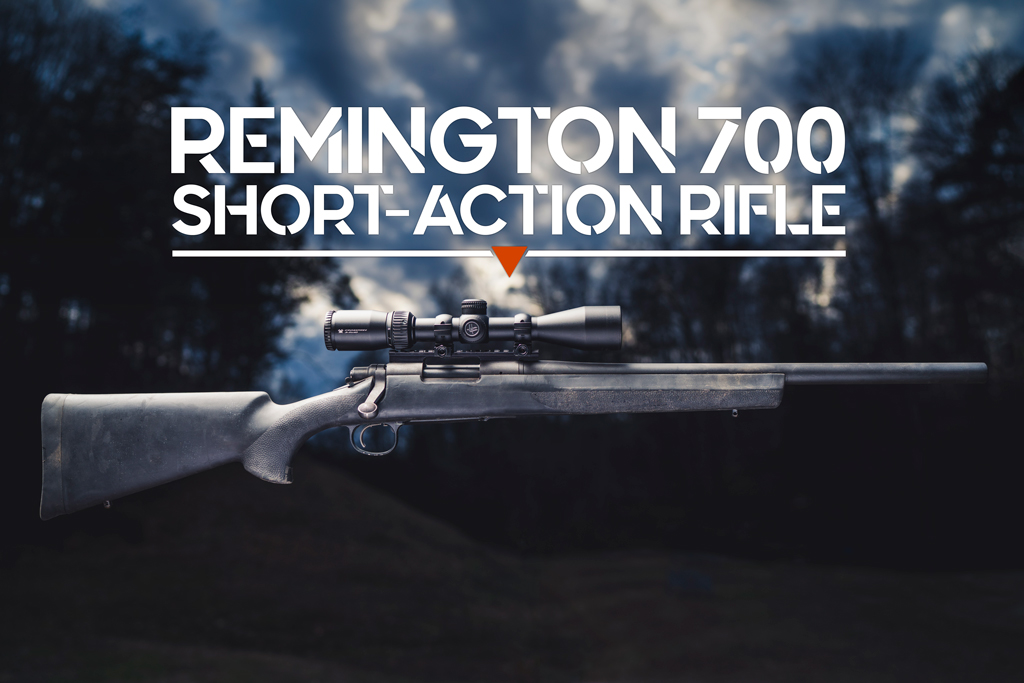
It’s safe to say that very few rifles in the history of American firearms have accumulated as much respect and popularity as the Remington 700 short-action. Ever since its introduction in 1962, this bolt-action platform has become a favorite of civilian shooting sports enthusiasts, the military, and law enforcement. The Remington 700 short-action stands out for its speed, accuracy, and versatility across a range of popular calibers.
Here, we’ll analyze the Remington 700 design, explaining what makes a short-action unique. We’ll then examine compatible calibers, discuss the benefits and limitations of the short-action format, and compare the short- and long-action versions.
Whether you’re a hunter, competitive shooter, or tactical enthusiast, understanding the Remington 700 short-action can help you select the optimal firearm for your needs.
Remington 700 Short-Action Design
The Remington 700 rifle operates as a bolt-action weapon with a cylindrical receiver and dual opposing locking lugs. The rifle provides consistent strength and accuracy through its “three rings of steel” design, which includes the bolt face, barrel shank, and receiver ring surrounding the cartridge head.
The push-feed mechanism is combined with an external plunger-style ejector, offering reliability and ease of maintenance. However, some users prefer controlled-feed systems, such as those used in the Winchester Model 70.
Key Design Features Include:
- Adjustable trigger (X-Mark Pro in modern versions)
- Broad aftermarket support for barrels, stocks, triggers, and optics
- Modular design with a two-lug bolt and simple construction for customization
- Accuracy-focused action with a reputation for sub-MOA performance
Over the decades, the Remington 700 has become the foundation for numerous custom rifles, military sniper systems (such as the M24 and M40), and precision hunting rifles.
What Is a Short-Action?
Bolt-action rifles are typically classified by their action length: short, long, or magnum. The short-action is designed to accommodate cartridges with an overall length (OAL) of approximately 2.3″ to 2.8″. This length allows the bolt throw to be shorter than in a long action, making for faster cycling and often a stiffer, more rigid receiver, which is a beneficial trait in terms of speed and accuracy.
Remington 700 short-actions measure about 1/2″ shorter than their long-action counterparts, with bolt travel optimized for mid-sized cartridges.
One of the key benefits of the Remington 700 short-action is its compatibility with many of the most popular cartridges for hunting and target shooting.
Popular Short-Action Calibers

Left to Right: .308 Win, 6.5 Creedmoor, .243 Win, .260 Win, 7mm-08 Rem, .22-250 Rem, and 6mm Creedmoor.
- .308 Winchester – Arguably the most common short-action caliber, suitable for hunting and tactical applications.
- 6.5 Creedmoor – A modern favorite for long-range precision due to its flat trajectory and mild recoil.
- .243 Winchester – Excellent for varmint and deer hunting, offering high velocity with light recoil.
- .260 Remington – A versatile caliber that balances ballistic efficiency with low recoil.
- 7mm-08 Remington – Popular among hunters for its effectiveness on medium to large game.
- .22-250 Remington – A high-velocity varmint round.
- 6mm Creedmoor – Gaining traction in precision rifle competitions.
These cartridges are well-suited for short-action rifles due to their compact case lengths and efficient powder burns.
Advantages of the Remington 700 Short-Action
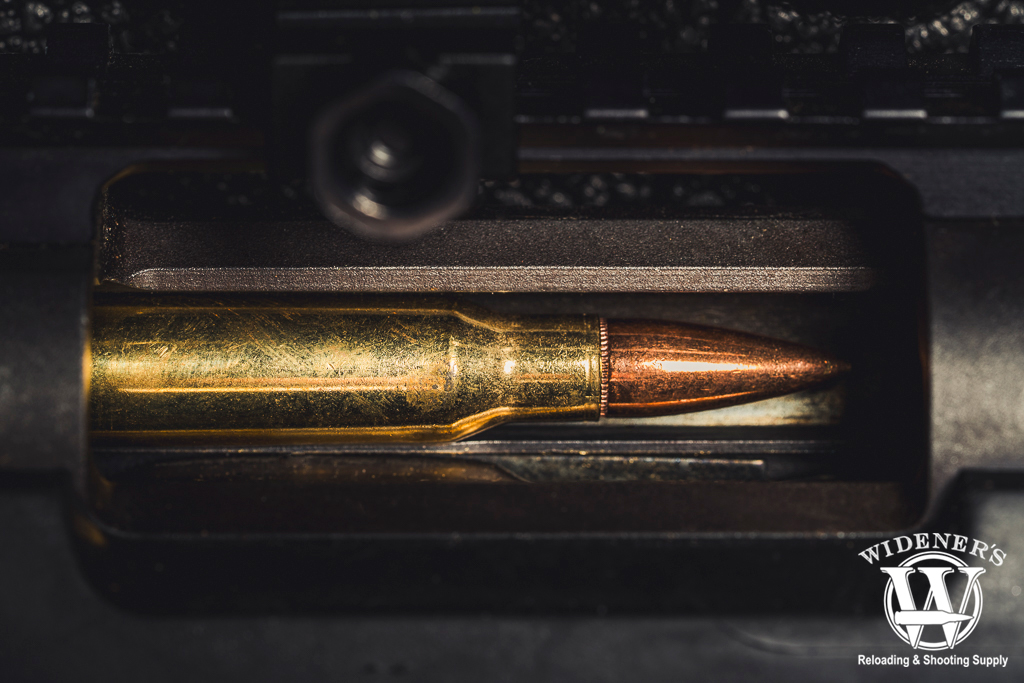
The short-action design is compatible with popular centerfire calibers such as .308 Win and 6.5 Creedmoor.
The short-action design provides multiple advantages to its users. The lighter weight and shorter overall length allow for faster cycling, quicker follow-up shots, and the potential for increased accuracy.
1. Faster Bolt Cycling
The bolt cycling becomes faster in short-action rifles because the bolt travel distance remains smaller. A shorter throw in the bolt provides multiple advantages for users:
- Hunting situations that require quick, successive shots.
- PRS competitions and tactical matches that require quick performance and speed.
- New shooters will find shorter cycling beneficial for building their shooting confidence and rhythm during training sessions.
2. Greater Receiver Rigidity = Enhanced Accuracy
Short-action receivers maintain less surface area that could bend or twist. The improved rigidity results in:
- Better harmonics and vibration control.
- The accuracy between shots remains consistent.
- Predictable barrel-to-action alignment.
- Precision rifle builders choose short-action platforms because the added rigidity helps maintain long-range accuracy.
3. Lighter Overall Weight
Short-action receivers weigh 3 to 6 ounces less than long-action ones. The minimal weight difference becomes important when:
- Hiking deep into backcountry terrain.
- Hauling gear on long hunts.
- The construction of a precision rifle system weighing less than 9 pounds requires this approach.
4. Compact, Maneuverable Rifles
The shorter length of rifles using short-action receivers improves handling in dense brush areas and forested environments. It’s also a plus in tight shooting positions in competitions, and tree stands or blinds with limited mobility.
5. Better Efficiency and Barrel Life in Some Calibers
The powder burn efficiency of 6.5 Creedmoor and .308 Winchester cartridges benefits from short-action receivers. The throats of these barrels endure less wear than magnum cartridges with overbored dimensions. Additionally, the precision shooter who fires thousands of rounds will benefit from extended barrel life with this configuration.
6. Ideal for Most North American Game
Short-action cartridges provide enough power to deliver clean kills to deer, antelope, hogs, and elk when hunters use proper aiming techniques. Most hunters will find that a short-action Remington 700 provides sufficient performance without the need to switch to a heavier, long-action rifle.
Disadvantages of the Remington 700 Short-Action
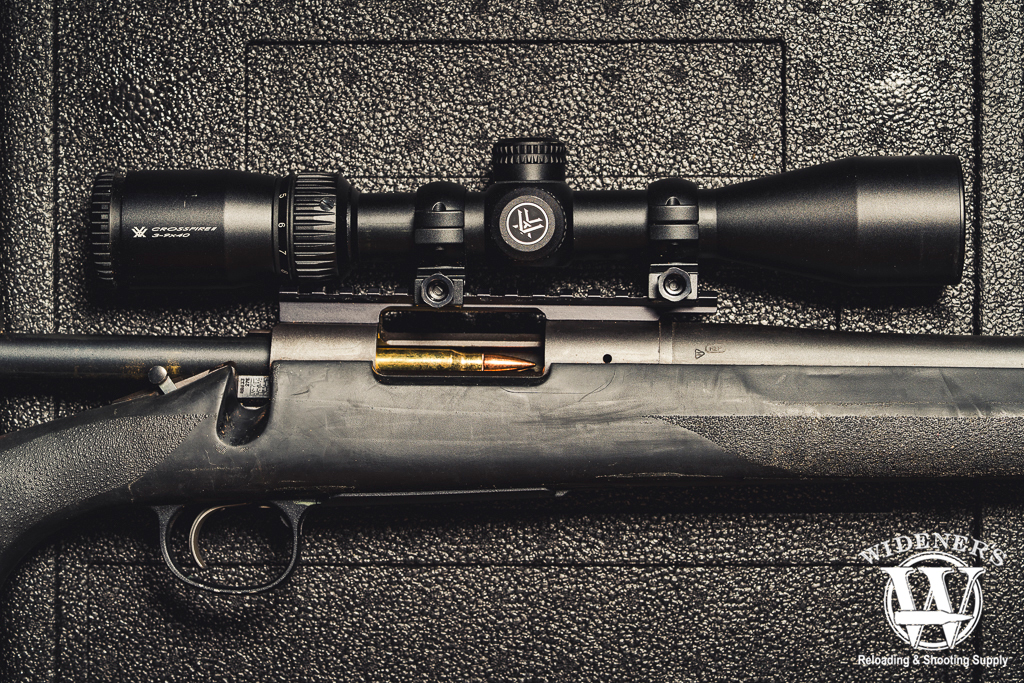
The short-action cartridge is limited in size, meaning less room for powder to increase velocities.
As with all things, even the most appealing options have a few drawbacks. Don’t even get us started about the trigger issues. Here are some key things to consider based on your circumstances.
1. Limited Cartridge Options
Short-action rifles have a restriction on cartridge length to about 2.8 inches or less. This disadvantage means:
- The .30-06 Springfield, .270 Winchester, and .300 Win Mag are among the long-action rounds that cannot be chambered.
- You may have to choose between versatility and specialization.
- Handloaders will find it challenging to seat their bullets to the maximum depth in some instances.
- Hunters who want to take down large game at extended distances or need flexible caliber options should consider this a significant drawback.
2. Reduced Case Capacity = Less Muzzle Energy
The reduced powder capacity in short-action cartridges results in lower muzzle velocity and terminal energy at extended distances and effective ranges on large game. The muzzle velocity and terminal energy at 800–1,000 yards, as well as the effective range on large game, are limited.
For example, while 6.5 Creedmoor is incredibly efficient, it still delivers less energy at 800–1,000 yards than a 7mm Rem Mag or .300 Win Mag, which may matter for ethical big-game hunting or extreme long-range shooting.
3. Long-Range Performance Ceiling
The maximum distance that short-action cartridges can reach is restricted by:
- The size of the bullet
- The speed potential
- The resistance to wind at long distances.
The performance of long-range precision shooting and reaching distances beyond 1,000 yards can be impacted by requiring more precise dialing, resulting in less ballistic performance compared to long-action or magnum cartridges.
4. Potential Feeding Challenges with Longer Bullets
The length of the 140+ grain 6.5mm bullets combined with the short-action design creates feeding problems that result in:
- Reduced seating depth
- Compressed powder charges
- Standard box magazines can experience feeding issues
Short-Action VS Long Action

If you need magnum power, go with a long-action rifle, for everything else, a short-action will get the job done.
| Feature | Short-Action | Long Action |
| Cartridge Length | 2.3” to 2.8” OAL | 2.8” to 3.4” OAL |
| Weight | Lighter | Heavier |
| Bolt Throw | Shorter (faster follow-ups) | Longer (slower cycling) |
| Rigidity | More rigid receiver | Slightly less rigid |
| Caliber Range | Mid-sized cartridges (.308, 6.5 CM) | Larger cartridges (.30-06, 7mm Rem Mag) |
| Overall Rifle Size | More compact | Longer and heavier |
| Applications | Varmint, deer, and precision shooting | Elk, moose, and long-range hunting |
When to Choose a Short-Action:
- You prioritize fast cycling and lighter weight
- You primarily shoot within 600 yards
- Your preferred calibers include .308 and 6.5 Creedmoor, among others.
- You want a highly accurate rifle for hunting or PRS
When to Choose a Long-Action:
- You hunt large game at long distances
- You want maximum case capacity and muzzle velocity
- You prefer legacy cartridges like .30-06 or magnums
A Brief History of the Remington 700 Short-action
The Remington 700 was introduced in 1962 as a civilian follow-up to the Remington 721/722 series. Engineered to be affordable, accurate, and easy to mass-produce, the 700 quickly became a favorite of hunters and competitive shooters.
Its modularity and strong aftermarket support helped it evolve into a dominant platform for:
- Custom precision rifles
- Tactical sniper systems (M24 and M40)
- Benchrest and PRS competition guns
- DIY builds using Remington 700 pattern actions
The 700 short-action, in particular, played a major role in this rise due to its compatibility with some of the most accurate and efficient cartridges developed over the last few decades.
Even after Remington’s bankruptcy and restructuring, the 700’s legacy continues, with new manufacturers offering 700-pattern actions and rifles designed around the same footprint.
Legacy & Continued Relevance
What keeps the Remington 700 short-action rifle relevant today? Simply put, accuracy, adaptability, and a massive ecosystem of support.
Numerous aftermarket manufacturers produce:
- Drop-in triggers (e.g., Timney, TriggerTech)
- Custom barrels and chassis systems
- Bolt upgrades and scope mounts
- Stocks for precision shooting and hunting
This has allowed the 700 short-action to stay competitive with newer designs from companies like Tikka, Bergara, and Savage. Even high-end precision rifle builders often start with a 700-pattern short-action due to its proven track record.
For those interested in custom builds or competitive shooting (such as PRS), the Remington 700 short-action remains one of the best foundations available.
Short-Action Summary
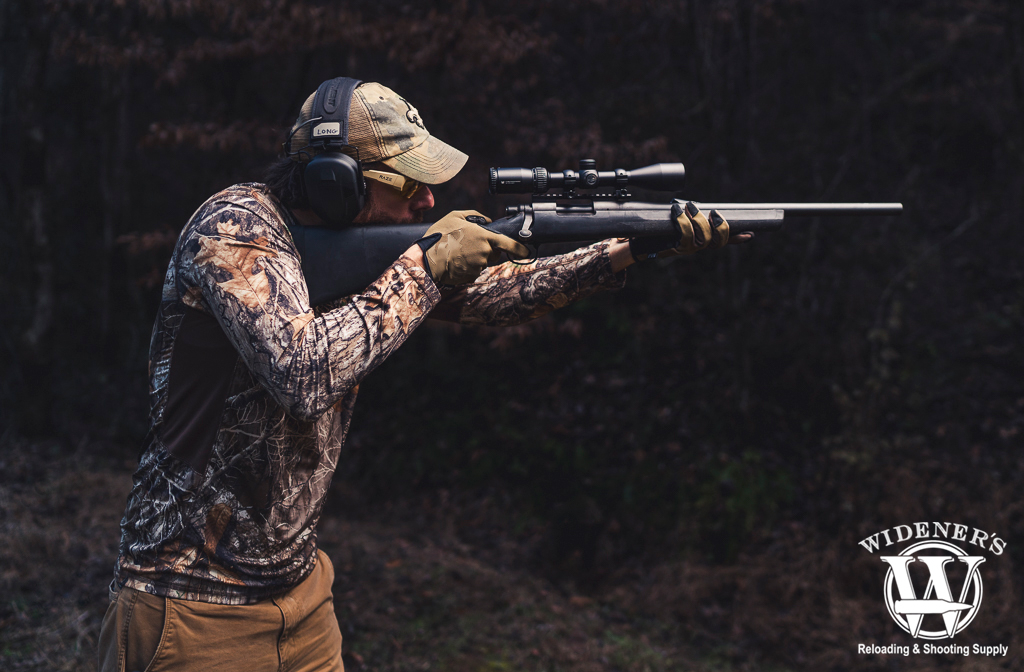
Remington’s short-action rifle performs exceptionally well in both hunting and competition target matches.
The Remington 700 short-action has become a permanent fixture in firearms history because of its precise design, versatile nature, and extensive aftermarket support. The rifle excels with popular mid-sized cartridges, offering excellent options for hunters, target shooters, and custom builders.
This rifle offers superior weight, speed, and accuracy compared to long-action or magnum calibers, although it does not deliver their full power range. It performs exceptionally well for both hunting whitetail deer in wooded areas and competing in local steel target matches.
You may also like
