


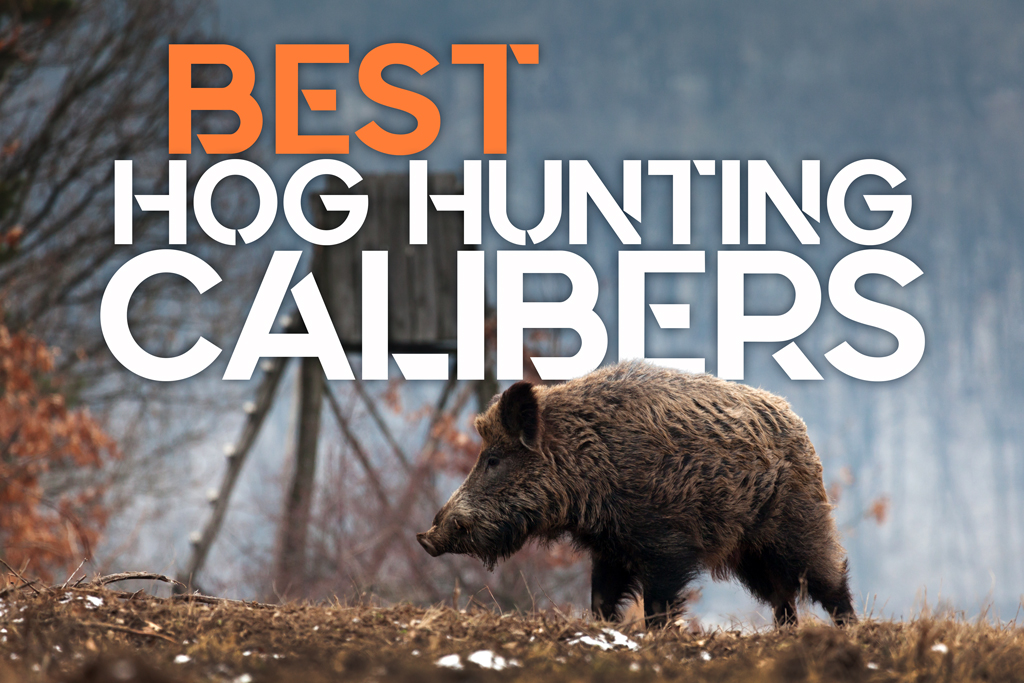
Everywhere you go, people hunt hogs for different reasons. To find the best caliber for hog hunting, you have to ask where and why you’re hunting hogs, and then go from there. In many cases, your terrain, property, and personal goals will guide you to the perfect hog hunting setup.
Many will tell you that any .30 caliber cartridge will do. Ultimately, the best caliber for hog hunting is the one that will reliably put the animal down with the least amount of difficulty. Most people find something like an AR-10 firing .308 is just about perfect, but some also find utility in a steady bolt-action rifle, or the rugged power of a lever-action in 45-70.
Of course, you can hunt a hog if you’ve got something bigger than a cap gun. But that’s glossing over a lot of nuances—that’s why we come to an article like this, right? So let’s talk details.
Best Caliber For Hog Hunting?
So now that you know what kind of rifle you’re using, let’s talk bullets. Or, more specifically, let’s talk about different hog hunting calibers and their benefits and drawbacks. Like everything in the firearm/hunting community, you’ll get a thousand answers if you ask one question. You’ll hear everything from, “The .223 is all you need,” to, “You need at least a .308.”
Are these folks wrong? Not necessarily. But they’re definitely coming from different perspectives, so let’s talk about them.
Here are some of the best calibers for hog hunting:
- The .223 (5.56 NATO)
- .300 Blackout
- 7.62×39
- The .308 (7.62×51 NATO)
- The 30-06
- The 45-70
Here’s some additional information on each of these options (and some specifics to consider).
Hunting Hogs with .223 (5.56 NATO)
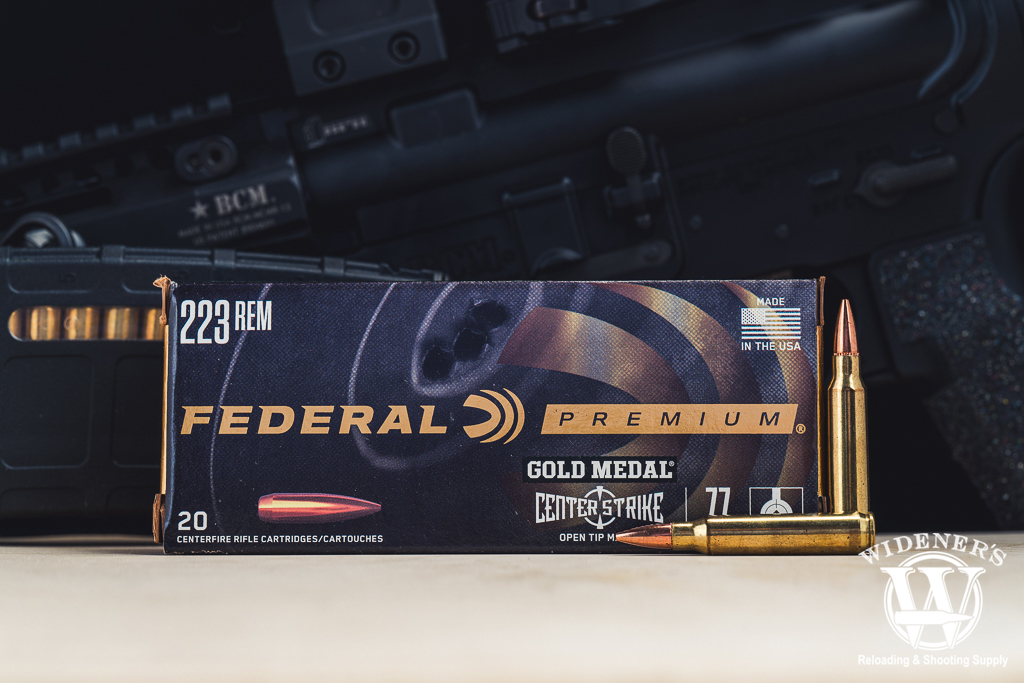
Federal makes a variety of grain weights for the .223 Rem cartridge, with many bullet types available.
You can take hogs with the .223. Is it the right option for every situation? No. Shot placement is key, and so is cartridge selection.
You won’t have much trouble harvesting small hogs cleanly with a 223 (5.56 NATO). When the hogs are smaller, they’re similar to hunting any medium game. A heart, or headshot, gets the job done quickly.
The problems start when you’re looking at those bigger hogs. Fortunately or unfortunately, there are a fair number of bigger ones. Countless hog hunters tell stories of hogs running off after being shot with a .223. And it’s not even that it won’t kill them; the hogs don’t tend to bleed out much (due to thick fat layers).
So if you don’t punch a big enough hole, the lack of a blood trail might mean the hog is gone for good. Energy plays a role in stopping power, as does bullet type and grain weight. I’ve heard tales of 64-grain and 69-grain dropping hogs, I’m sure they can. I’d personally recommend sticking with options in the 75-grain- 77-grain range. Soft-point, hollow-point, and polymer bullets are the top choices for dealing with unruly boars.

223 Rem - 75 Grain Heavy Match Hollow Point - Black Hills Ammunition - 50 Rounds
$64.85
Shop Now

Hornady Superformance Match 223 Rem 75 Grain HPBT – 20 Rounds
$30.85
Shop Now

Prvi Partizan 223 Rem 75 Grain HPBT - 20 Rounds
$18.85
Shop Now

Hornady Match 223 Rem 75 Grain HPBT - 200 Rounds
$264.85
Shop Now

Black Hills Heavy Match 223 Rem 75 Grain HP – 1000 Rounds
$1,324.85
Shop Now


Best Caliber For Hog Hunting: 300 Blackout
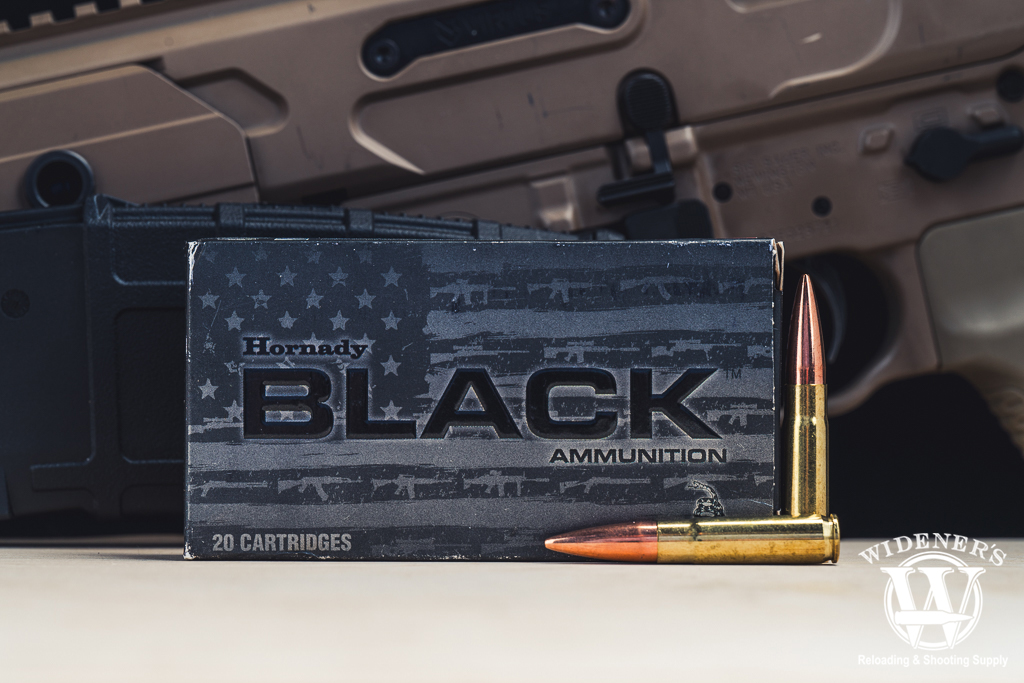
Hornady Black ammo features poly-tipped A-Max bullets designed for match-grade performance.
Many people like the .300 Blackout because it’s easy to suppress, light, and punches a bigger hole than the 223. It has a wide variety of grain weights and bullet types, but has the shortest effective range. If you’re getting up close and personal with the hogs, it’s a great option, but by 200 yards out, it’s losing a good amount of energy and velocity.
Years ago, I was on a hog hunt in the little town of Darien, GA. It’s a coastal town with an abundance of nut trees and a serious wild boar problem. I couldn’t help but crack a smile when I asked our guide how close we’d be getting to the hogs. “This close.” He told me, holding up a Remington 870 12-gauge shotgun. I didn’t own a .300 Blackout rifle at the time, but my buddy who was with us did. I was amazed at how quickly he reached his nightly (private land) bag limit while running Hornady 110-grain V-Max ammo.
Certainly, the .300 Blackout is an effective hog hunting option, with weights ranging from 90-220-grains. If you’re hog hunting at close range, it delivers where a smaller cartridge like the .223 Rem may fall short.

Hornady BLACK 300 AAC Blackout 110 Grain V-MAX – 20 Rounds
$28.85
Shop Now

Hornady Subsonic 300 AAC Blackout 190 Grain Sub-X – 20 Rounds
$32.85
Shop Now

Hornady Subsonic 300 AAC Blackout 190 Grain Sub-X - 200 Rounds

Hornady BLACK 300 AAC Blackout 208 Grain ELD Match – 200 Rounds
$289.85
Shop Now

Hornady Frontier 300 AAC Blackout 125 Grain FMJ – 20 Rounds
$18.25
Shop Now

Hornady Frontier 300 AAC Blackout 125 Grain FMJ – 200 Rounds
$164.85
Shop Now

Hornady BLACK 300 AAC Blackout 110 Grain V-MAX – 200 Rounds
$283.85
Shop Now

Hornady Custom 300 AAC Blackout 135 Grain FTX – 200 Rounds
$329.85
Shop Now

Hornady BLACK 300 AAC Blackout 110 Grain NTX – 20 Rounds
$31.85
Shop Now

Hornady Frontier 300 AAC Blackout 208 Grain FMJ – 20 Rounds
$18.85
Shop Now

Hornady Frontier 300 AAC Blackout 208 Grain FMJ – 200 Rounds
Hunting Hogs with 7.62x39mm
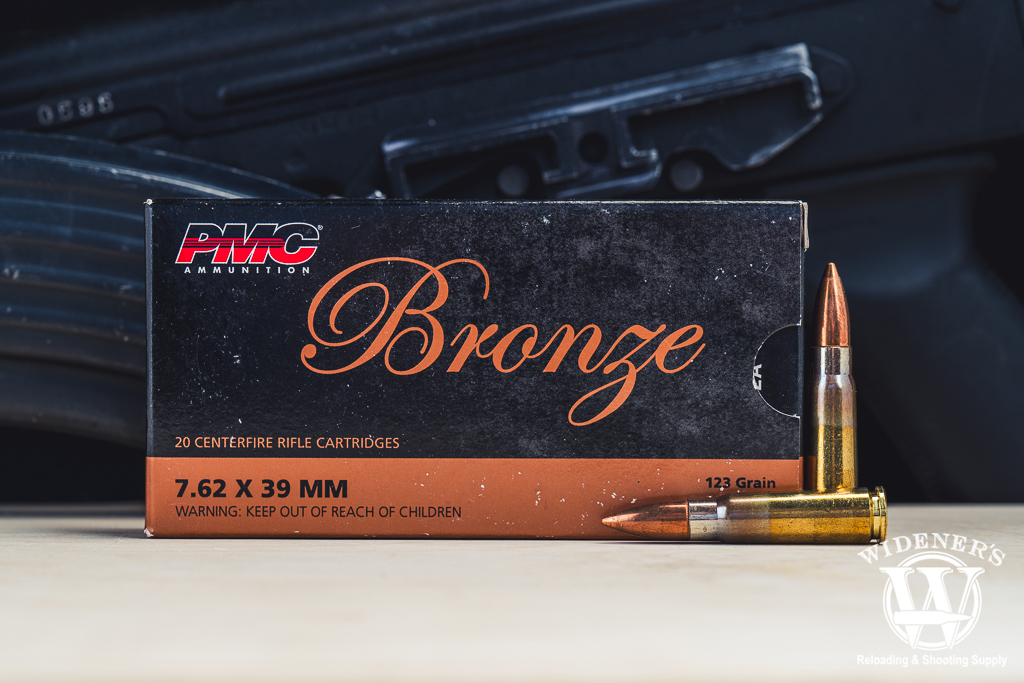
It wouldn’t be a hog hunt without 7.62×39 ammo. PMC Bronze matches quality with affordability for high-volume hunters.
7.62×39, or, old faithful as some may call it, has been a staple in the hog hunting community for decades. Much like the .300 Blackout cartridge, it’s a medium-range option that also works well up close. However, unlike the .300 Blackout, it does a much better job of retaining its energy and velocity well beyond 200 yards.
You can run it in a semi-auto platform, like the AK-47, or SKS. I’m here to tell you, from firsthand experience, it’s best appreciated in a bolt-action rifle. The best bang for your buck is the Ruger American Ranch (Gen II), as it can also be suppressed. It’s not a fancy rifle, but it puts a smile on your face with each trigger pull. Put a decent optic on top, and you’ve got yourself a sweet hog hunting setup. More on that below.
Ammo options are simple: you can get FMJ, JHP, or SP bullets. The same goes for grain weight options; you have 3-4 to choose from, all within the same parameters.

PMC 7.62x39mm 123 Grain FMJ – 500 Rounds
$409.85
Shop Now

MAXX Tech NFR 7.62x39 123 Grain FMJ – 500 Rounds
$324.85
Shop Now

PMC 7.62x39mm 123 Grain FMJ – 20 Rounds
$17.85
Shop Now

Federal Power-Shok 7.62x39 123 Grain JSP – 20 Rounds
$35.85
Shop Now

Winchester Super-X 7.62x39mm 123 Grain SP - 20 Rounds
$29.85
Shop Now

Belom 7.62x39 123 Grain FMJ – 480 Rounds
$329.85
Shop Now

Belom 7.62x39 123 Grain FMJ – 20 Rounds
$16.85
Shop Now

Fiocchi 7.62x39 123 Grain FMJ – 500 Rounds
$348.85
Shop Now

Fiocchi 7.62x39 123 Grain FMJ – 50 Rounds
$36.85
Shop Now

Winchester Super-X 7.62x39mm 123 Grain SP - 200 Rounds
$288.85
Shop Now

Hornady Frontier 7.62x39 123 Grain FMJ – 20 Rounds
$18.85
Shop Now
Hunting Hogs with .308 Win
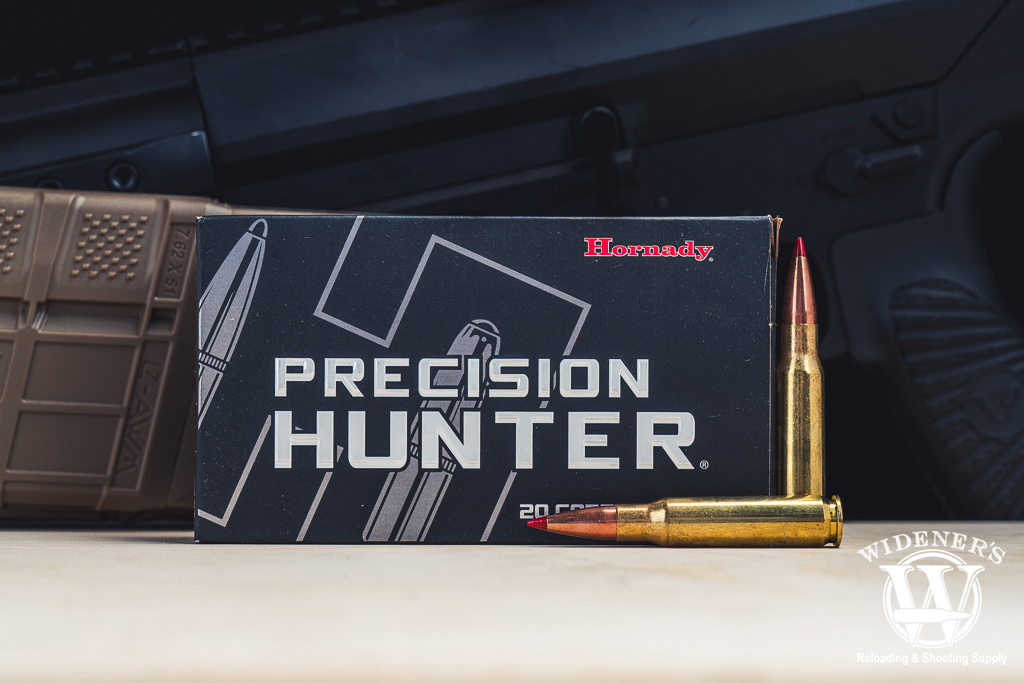
Hornady’s Precision Hunter line offers accuracy and consistent terminal performance at all practical ranges.
If you don’t currently own a hog hunting rifle, and you’re on the fence about which caliber to go with, this is the one to choose. The .308 Winchester is often hailed as a nearly perfect hog hunting round. Why? It’s not the round itself, it’s the economics around the caliber. You can buy .308 everywhere, and if you’re killing a lot of hogs, you’re going to need extra ammo.
Not only that, but .308 comes in the style of your choice. You can buy or build an AR-10 or go with a more traditional bolt action. The .308 allows you to reliably drop any-sized hog. The only drawback is that some platforms can be heavier and more expensive than lightweight options.
When it comes to ammo options, you can pretty much take your pick. Grain weights range from 110-180 grains on average, and there’s every bullet type you can imagine under the sun.
Hog Hunting with .30-06
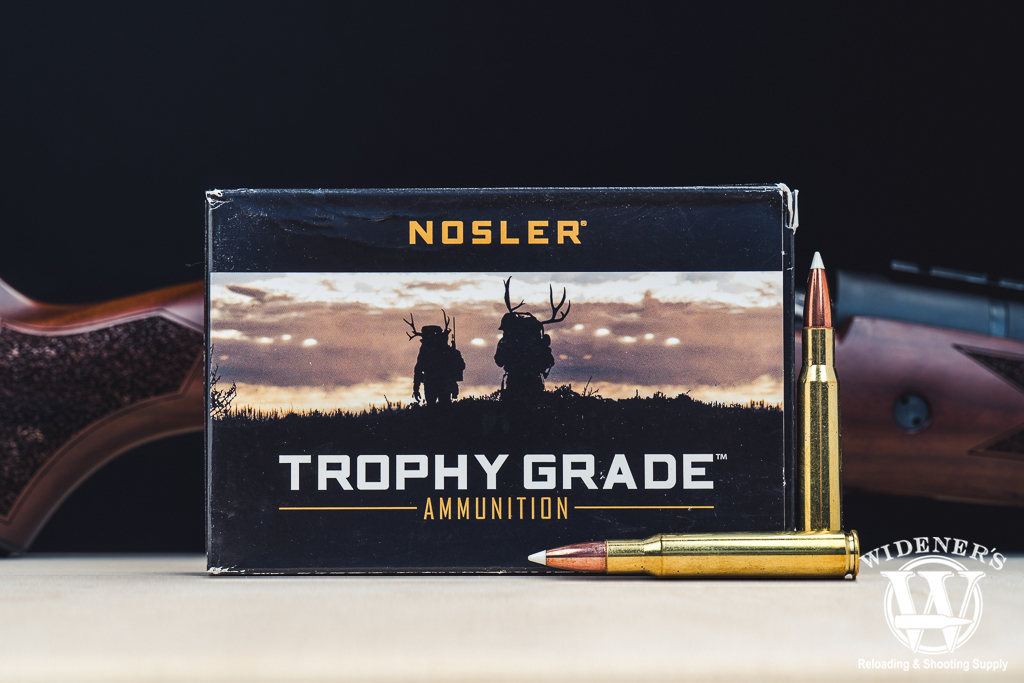
Nosler Trophy Grade uses custom brass and Nosler bullets to attain optimum performance, no matter where your hunting trip takes you.
The 30-06 is certainly a strong option for hunting hogs. It’s also a big-boy cartridge, so expect significant recoil. In any given scenario, the 30-06 will be more than enough to harvest big hogs, and it also gives you a lot of range if you find yourself in wide-open country.
The drawback to the 30-06 is that there aren’t many semi-auto platforms due to the heavy recoil/muzzle rise. It’s a long-action cartridge, so you’re limited to what’s available on the market. Not only that, but if you’re looking to kill a lot of hogs, you might want to consider a less expensive caliber.
Bullet types are a little more limited than the .308 Win, as are the grain weight options. That being said, the 30-06 has been getting the job done since before most of us were alive.

Hornady Precision Hunter 30-06 178 Grain ELD-X - 20 Rounds
$42.85
Shop Now
Hog Hunting with 45-70 Gov’t
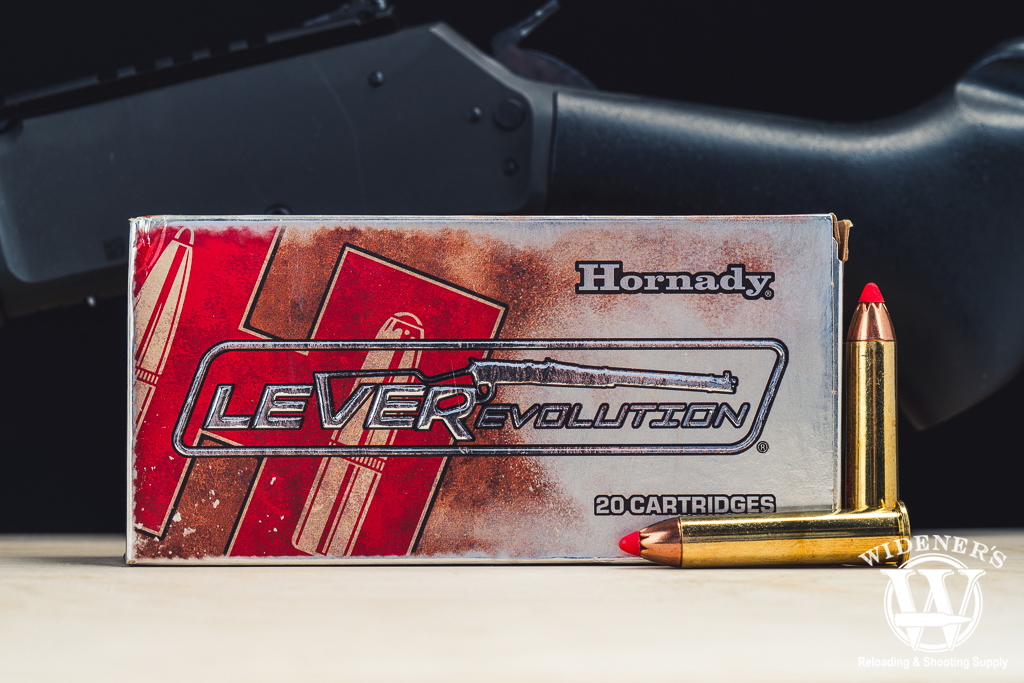
Hits like a hammer. The 45-70 Gov’t puts down hogs with modern Hornady Lever-Evolution ammo technology.
The 45-70 is the “We’re done playing around,” caliber. It’s the one to reach for if you’re tired of seeing that mid-sized to big hog run off after grazing it with the .223 or 300 Blackout (or if you’re tired of a couple of branches disrupting your bullet’s trajectory). Can it take down a buffalo? You bet. Which is why it’s also an effective option for large wild boar.
It’s a straight-walled cartridge, designed for hunting. You can get it with reduced recoil, standard velocity, and +P options. Depending on your bullet type, it’s essentially a hunk of copper or lead. Bullet weights reach up to an eye-watering 500 grains, and while bullet types are limited, there are some nasty modern JHP and Polymer designs.
It’s best suited for a lever-gun platform, which, with the modern options now on the market, makes it an attractive proposition. Not too shabby for a cartridge that was first introduced in 1873.

Winchester Super-X 45-70 Government 300 Grain JHP – 20 Rounds
$51.85
Shop Now

Hornady LeveRevolution 45-70 Government 325 Grain FTX - 20 Rounds
$43.85
Shop Now

Winchester 45-70 Government 405 Grain Lead Flat Nose - 20 Rounds
$56.85
Shop Now

Hornady 45-70 Gov 250 Grain MonoFlex Polymer Tip - 20 Rounds
$51.85
Shop Now

Black Hills 45-70 Government 405 Grain LFN – 20 Rounds
$49.85
Shop Now

Hornady LEVERevolution 45-70 Government 325 Grain FTX – 200 Rounds

Fiocchi 45-70 Government 300 Grain HPFN – 20 Rounds
$49.85
Shop Now

Buffalo Bore 45-70 Government Magnum 300 Grain JHP – 20 Rounds
$74.85
Shop Now

Sellier & Bellot 45-70 Government 405 Grain SP – 20 Rounds
$35.85
Shop Now
Best Rifle For Hog Hunting?
Before we go over specific calibers, let’s discuss the different rifle platforms and styles for hog hunting. That’s right, we’re talking about the differences between a semi-auto and a bolt action, and the benefits (if any) of something like a lever-action or a single-shot rifle.
If you know anything about hogs, then you know that they don’t fit into any specific category regarding size. Basically, you can have feral hogs that run from 20 pounds up to 800 pounds, as in the famous Hogzilla case. This is one of those cases where you really need to consider the type of hog you’re chasing.
Let’s list (and then look) at a few common firearm styles for hog hunting.
Here are a few of the common choices for hunting hogs:
- Semi-Auto (AR-style Rifles)
- Bolt Action
- Lever-action
Let’s pull the optics out and look at each of these a little closer.
Hunting Hogs: Semi-Auto Rifle (AR-15 & AR-10)
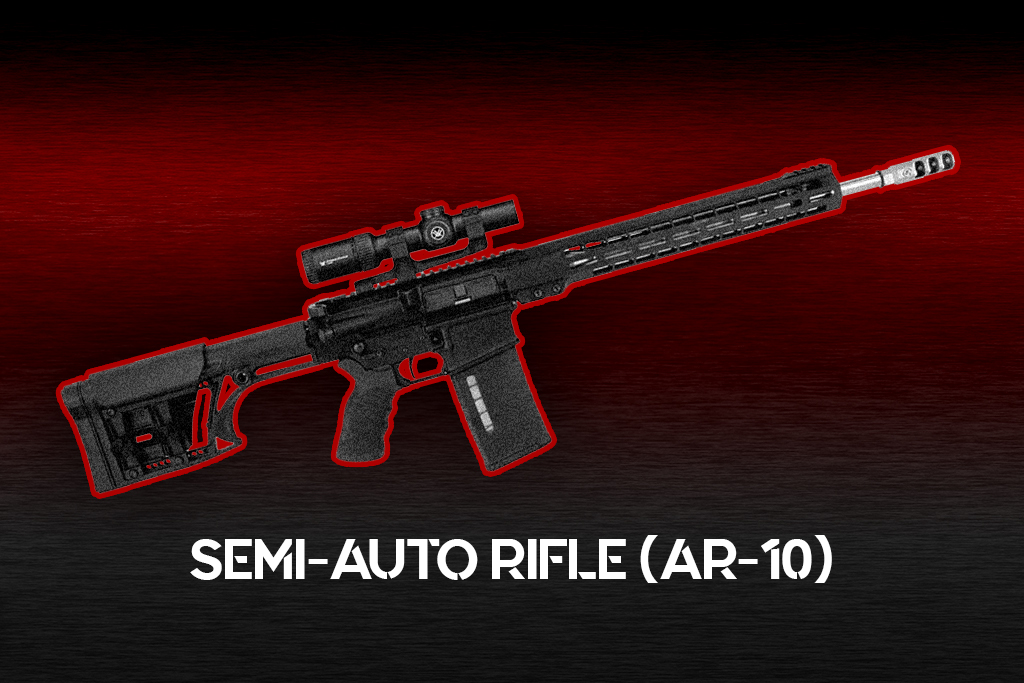
It’s hard to argue that the modern AR-platform sporting rifle isn’t the best choice for hog hunting.
The semi-automatic rifle is best suited for people working on population control. If you have a farm (or really any kind of property that needs protection from a wild hog, including gardens, small animals, etc.), then the goal is to take down as many hogs as possible.
This might sound slightly “wild” for those unfamiliar with feral hogs. The gist is this: feral hogs have become a real problem in many states, destroying property and crops. Their population is truly out of control in some areas, and for this reason, regulations around their hunting and elimination are slim.
In fact, in some areas, there are bounties paid to hunters and landowners who turn in proof that they’ve killed a wild hog. If that doesn’t tell someone what problem these things have become, I don’t know what will.
With all that said, a semi-auto AR platform allows you extra capacity and rapid firing, ensuring you can drop as many of these beasts as possible, hopefully saving your crops and protecting your property.
However, not everyone hunts hogs to reduce their numbers. Some are looking to go head-to-head with an emerging monster.
Hunting Hogs: Bolt-Action Hunting Rifle
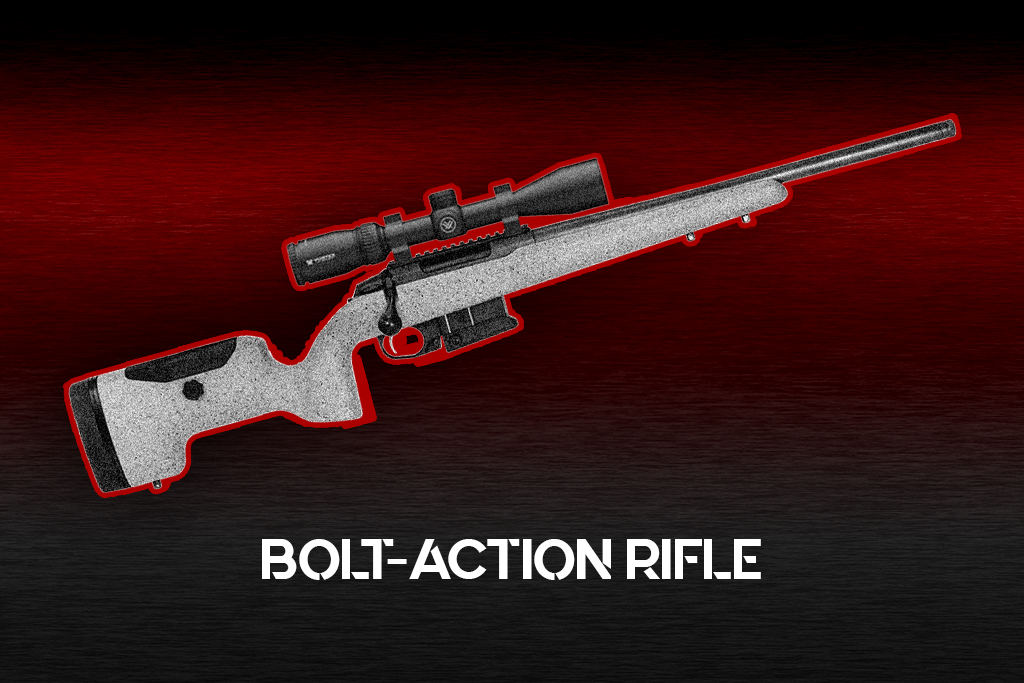
When accuracy matters, the bolt-action rifle answers. Reloads are done by cycling the bolt, and most models feature a detachable magazine.
For those who are looking to hunt hogs (by that, we mean that you’ll be picky about the animal you harvest and that you’re looking for something particular), then a standard bolt-action hunting rifle will get the job done well. Now, you can go out and drop thousands of dollars on a match-grade rifle, that will give you sub-MOA accuracy beyond your field of vision, but you don’t need to.
As I mentioned, Ruger makes a fine American (Ranch Gen II) model that can be had for less than $800. Tikka, Savage, and Bergara also make entry-level models that won’t wear out your wallet. The point is, budget for what you need, remember that you’ll also need an optic, and choose the best bolt-action rifle for you that gets the job done.
The bolt action is reliable, accurate, and no-nonsense. With a standard caliber you’d use for deer, .308 or 30-06, you can expect to reliably drop any wild hog you choose. If ammunition capacity is not a worry, then the old and reliable bolt action hanging over your mantle might be the tool to bring on your quest to bag the next Hogzilla!
Best Rifle For Hog Hunting: Lever-Action Rifle
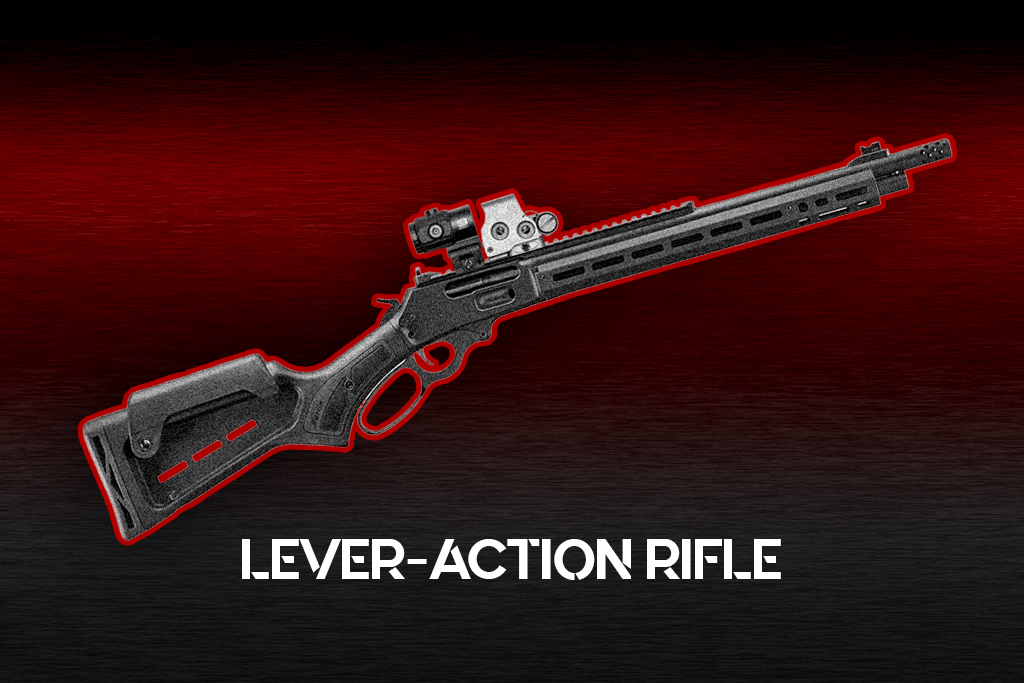
The lever-action rifle handles a variety of calibers, with a tube-fed magazine and a simple action for reloading.
A lever-action rifle in a caliber like the ever-classic 30-30 or the hard-hitting 45-70 will comfortably eliminate any hog it comes across. What’s the benefit of the lever-action over something like a bolt action?
Well, it comes down to your hunting terrain. If you’re working in wide open lands, the bolt action will suffice; however, working through the thick brush or dense forest (places many hogs are fond of), the lever action will be more handy and easier to maneuver. Also, with a heavy 45-70 caliber, you don’t need to worry about branches and small trees deflecting your round.
Matching Your Goals To Your Rifle
Before we wrap this up, let’s take a moment to reverse engineer everything. Instead of matching the person to the gun, let’s match the gun to the person. Of course, your personal shooting preferences will dictate many things (open sights or scope, lever action or bolt, polymer or wood furniture), but your intentions also play a big role.
Here are a few common hog hunting situations:
- The Trophy Hog Hunter: If you’re going for the biggest hog in your state, capacity shouldn’t be your primary concern. You want a big caliber that will take that beast down with one shot—nothing much less than a .308.
- Pest Control Hog Hunting: For population control, think semi-auto. You can get the job done with .223 or .300 Blackout if you’re mainly hunting smaller hogs.
- The Full Hog Hunting Experience: What does this mean? It just means that you should experiment. Unlike some animals that have limits on the size of caliber/type of gun you must use, the hog is pretty wide open. So give things a try! Be sure to follow local laws, but from there be creative with styles and set-ups and see what works.
Alright, that was a lot of hog talk. Let’s wrap this bacon up.
Recap: Best Caliber For Hog Hunting
Hunting hogs can be real fun. Not only can you harvest some tasty meat, but in some cases, you can actually make money by collecting a bounty for each feral hog you harvest. Even so, hog hunting can be highly variable, and you must match your caliber and rifle to your goals. The best caliber for hog hunting is the one that fits your budget and takes care of business efficiently.
The best overall hog hunting rifle is probably a semi-auto AR-10 in .308 Winchester. It’s durable, powerful, and fast. However, if you’re preparing for some trophy hog hunting, taking your bolt-action rifle in 30-06 or something similar will be grand. Finally, for population control of smaller feral hogs, a .223 AR-15 is certainly a possibility.
Overall, the freedom around hog hunting allows you to test different rifle styles and calibers, uncovering what suits you.
Thanks for hanging out! If you liked this article, you’ll love our guide to the best rifle for hunting deer.
You may also like
