


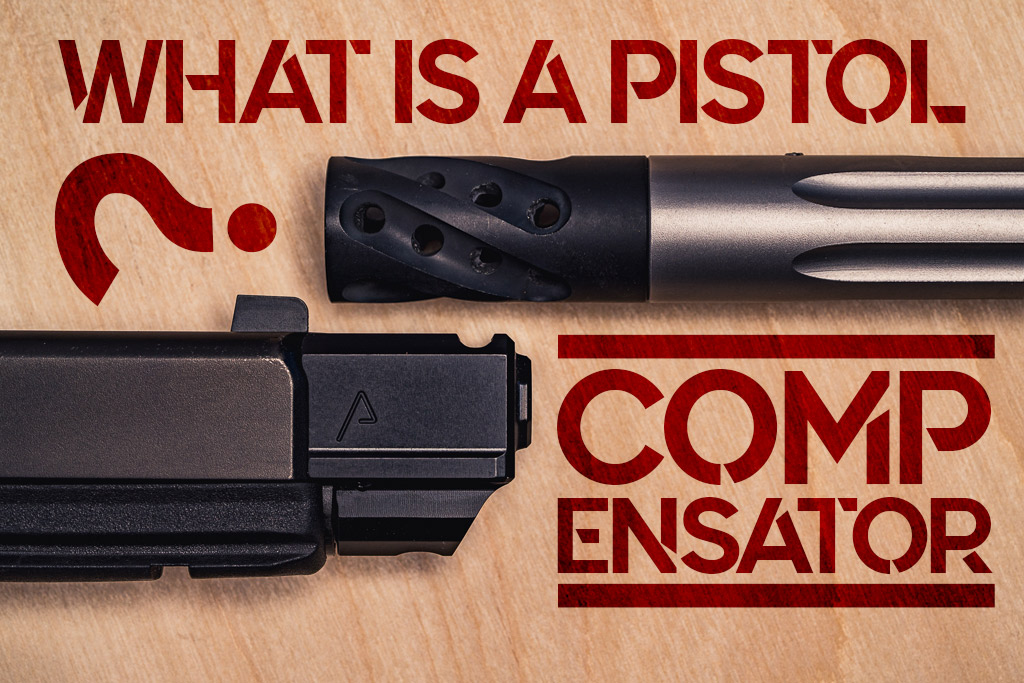
The pistol compensator has grown rapidly in popularity over the last decade. Once mostly seen in competitive shooting circles and custom 1911 builds, compensators are now widely used on everyday carry pistols, home-defense setups, and duty firearms. Their streamlined appearance, measurable performance benefits, and compatibility with modern threaded-barrel pistols have made them one of the most in-demand handgun upgrades on the market.
This guide provides a clear explanation of what pistol compensators are, how they work, their history, and the advantages and disadvantages of using one.
What Is a Pistol Compensator?
A pistol compensator is a muzzle device engineered to reduce recoil and muzzle rise by redirecting the high-pressure gases that exit the barrel after a shot is fired. It attaches to a threaded pistol barrel, most commonly using the standard 1/2×28 thread pattern on 9mm platforms.
Compensators vary in size and design, but all share the same purpose: keeping the gun flatter and more controllable during rapid fire.
Unlike suppressors or flash hiders, a compensator does not attempt to reduce sound or hide flash. Its sole mission is recoil control, which it achieves by redirecting some of the gases exiting the muzzle of your weapon.
How a Pistol Compensator Works
To understand what a compensator accomplishes, it helps to review the basics of recoil. When you fire a round, pressure builds behind the bullet. As the bullet exits the muzzle of your pistol, the expanding gas follows behind. The force of the gas pushes the muzzle upward, causing muzzle rise.
A compensator redirects some of that gas to counteract this upward motion with:
Gas Ports for Vertical Control
Most compensators feature ports on the top. When gas escapes upward through these ports, the downward force created by the redirected gas reduces muzzle rise. This helps keep the barrel of your pistol flatter, meaning you can stay on target and deliver faster follow-up shots.
Side Ports for Stability
Some compensators include angled side ports. These help counteract lateral movement and rotational torque, stabilizing the pistol under sustained rapid fire. With red-dot-equipped pistols, this results in more consistent dot tracking and less vertical bounce.
Pistol Compensator: A Brief History
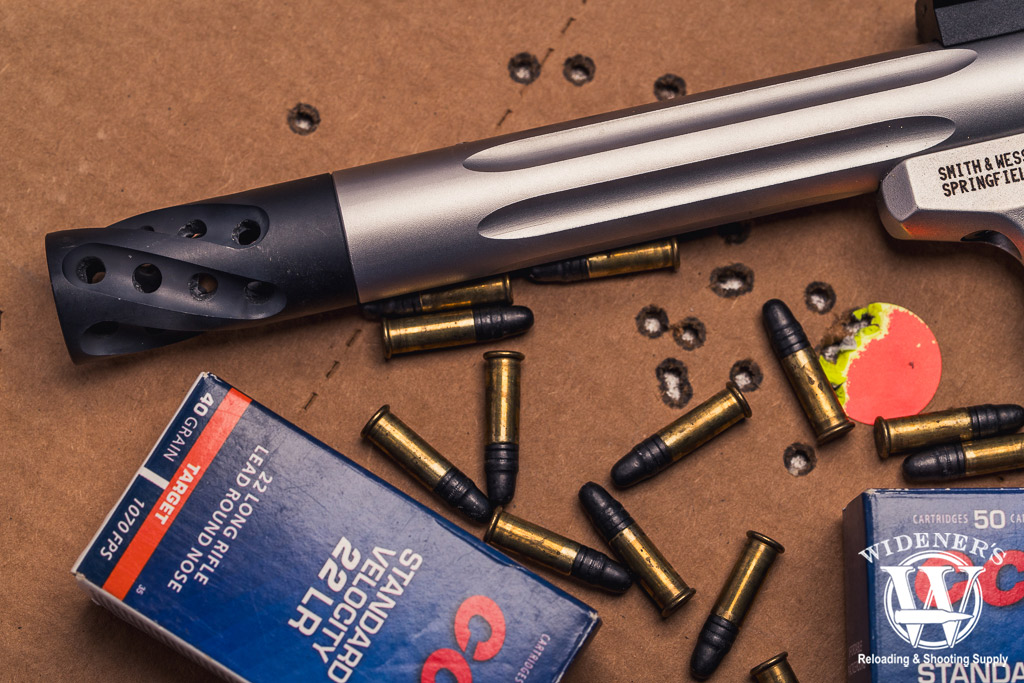
Shooters use compensators to reduce muzzle rise, achieve faster follow-up shots, and execute quicker reacquisition of the target.
While compensators first appeared on heavy machine guns and long guns in the early 20th century, they were not widely used on handguns until competitive shooters began experimenting with them.
The 1970s & 1980s
IPSC and USPSA competitors were among the first to adopt handgun compensators. Early compensated 1911s, especially in .38 Super, delivered faster follow-up shots and flatter recoil, giving shooters a competitive edge. This era made the compensated “race gun” a standard fixture in action shooting sports.
The 1990s & 2000s
Law enforcement teams tested ported barrels and compensators, but the concept mainly remained within competition. Custom gunsmiths refined compensator designs, improving their efficiency and reliability.
The Modern Era
Over the past decade, compensators have become mainstream. The rise of red dots on pistols, the growing availability of threaded barrels, and the development of compact and micro compensators have all contributed to their everyday use. Today, concealed carriers, home-defense users, and recreational shooters regularly incorporate comps into their setups.
Why Shooters Use Pistol Compensators
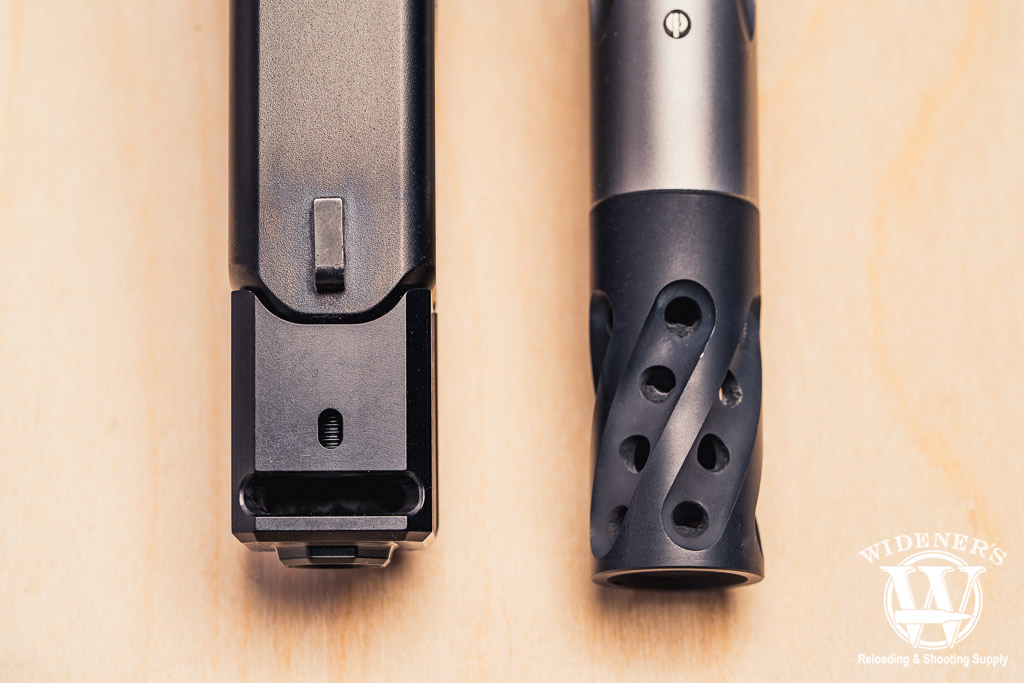
Some pistol compensators can be threaded directly onto the barrel, while others may require a set screw to stay in place.
Shooters adopt compensators for several performance-enhancing reasons.
Reduced Muzzle Rise
The primary function of a compensator is to significantly reduce muzzle rise. By redirecting gas upward, the compensator counteracts the natural upward flip that occurs with each shot. This results in a flatter-shooting pistol and a more immediate sight return.
Faster Follow-Up Shots
Because the gun moves less between shots, split times decrease. Many shooters experience noticeably faster second and third shots after adding a compensator, especially when combined with hot defensive 9mm loads.
Increased Stability & Accuracy in Rapid Fire
A compensator does not enhance the accuracy of the first shot. However, it dramatically improves accuracy during rapid-fire strings by stabilizing the pistol and maintaining a consistent sight picture.
Smoother Perceived Recoil
While a compensator does not change the physics of recoil, it reshapes the recoil impulse. The recoil feels more controlled, less abrupt, and more predictable. This can make lightweight polymer pistols or subcompact EDC carry guns noticeably easier to manage.
Improved Red Dot Tracking
One of the most popular reasons modern shooters install compensators is to improve red dot behavior. A compensator reduces vertical dot movement, allowing the dot to settle more quickly.
Downsides of Using a Pistol Compensator
Compensators are not perfect for every situation. Several drawbacks may influence a shooter’s decision on whether to use one.
Increased Blast & Concussion
Because compensators vent gas upward and sideways, the shooter and those nearby experience more muzzle blast and concussion. In enclosed spaces, the effect is more pronounced. This can be a concern for defensive use inside a home.
More Visible Muzzle Flash
Compensators can produce a more noticeable flash signature, particularly with ammunition that uses slower-burning powders. While modern defensive ammo reduces this effect, it remains a factor for low-light situations.
Ammunition Sensitivity
Compensator performance depends heavily on gas pressure. Subsonic ammunition often produces less pressure, reducing compensator effectiveness. High-pressure or +P ammunition generally works best.
Potential Reliability Issues
A compensator adds weight to the muzzle and alters the pistol’s recoil dynamics. Some firearms may require recoil spring adjustments or minor tuning for reliable operation. Most modern compensators function reliably out of the box, but compatibility can vary.
Holster Limitations
Adding even a small compensator increases the overall length of the pistol. Not all holsters accommodate compensators, so shooters may need to switch to an open-muzzle or comp-compatible holster.
Added Length & Weight
A compensator extends the pistol slightly and adds weight toward the muzzle. While the added length is often minimal, it may affect concealment or draw speed for some shooters.
Ported Barrels VS Pistol Compensators
Some pistols use ported barrels or ported slides as an alternative to installing a threaded compensator. These designs vent gas directly through cuts in the barrel or slide.
Ported barrels typically offer moderate recoil reduction, require no additional length, and maintain full holster compatibility. However, they usually provide less recoil mitigation than a dedicated compensator.
Compensators are generally more effective and offer greater tuning flexibility, though they add bulk and may require minor mechanical adjustments.
Recoil Reduction
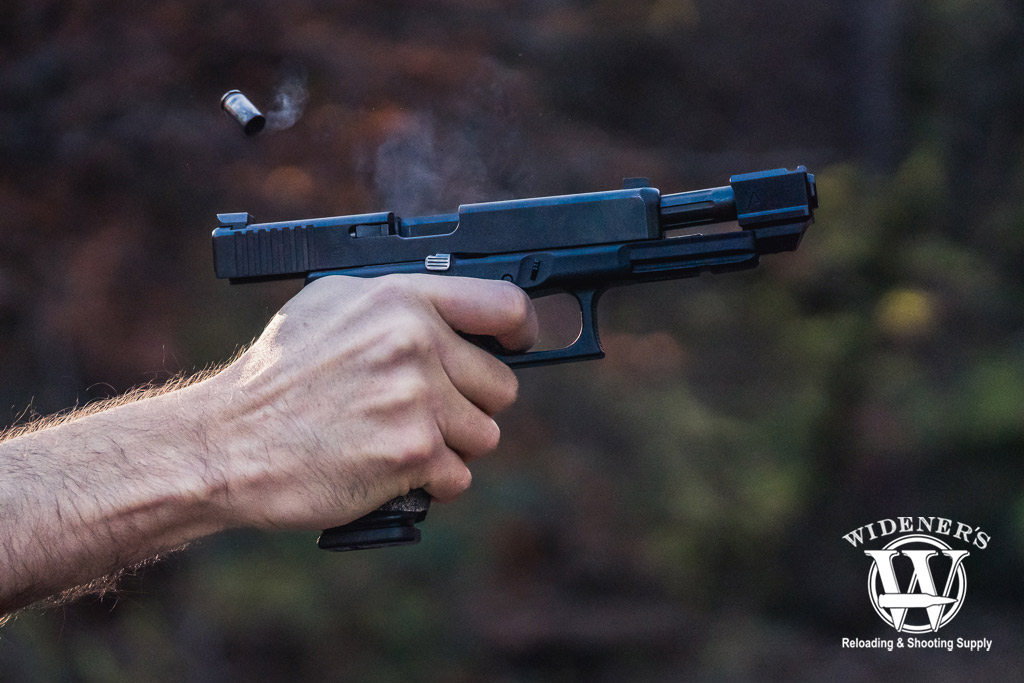
Compensators reduce recoil and muzzle flip by venting propellant gases upward, forcing the barrel down during firing.
Recoil reduction varies significantly depending on ammunition, firearm design, compensator size, and spring weight. In general:
- Micro compensators often reduce muzzle rise by 10-20%.
- Mid-sized compensators commonly reduce rise by 20-40 percent.
- Competition-grade compensators in conjunction with high-pressure ammo can reduce muzzle rise by 50 percent or more.
- Everyday-carry pistols typically see a moderate yet noticeable improvement.
Who Should Consider Using a Pistol Compensator?
Compensators make sense for many shooting applications.
Competitive Shooters
Competitors benefit the most from compensators, as speed and recoil control directly affect performance.
Red Dot Users
Anyone running a red dot sight will see improved tracking and faster dot recovery.
Recoil-Sensitive Shooters
New shooters and those who prefer softer-shooting firearms may appreciate the smoother recoil impulse.
Home-Defense Shooters
A compensator can improve control during rapid fire, but users should be aware of the increased blast and flash indoors.
Shooters with Threaded Barrels
For pistols already equipped with threaded barrels, adding a compensator is an easy and reversible upgrade.
Is A Pistol Compensator Worth It?
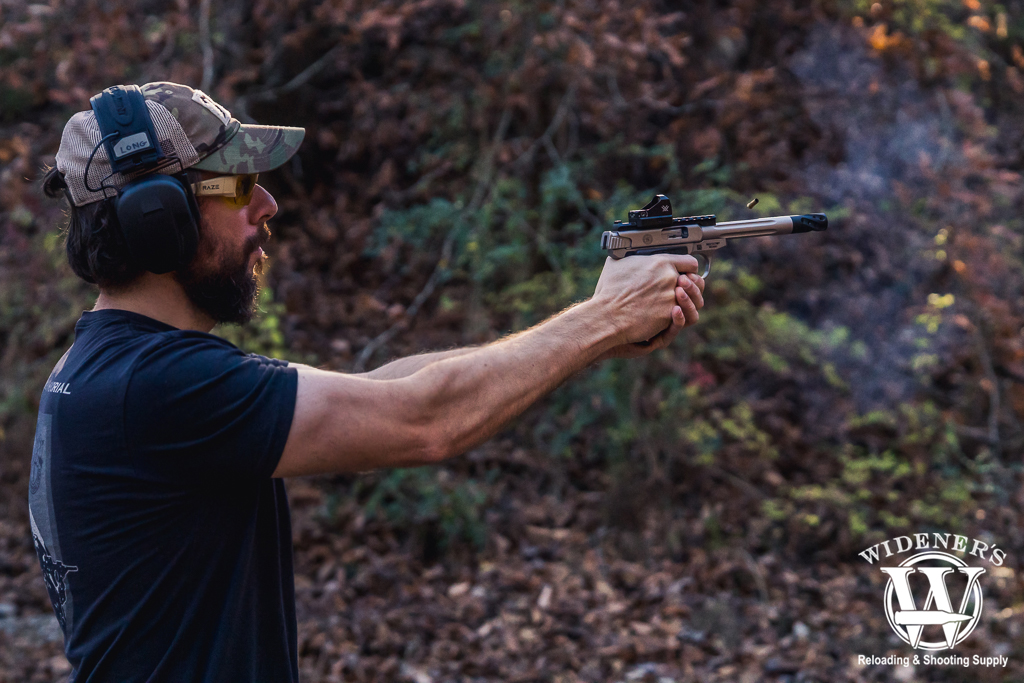
Pistol compensators reduce muzzle rise, smooth the recoil impulse, and improve shot-to-shot performance.
A pistol compensator is an effective tool for reducing muzzle rise, smoothing the recoil impulse, and improving shot-to-shot performance. While compensators do not eliminate recoil, they make recoil easier to manage and help shooters maintain better control during rapid fire. They also enhance red dot performance by reducing vertical bounce.
However, compensators come with trade-offs, including added blast, potential flash increase, possible tuning needs, and holster compatibility considerations. Whether a compensator is the right choice depends on the shooter’s intended use, environment, ammunition type, and training goals.
For many modern shooters, especially those running red dots or seeking improved performance in rapid-fire scenarios, a compensator is one of the most impactful handgun upgrades. If you want an easier time sighting in your firearm, try the Laser Bore Sight from CVLIFE.
You may also like
