


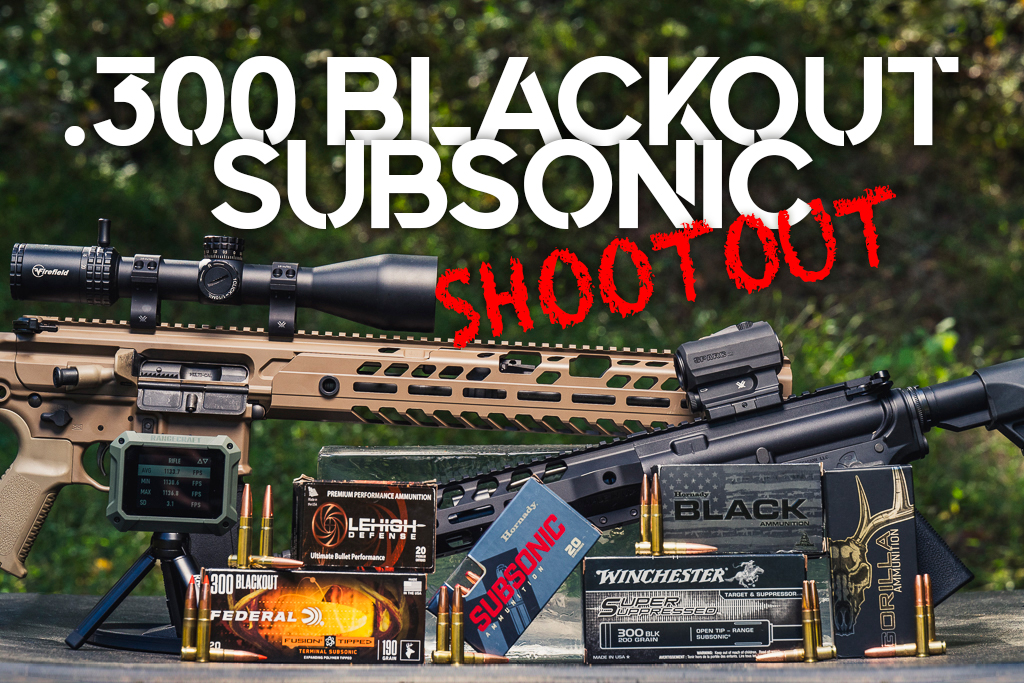
Many say shooting is a game of inches. This is true. But it can also be a game of silence and ballistic efficiency. In this article, our goal is to understand the finer details of subsonic 300 Blackout cartridges. We’ll compare different companies, different barrels, all at different distances.
It’s often tough to decide which rounds to test in these comparisons. So we selected options that cover a few different categories. The combinations of 300 BLK ammo and barrel lengths we tested gave us data that should be useful for a variety of gun owners.
We wanted to know how these rounds perform and why. The hope? Uncover subsonic secrets that will make a noticeable difference in real-world 300 Blackout use.
Subsonic 300 Blackout Ammo
When it comes to analyzing .300 Blackout, we try to test the round against the manufacturer’s published data. For example, if a company states their subsonic 300 BLK will fragment at 50 yards, does this prove to be the case in the real world? And, if so, how often will that round fail?
To give a parallel example, consider food. One thing many people don’t realize is that many foods actually deviate somewhere around 20 percent from their listed calories on the packaging. Why? Because when these standards are set by the FDA, the regulations allow the manufacturers some wiggle room.
Of course, subsonic 300 Blackout bullets aren’t exactly peanut butter jelly sandwiches, but you get the point. Whenever we’re testing a round, particularly under subsonic and suppressed conditions, we want to get a feel for how it actually performs in relation to its advertised abilities.
Let’s start from the beginning. Then, we’ll give you a brief overview of our testing procedures and each round.
Cartridge Specs & Overview: Subsonic 300 Blackout
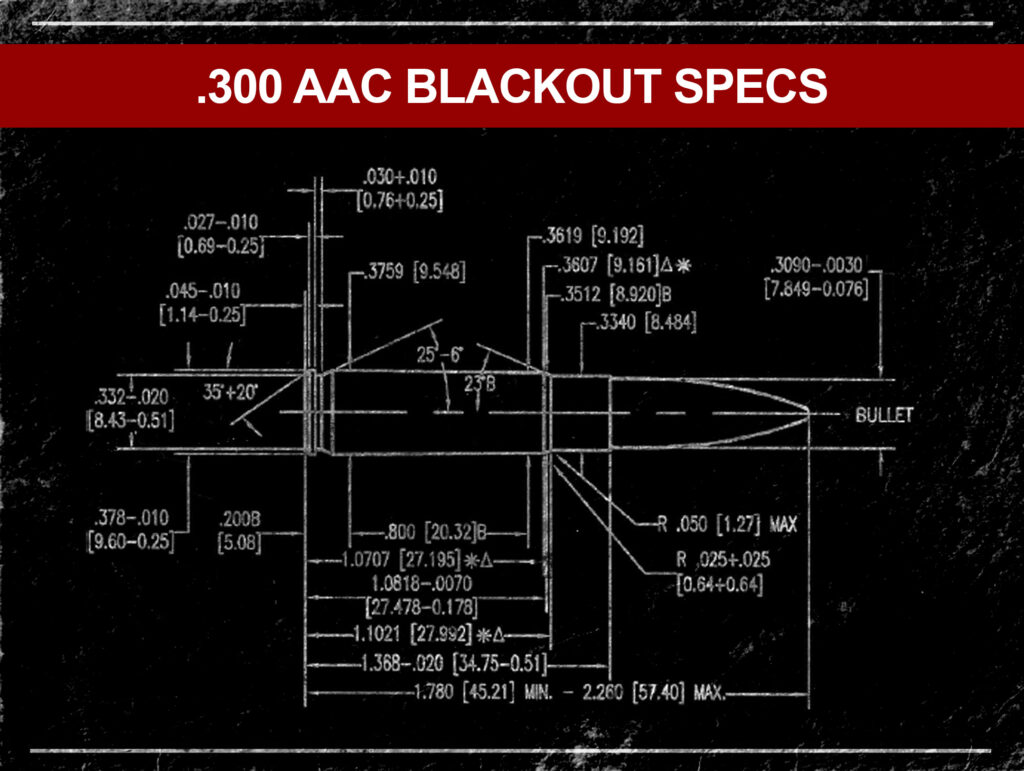
.300 Blackout has the same bullet diameter as the .308 Win; its shorter case makes it roughly the same length as .223 Rem.
By now, you’ve probably noticed a common thread: subsonic. If you’re new to subsonic rounds, the main goal is to reduce the “crack” that results from a bullet breaking the speed of sound. To achieve this goal, subsonic rounds usually sit at around 1050 fps, give or take (1125.3 fps is the speed of sound).
This means a much quieter round overall, which has advantages in hunting and home defense. When suppressed, it also makes target shooting less noisy, and thus more enjoyable. With a suppressor, you end up with a firearm that’s so quiet it will remind you of plinking around in the backyard with your old Red Ryder .177 caliber.
| Cartridge Specs | .300 AAC Blackout |
|---|---|
| Parent Casing | .221 Fireball/.223 Rem |
| Bullet Diameter | .308″ |
| Neck Diameter | .334″ |
| Base Diameter | .376″ |
| Case Length | 1.368″ |
| Overall Length | 2.26″ |
| Grain Weight | 90gr-220gr |
| Max Pressure (SAMMI) | 55,000 PSI |
Testing Procedure
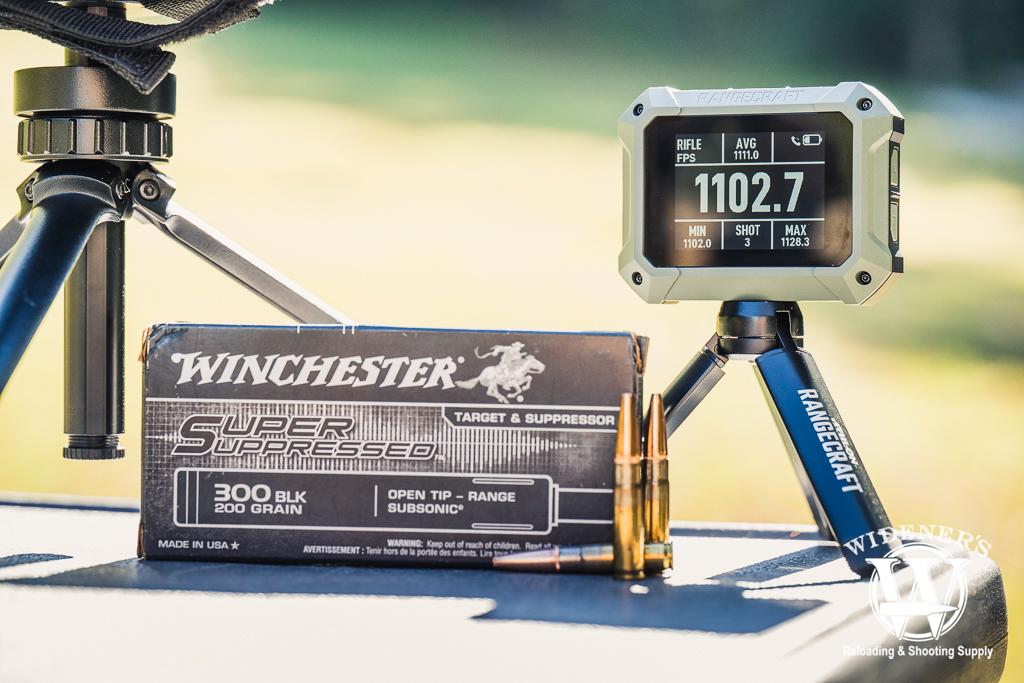
A good radar chronograph makes a full day of ballistic data collection much less painful.
The testing procedures are straightforward. Shoot each commercially available subsonic 300 Blackout round into ballistic gelatin at a distance of 50 yards and 100 yards with a 16″ (1/6 twist) and 10.5″ (1/7 twist) length rifle barrel. At 50 yards, we used the FBI standard fabric protocol in front of the gel blocks. We did this to give each round the best chance of performing/opening at a relatively short distance. At 100 yards, we let the rounds do their thing and go straight into the ballistic gelatin without the fabric barrier.
We gathered ballistic data using the Athlon Rangecraft Velocity Pro chronograph. If you’re not familiar, it’s a small, rechargeable radar chronograph, capable of measuring a wide variety of projectiles at various velocities. Its interface is easy to use, and a handy app lets you quickly download your data. It also has a long (rechargeable) battery life, and it has an impressive IP67 weather seal rating.
For the test, we used calibrated blocks of Clear Ballistics ballistic gelatin. We shot three rounds of each SKU and recorded the average velocity and penetration depth. After measuring, we recovered the bullets from the gelatin to inspect their state. In the event that the ballistic gelatin failed to stop a bullet, an additional round (or rounds) was fired until 3 were captured. In the event that no rounds were captured in the ballistic gelatin, we measured the depth the round exited the gel and recorded it.
Federal Subsonic 300 Blackout 190 Grain Fusion Tipped
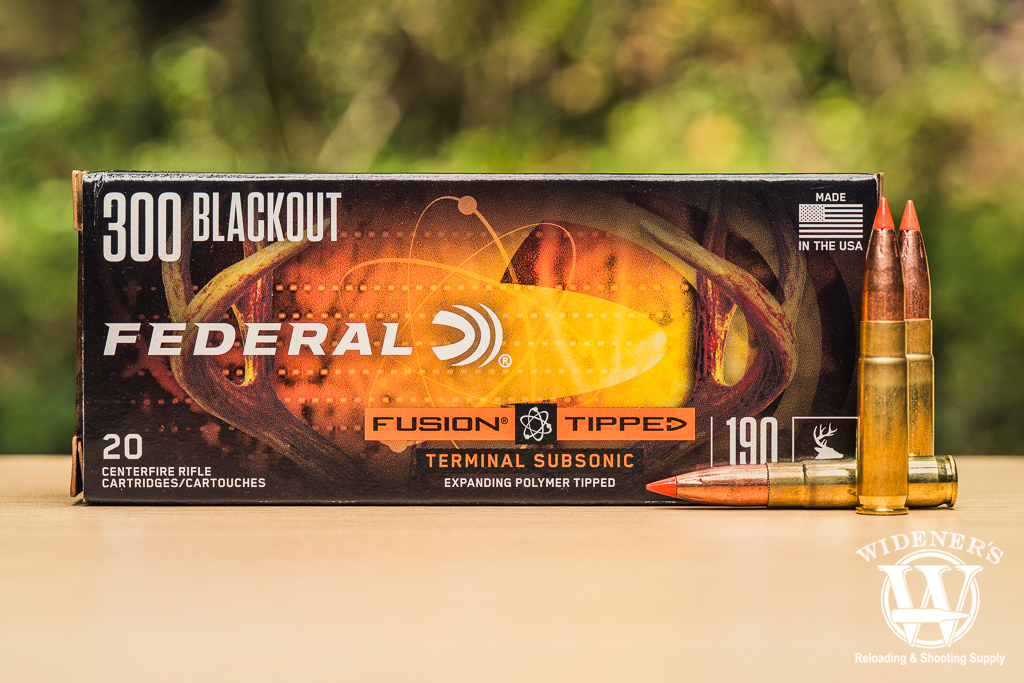
Federal Fusion Tipped combines a heavy, subsonic projectile with a polymer tip and bonded bullet for reliable penetration & performance.
Federal has a strong reputation, and that’s true with their 300 BLK subsonic rounds. There are three main things that make this round special.
First, the manufacturing process essentially fuses (hence the name) the jacket to the core. This means that, upon impact, you get an incredibly reliable expansion.
Second, the polymer tip provides the necessary forces to reliably expand the round at subsonic levels (incredibly important for suppressed shooting). Finally, the shape of the tip leads to reliable feeding across many different platforms.
Pros and Cons of the Federal Subsonic 300 Blackout 190 Grain Fusion Tipped
The best uses for the subsonic Federal 300 Blackout Fusion Tipped include medium-game hunting at closer ranges as well as personal defense. You’ll find that, when properly placed, the energy retention and penetration force of the Fusion-Tipped bullets delivers a powerful strike to game animals in the white-tailed deer/feral hog category.
Pros: Reliable pattern that can penetrate to vital organs on medium game. Also, the geometry of the point leads to reliable cycling across the good, bad, and ugly varieties of firearms.
Cons: May offer a little bit too much penetration for your average home defense situation. Also, these rounds may not stay subsonic depending on your barrel length.
| Caliber | Bullet Type | Bullet Weight | Velocity (Muzzle) | Energy (Muzzle) | 100 Yards (Velocity/Energy) | 200 Yards (Velocity/Energy) | 300 Yards (Velocity/Energy) |
|---|---|---|---|---|---|---|---|
| .300 AAC BLK | Poly | 190gr | 1,000 FPS | 422 FT LBS | 962 FPS/390 FT LBS | 928 FPS/363 FT LBS | 898 FPS/340 FT LBS |

Federal American Eagle 300 AAC Blackout 150 Grain FMJ - 500 Rounds
$484.85
Shop Now

Sellier & Bellot Subsonic 300 AAC Blackout 200 Grain FMJ – 500 Rounds
$399.85
Shop Now

Hornady Frontier 300 AAC Blackout 125 Grain FMJ – 20 Rounds
$18.25
Shop Now

Hornady Frontier 300 AAC Blackout 125 Grain FMJ – 200 Rounds
$164.85
Shop Now

Sellier & Bellot Subsonic 300 AAC Blackout 200 Grain FMJ – 20 Rounds
$17.85
Shop Now

Magtech First Defense 300 AAC Blackout 123 Grain FMJ – 500 Rounds

Magtech Subsonic 300 AAC Blackout 200 Grain FMJ – 50 Rounds
$44.85
Shop Now

Magtech Subsonic 300 AAC Blackout 200 Grain FMJ – 500 Rounds

Wolf 300 AAC Blackout 145 Grain FMJ Steel Cased – 500 Rounds
$289.85
Shop Now

Federal American Eagle 300 AAC Blackout 150 Grain FMJBT – 20 Rounds
$21.00
Shop Now

American Quality Ammunition 300 AAC Blackout 147 Grain FMJ – 250 Rounds

Hornady Frontier 300 AAC Blackout 208 Grain FMJ – 20 Rounds
$18.85
Shop Now

Sellier & Bellot 300 AAC Blackout 147 Grain FMJ - 20 Rounds
$19.85
Shop Now

Hornady Frontier 300 AAC Blackout 208 Grain FMJ – 200 Rounds


Performance At 50 Yards
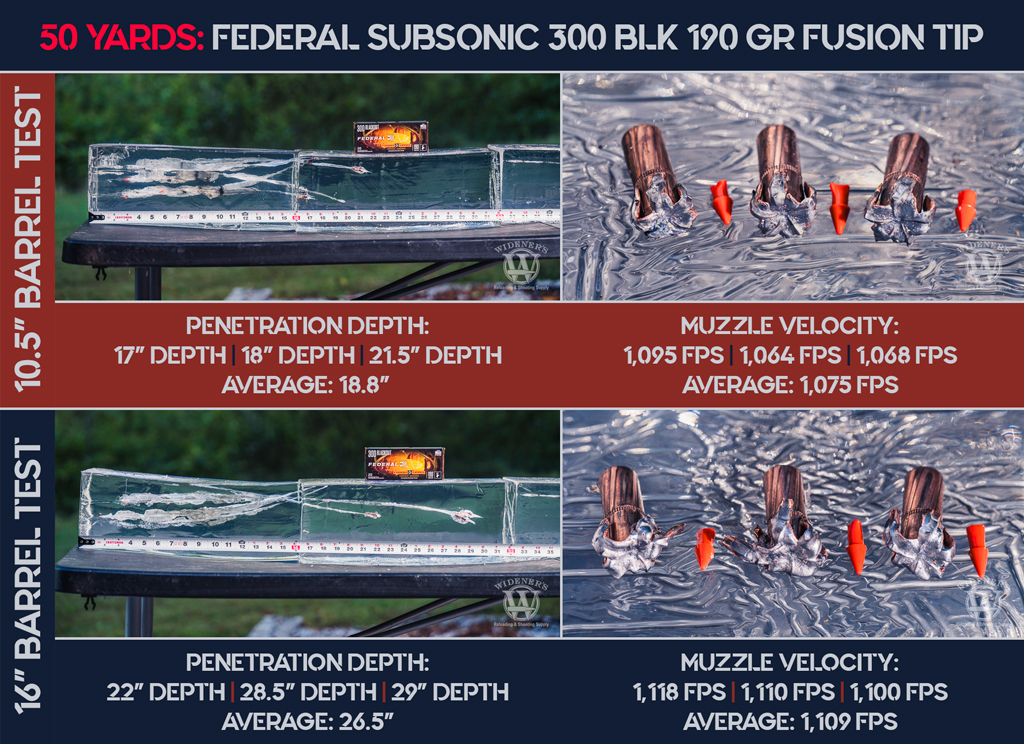
The Fusion poly tip separated more quickly from the 10.5″ barrel than the 16″ barrel after hitting the gel block. However, the petal formations were about the same for both barrel lengths. Each group of three had one shot that formed symmetrical petals, and two that did not. The captured bullets were far enough apart in the gel block that it was clear they did not collide. Wound channels from the 10.5″ barrel had visible diesel effect in them at the midway point. Penetration depth was 7.7″ deeper from the 16″ barrel.
Performance At 100 Yards
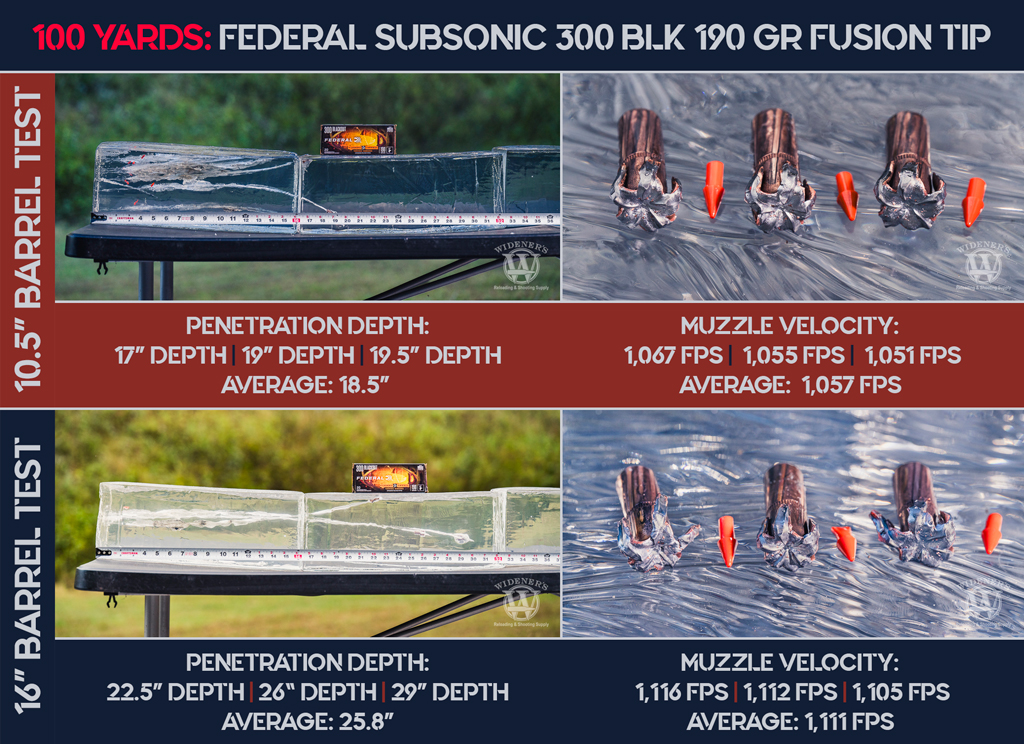
At 100 yards, the Fusion poly tip again separated more quickly in the gel from the 10.5″ barrel, and bullets had a tendency to arc upwards. Petal formations were different. The 10.5″ group had three shots that formed symmetrical petals. The 16″ group had one with symmetrical petals and two that did not. The 16″ barrel’s wound channels extended 3-4″ deeper. Wound channels from the 10.5″ barrel again had visible diesel effect in them at the midway point. Penetration depth was 7.3″ deeper from the 16″ barrel.
Gorilla Ammunition 300 Blackout 205 Grain HP Subsonic (4 Petal)
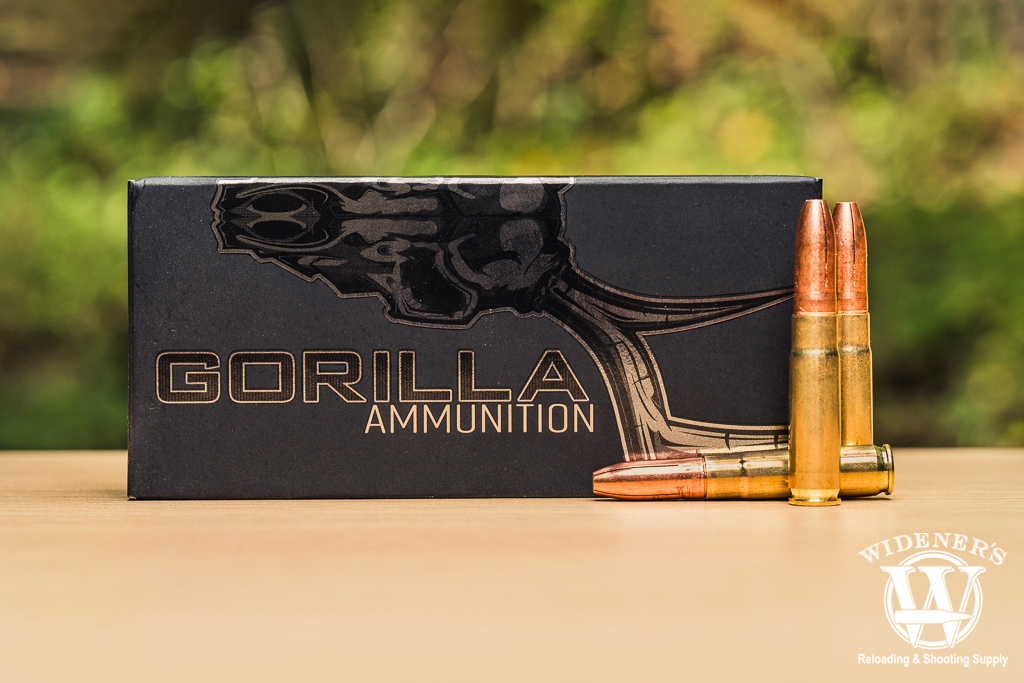
Gorilla Ammunition HP Subsonic features a specialized four-petal hollow-point projectile engineered for hunting & personal defense.
Gorilla Ammunition 300 Blackout 205 Grain HP Subsonic (4 Petal) ammunition is designed for shooters who want more than just quiet performance from their suppressed firearms.
Featuring a heavy 205-grain hollow-point projectile with a specialized four-petal design, this ammunition is engineered to expand at subsonic velocities, creating a larger wound channel than conventional non-expanding bullets.
Its four-petal construction promotes controlled expansion and energy transfer, making it a practical option for short-range hunting and personal defense.
Pros and Cons of Gorilla Ammunition 300 Blackout 205 Grain HP Subsonic (4 Petal)
The best uses for subsonic Gorilla Ammunition HP (4 Petal) are short-range hunting. Its rapidly expanding projectile makes it a candidate for white-tailed deer and feral hogs at shorter distances, subject to verified terminal performance.
Pros: The suppressor-friendly four-petal hollow-point projectile is engineered to expand at lower velocities, unlike many conventional FMJ bullets.
Cons: Some semiautomatic rifles may struggle to cycle subsonic ammunition reliably, particularly without a suppressor. Some semiautomatic rifles may struggle to cycle subsonic ammunition reliably, particularly without a suppressor.
| Caliber | Bullet Type | Bullet Weight | Velocity (Muzzle) | Energy (Muzzle) | 100 Yards (Velocity/Energy) | 200 Yards (Velocity/Energy) | 300 Yards (Velocity/Energy) |
| 300 BLK | HP | 205gr | 1,040 FPS | 492 FT LBS | 1,005 FPS/460 FT LBS | 960 FPS/419 FT LBS | 928 FPS/392 FT LBS |
Federal American Eagle 300 AAC Blackout 150 Grain FMJ - 500 Rounds
$484.85
Shop Now
Sellier & Bellot Subsonic 300 AAC Blackout 200 Grain FMJ – 500 Rounds
$399.85
Shop Now
Hornady Frontier 300 AAC Blackout 125 Grain FMJ – 20 Rounds
$18.25
Shop Now
Hornady Frontier 300 AAC Blackout 125 Grain FMJ – 200 Rounds
$164.85
Shop Now
Sellier & Bellot Subsonic 300 AAC Blackout 200 Grain FMJ – 20 Rounds
$17.85
Shop Now
Magtech First Defense 300 AAC Blackout 123 Grain FMJ – 500 Rounds
Magtech Subsonic 300 AAC Blackout 200 Grain FMJ – 50 Rounds
$44.85
Shop Now
Magtech Subsonic 300 AAC Blackout 200 Grain FMJ – 500 Rounds
Wolf 300 AAC Blackout 145 Grain FMJ Steel Cased – 500 Rounds
$289.85
Shop Now
Federal American Eagle 300 AAC Blackout 150 Grain FMJBT – 20 Rounds
$21.00
Shop Now
American Quality Ammunition 300 AAC Blackout 147 Grain FMJ – 250 Rounds
Hornady Frontier 300 AAC Blackout 208 Grain FMJ – 20 Rounds
$18.85
Shop Now
Sellier & Bellot 300 AAC Blackout 147 Grain FMJ - 20 Rounds
$19.85
Shop Now
Hornady Frontier 300 AAC Blackout 208 Grain FMJ – 200 Rounds
Performance At 50 Yards
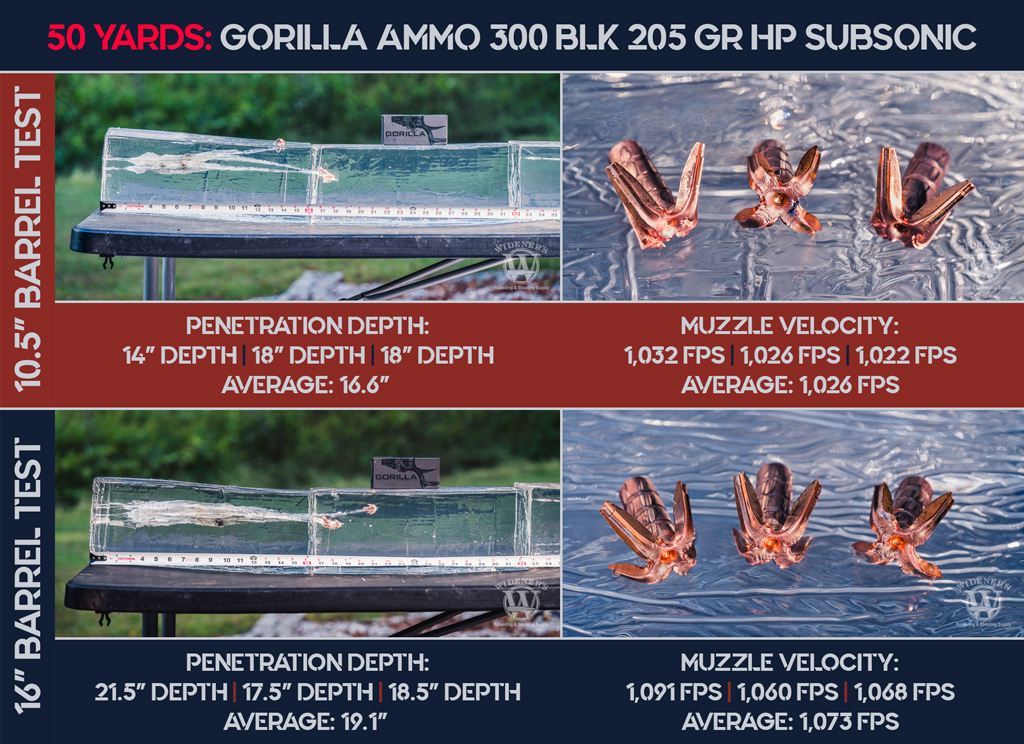
This is one nasty round from either barrel length. The petals began expanding in the gel at 2″ with the 10.5″ barrel and at 2.5″ with the 16″ barrel. The 16″ barrel length gave more consistent penetration results and more symmetrical petals. Bullet paths from the 10.5″ barrel were more erratic, and on two recovered shots, the petals were flat against the bullet. Wound channels were easily 1.5x the width of the bullet and showed signs of cavitation and charring. Penetration depth was 2.5″ deeper from the 16″ barrel.
Performance At 100 Yards
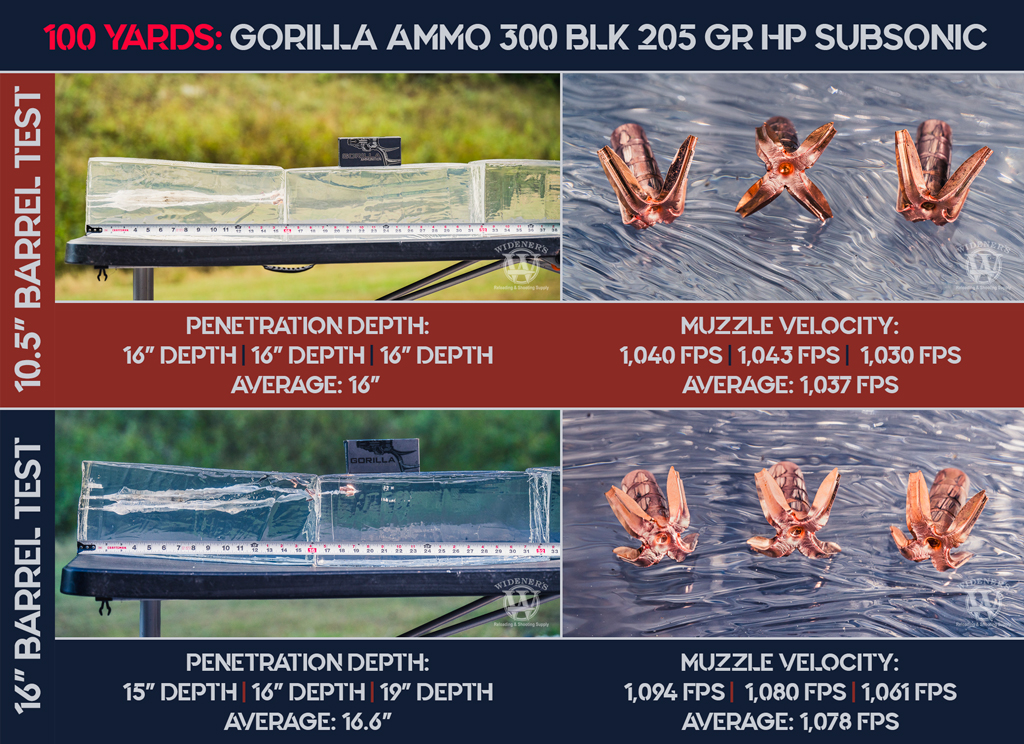
These rounds performed well at 100 yards, keeping tight groupings and wound channels in both barrel lengths. The petals began expanding in the gel at 2″ for both barrels. The 16″ barrel length again gave more consistent penetration results and more symmetrical petals. Wound channels were again 1.5x the width of the bullet and showed signs of cavitation and charring. Penetration depth was 0.6″ deeper from the 16″ barrel.
Hornady BLACK 300 Blackout 208 Grain BTHP
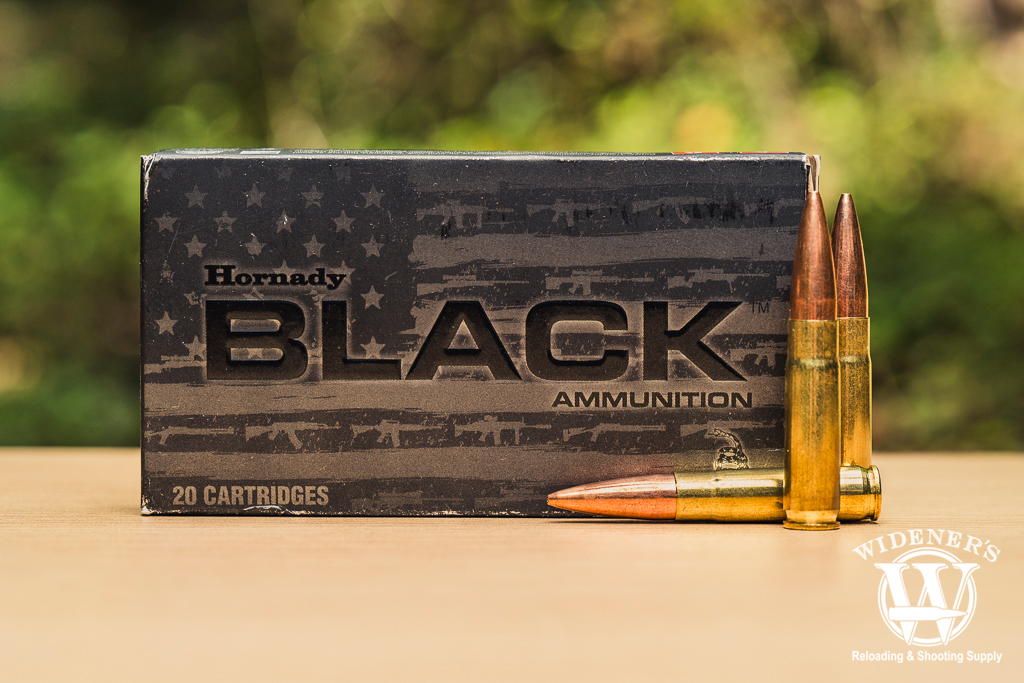
Hornady BLACK BTHP ammunition features a heavy boat-tail hollow-point projectile designed for consistent accuracy, cycling, and reduced noise.
Hornady BLACK 300 Blackout 208 Grain BTHP ammunition combines heavyweight bullet construction with subsonic performance, making it an appealing choice for suppressed shooting and recreational target practice.
Its 208-grain boat-tail hollow-point (BTHP) projectile features an aerodynamic profile designed to promote consistent accuracy and stable flight at lower velocities.
Pros and Cons of Hornady BLACK 300 Blackout 208 Grain BTHP
The best uses for Hornady BLACK 300 Blackout 208 Grain BTHP include suppressed recreational shooting, target practice, and short-range accuracy work.
Pros: Offers reduced noise when paired with a suppressor, making it appealing for recreational shooting.
Cons: Limited range and a projectile that isn’t specifically designed for expansion at subsonic velocities.
| Caliber | Bullet Type | Bullet Weight | Velocity (Muzzle) | Energy (Muzzle) | 100 Yards (Velocity/Energy) | 200 Yards (Velocity/Energy) | 300 Yards (Velocity/Energy) |
| 300 BLK | BTHP | 208gr | 1,020 FPS | 480 FT LBS | 985 FPS/448 FT LBS | 945 FPS/412 FT LBS | 913 FPS/385 FT LBS |
Performance At 50 Yards
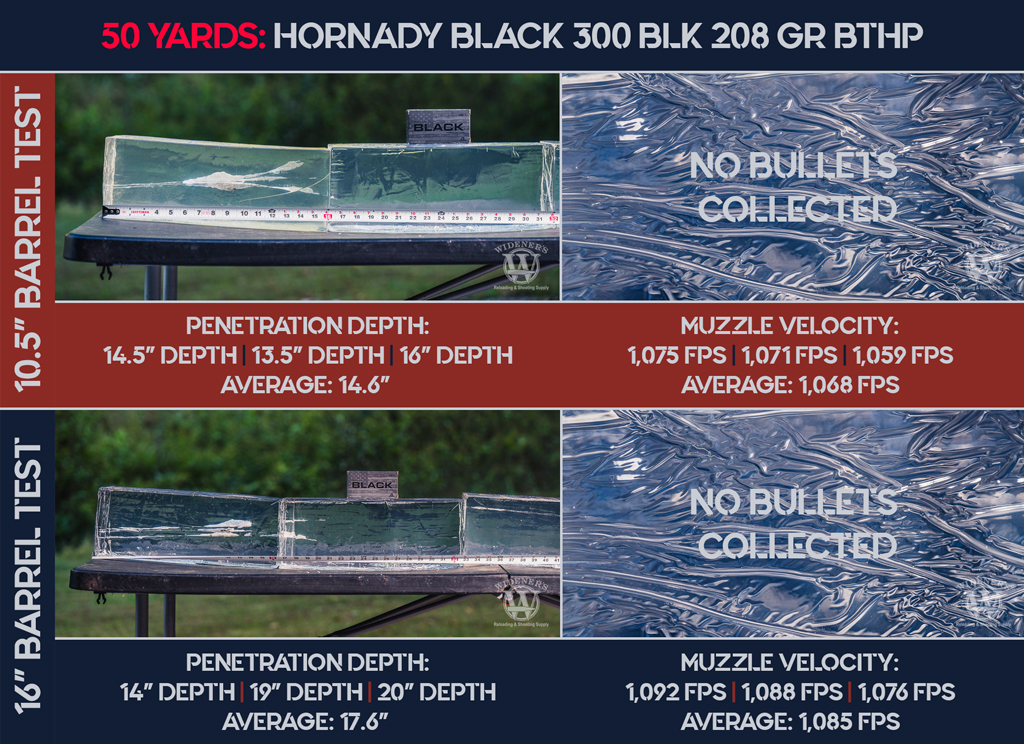
It took us a minute to figure out where these rounds were going. Some exited through the top of the blocks and others through the bottom. Some were even forceful enough to punch through our folding table. We tried setting up additional gel blocks on each side and below the table, but were unable to capture any bullets to review. Based on the channel size and the speeds the bullets traveled through the gel, it’s doubtful they expanded or performed as intended at this close range. Penetration depth was 3″ deeper from the 16″ barrel.
Performance At 100 Yards
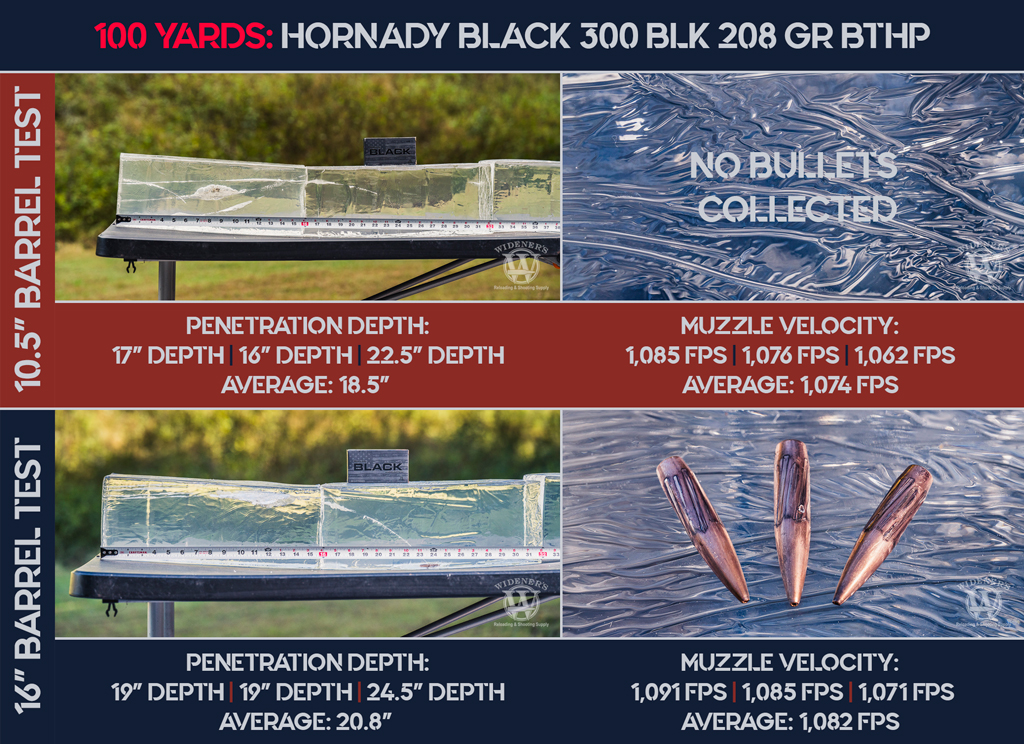
We finally captured a few of these rounds with the 16″ barrel length at 100 yards. They ended up arcing downward and getting trapped between the bottom of the gel block and the tabletop. There was no measurable expansion or signs of deformation to the bullets. They simply dumped their energy and took a nap. However, one round did tumble from the 105″ barrel. Penetration depth was 2.3″ deeper from the 16″ barrel.
Hornady 300 Blackout 190 Grain Sub-X Subsonic
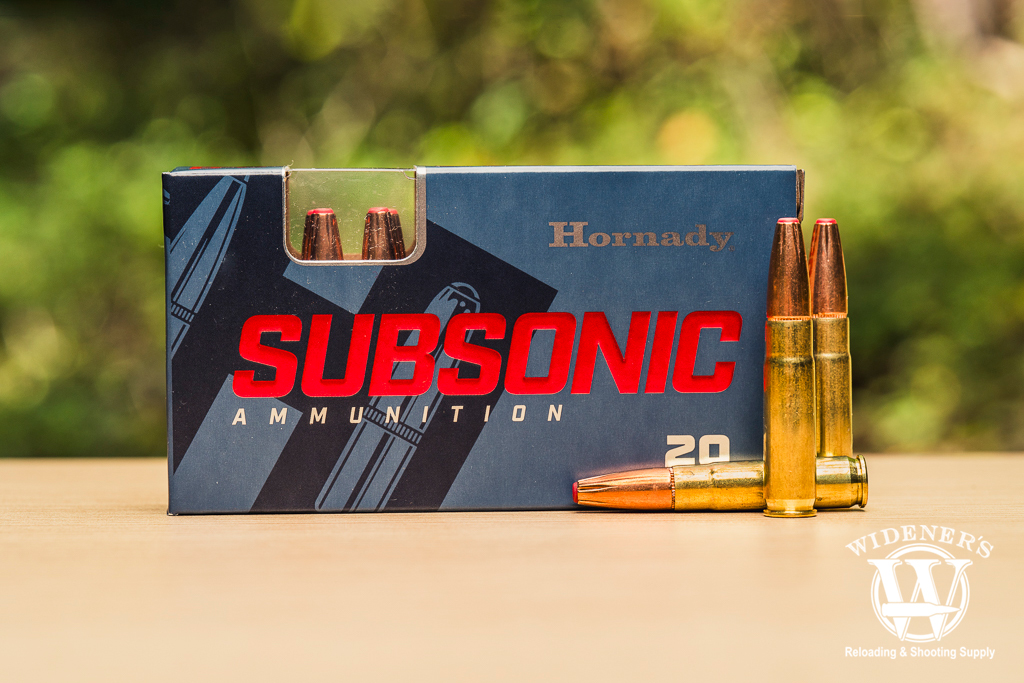
Hornady 300 Blackout Sub-X Subsonic ammo features a heavy, lead-core bullet with a patented Flex Tip insert designed to promote reliable expansion.
The Hornady 300 Blackout 190 Grain Sub-X Subsonic. It’s a mouthful, but this round is worth every syllable. Where the Hornady shines is with the grooves in the jacket.
These grooves, combined with the Flex-Tip insert, mean that you get reliable expansion, fragmentation, and an energy dump that makes these bullets a formidable choice for your personal safety and home defense applications.
Pros and Cons of the Hornady 300 Blackout 190 Grain Sub-X Subsonic
The Hornady Sub-X 300 Blackout is many a firearm owners’ go-to round for home defense. That being said, you’re also going to see many people utilizing this round for medium game animals.
Pros: Reliable expansion at subsonic velocities leads to a super quiet round that still packs a punch but with less worry about overpenetration (particularly within a home).
Cons: While not something that everyone experiences, some shooters have found that the geometry of the tip can be slightly finicky, leading to a misfeed here or there. Because of this, some guns also eat the brass while ejecting.
| Caliber | Bullet Type | Bullet Weight | Velocity (Muzzle) | Energy (Muzzle) | 100 Yards (Velocity/Energy) | 200 Yards (Velocity/Energy) | 300 Yards (Velocity/Energy) |
| 300 BLK | Sub-X | 190gr | 1,050 FPS | 465 FT LBS | 998 FPS/420 FT LBS | 955 FPS/384 FT LBS | 918 FPS/355 FT LBS |
Performance At 50 Yards
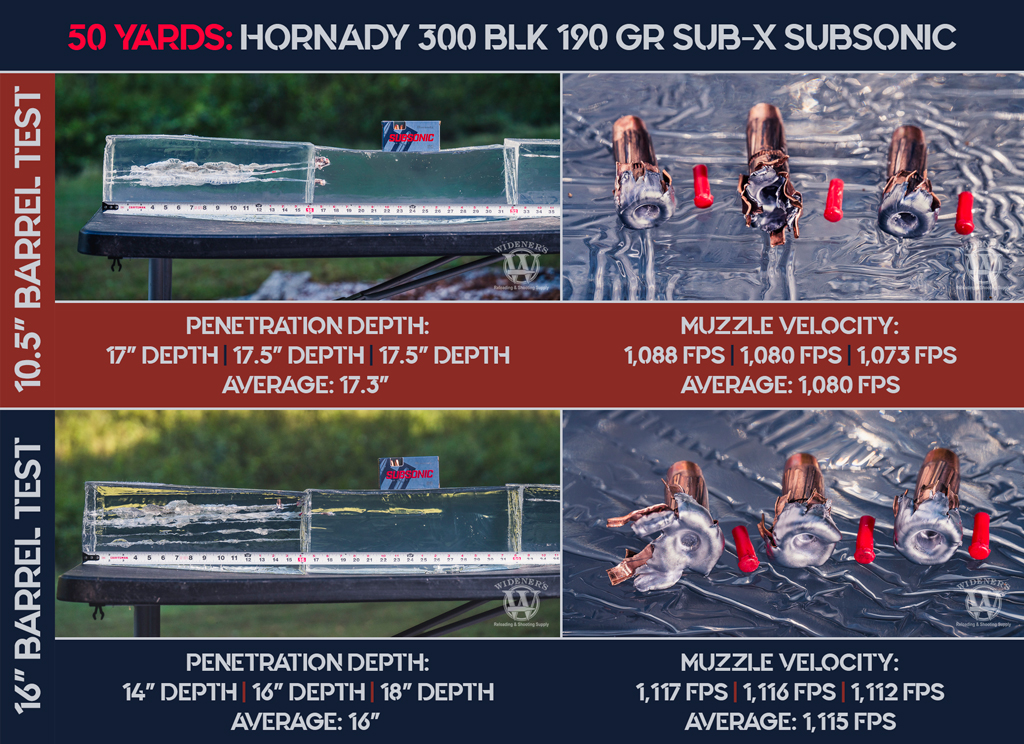
This round provided some interesting results. The poly insert separated much earlier from the 16″ barrel. Expansion began in the gel at 2″ with the 10.5″ barrel and the 16″ barrel. Both barrel lengths gave similar penetration results and produced 2/3 symmetrical petals. The 10.5″ barrel gave us one round that didn’t fully expand, and the 16″ barrel gave us one asymmetrical round. Wound channels appeared to be about 2x the width of the bullet. Penetration depth was 1.3″ deeper from the 10.5″ barrel.
Performance At 100 Yards
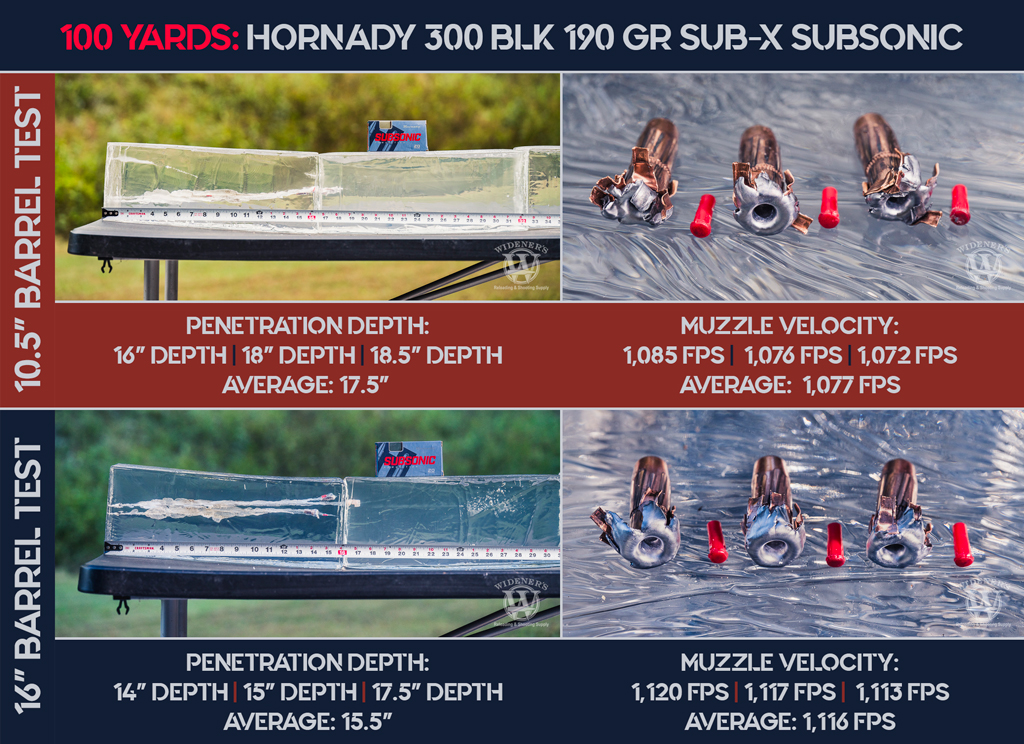
At 100 yards, this round performed somewhat differently. The poly insert traveled with the bullets from the 16″ barrel. That same barrel length produced sonoluminescence as the bullets dumped their energy. Expansion began in the gel at 2.5″ with the 10.5″ barrel and the 16″ barrel. Both barrel lengths gave similar penetration results and again produced 2/3 symmetrical petals. The 10.5″ barrel gave us one round that didn’t fully expand, and the 16″ barrel gave us one asymmetrical round. Wound channels appeared to be about 2x the width of the bullet. Penetration depth was 2″ deeper from the 10.5″ barrel.
Lehigh Defense 300 Blackout 194 Grain HP Subsonic (3 Petal)
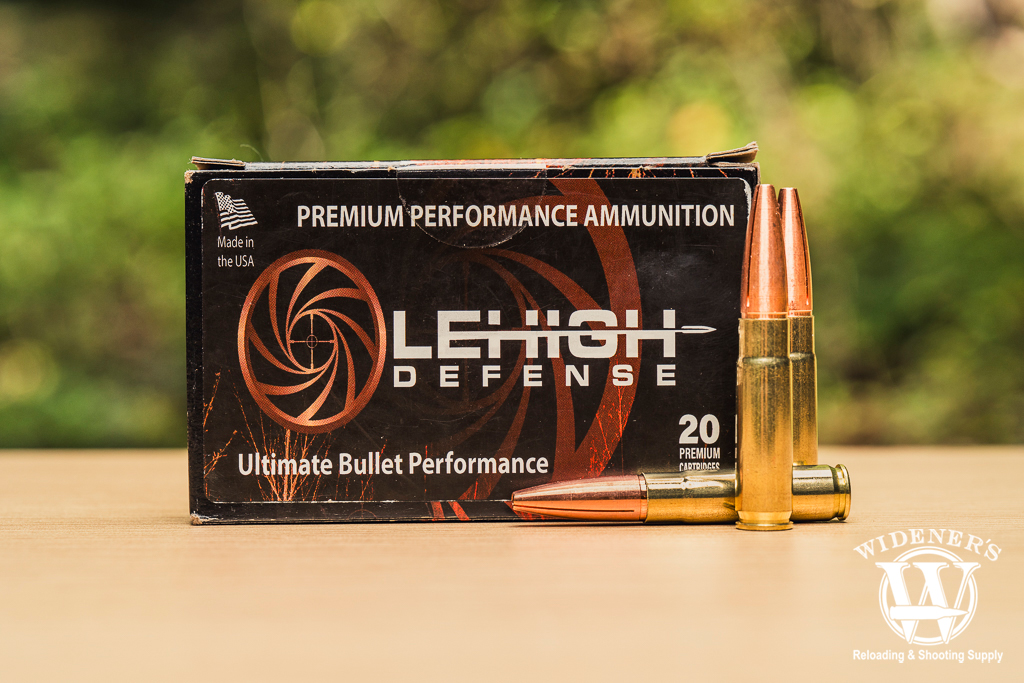
Lehigh Defense 300 BLK Subsonic features a solid-copper hollow-point projectile with an innovative three-petal design engineered for dramatic expansion.
Lehigh Defense’s 194-grain three-petal hollow point offers a specialized alternative to traditional subsonic ammunition. Engineered to deliver impressive terminal performance without sacrificing the noise-reduction benefits of subsonic shooting.
Featuring Lehigh’s Maximum Expansion technology, this round uses a precision-machined, solid-copper hollow-point projectile with three petals designed to expand dramatically upon impact, even at lower velocities.
Pros and Cons of Lehigh Defense 300 Blackout 194 Grain HP Subsonic (3 Petal)
Its heavyweight construction and subsonic velocity make it particularly appealing for suppressed 300 Blackout firearms, especially in short-range hunting and defensive applications.
Pros: Its expanding projectile makes it a potential choice for hunting appropriate game at shorter distances.
Cons: Specialized solid-copper ammunition generally costs considerably more than conventional subsonic FMJ loads.
| Caliber | Bullet Type | Bullet Weight | Velocity (Muzzle) | Energy (Muzzle) | 100 Yards (Velocity/Energy) | 200 Yards (Velocity/Energy) | 300 Yards (Velocity/Energy) |
| 300 BLK | HP | 194gr | 1,050 FPS | 475 FT LBS | 1,007 FPS/437 FT LBS | 971 FPS/406 FT LBS | 939 FPS/380 FT LBS |
Federal American Eagle 300 AAC Blackout 150 Grain FMJ - 500 Rounds
$484.85
Shop Now
Sellier & Bellot Subsonic 300 AAC Blackout 200 Grain FMJ – 500 Rounds
$399.85
Shop Now
Hornady Frontier 300 AAC Blackout 125 Grain FMJ – 20 Rounds
$18.25
Shop Now
Hornady Frontier 300 AAC Blackout 125 Grain FMJ – 200 Rounds
$164.85
Shop Now
Sellier & Bellot Subsonic 300 AAC Blackout 200 Grain FMJ – 20 Rounds
$17.85
Shop Now
Magtech First Defense 300 AAC Blackout 123 Grain FMJ – 500 Rounds
Magtech Subsonic 300 AAC Blackout 200 Grain FMJ – 50 Rounds
$44.85
Shop Now
Magtech Subsonic 300 AAC Blackout 200 Grain FMJ – 500 Rounds
Wolf 300 AAC Blackout 145 Grain FMJ Steel Cased – 500 Rounds
$289.85
Shop Now
Federal American Eagle 300 AAC Blackout 150 Grain FMJBT – 20 Rounds
$21.00
Shop Now
American Quality Ammunition 300 AAC Blackout 147 Grain FMJ – 250 Rounds
Hornady Frontier 300 AAC Blackout 208 Grain FMJ – 20 Rounds
$18.85
Shop Now
Sellier & Bellot 300 AAC Blackout 147 Grain FMJ - 20 Rounds
$19.85
Shop Now
Hornady Frontier 300 AAC Blackout 208 Grain FMJ – 200 Rounds
Performance At 50 Yards
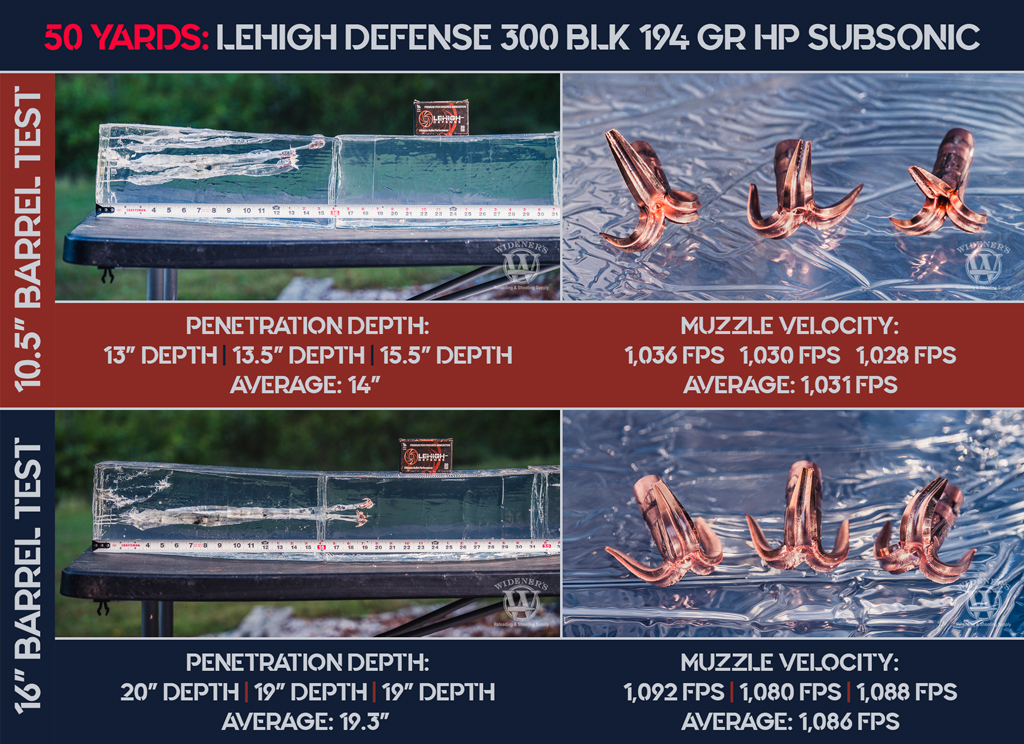
Lehigh’s three-petal design leaves an almost triangular wound channel in the ballistic gel. The petals began expanding in the gel at 1.5″ with the 10.5″ barrel and at 2″ with the 16″ barrel. The 16″ barrel length gave more consistent penetration results and more symmetrical petals. Recovered shots from the 10.5″ barrel had petals that were more asymmetrical, with one petal not fully opening. Wound channels were at least 1.5x the width of the bullet and showed signs of cavitation and charring. Penetration depth was 5.3″ deeper from the 16″ barrel.
Performance At 100 Yards
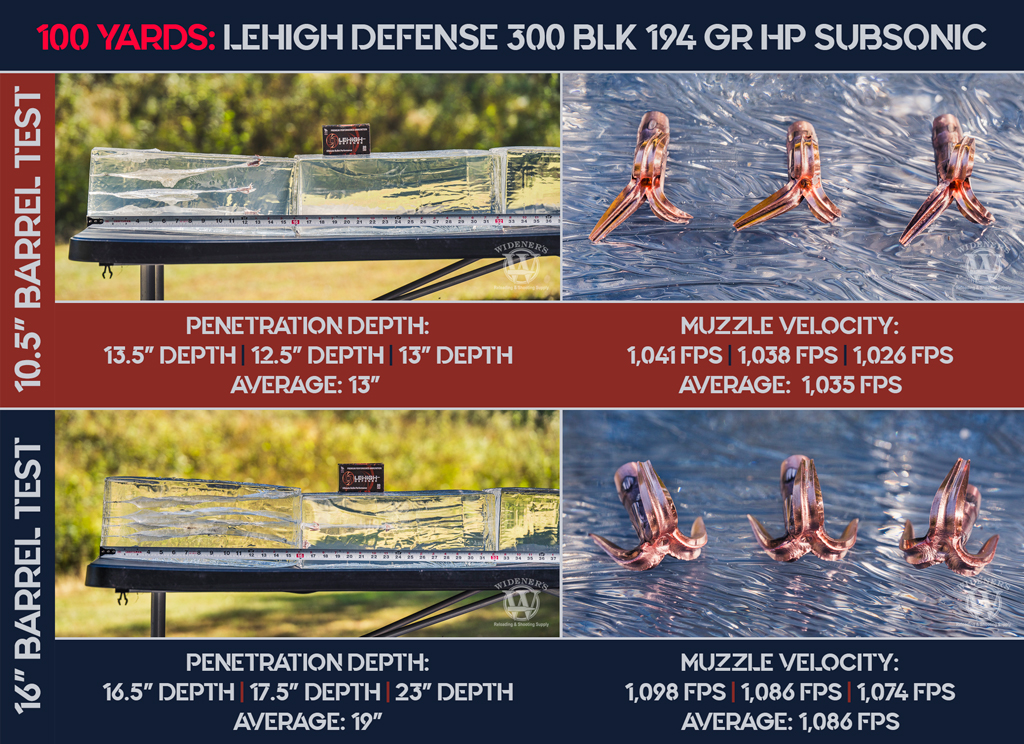
Pushing this round to 100 yards from a 10.5″ barrel asks a lot. That said, performance and accuracy at this distance were not great from that barrel length. The petals began expanding in the gel at 1.5″, and there were signs of tumbling in the wound channels. The 16″ barrel length produced better accuracy and more symmetrical petals. All recovered shots from the 10.5″ barrel had asymmetrical petals. Wound channels were at least 1.5x the width of the bullet. Penetration depth was 6″ deeper from the 16″ barrel.
Winchester Super Suppressed 300 Blackout 200 Grain Subsonic
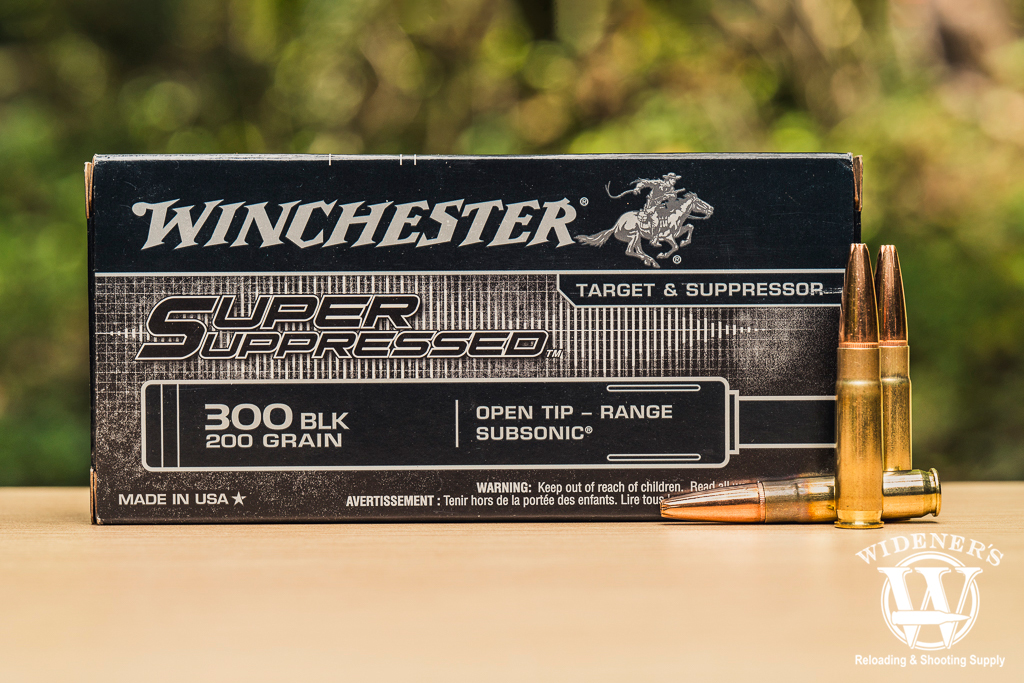
Winchester Super Suppressed features a heavy, open-tip bullet designed for consistent accuracy and reliable performance at subsonic velocities.
Winchester. It’s a name we’ve heard since 1866, and there’s a reason it’s still going strong. When it comes to the Winchester Super Suppressed 300 Blackout, you’ll find a round that’s made to burn clean and shoot quiet.
At a much lower price than the previous two rounds we’ve discussed, the Winchester Super Suppressed 300 BLK is a round that will perform well at the range, giving you the opportunity to hone your optics and platform without breaking the budget.
Pros and Cons of the Winchester Super Suppressed 300 BLK 200 Grain Subsonic
For your Winchester Super Suppressed 300 BLK, your best use is at the range. If you use a suppressor with this round, you’ll find that your ears (and your fellow shooter’s ears at the range) will thank you.
Pros: A reliable target round that shoots quietly. Not only that, but you can get a good day of practice in at an affordable price.
Cons: Some shooters have said that this round produces a sandy substance in the bolt and receiver. It’s something to keep in mind; however, it’s not a widely reported problem.
| Caliber | Bullet Type | Bullet Weight | Velocity (Muzzle) | Energy (Muzzle) | 100 Yards (Velocity/Energy) | 200 Yards (Velocity/Energy) | 300 Yards (Velocity/Energy) |
| 300 BLK | OTM | 200gr | 1060 FPS | 499 FT LBS | 1,006 FPS/450 FT LBS | 962 FPS/411 FT LBS | 910 FPS/368 FT LBS |

Winchester Super Suppressed 300 AAC Blackout 200 Grain Open Tip – 20 Rounds
$17.85
Shop Now

Winchester Super Suppressed 300 AAC Blackout 200 Grain Open Tip – 200 Rounds

Winchester 300 AAC Blackout New Unprimed Brass Casings - 100 Casings
$49.85
Shop Now

Winchester Deer Season XP 300 AAC Blackout 150 Grain Polymer Tipped - 20 Rounds
$25.85
Shop Now

Winchester Super Suppressed 300 AAC Blackout 200 Grain Open Tip – 125 Rounds
$109.85
Shop Now
Performance At 50 Yards
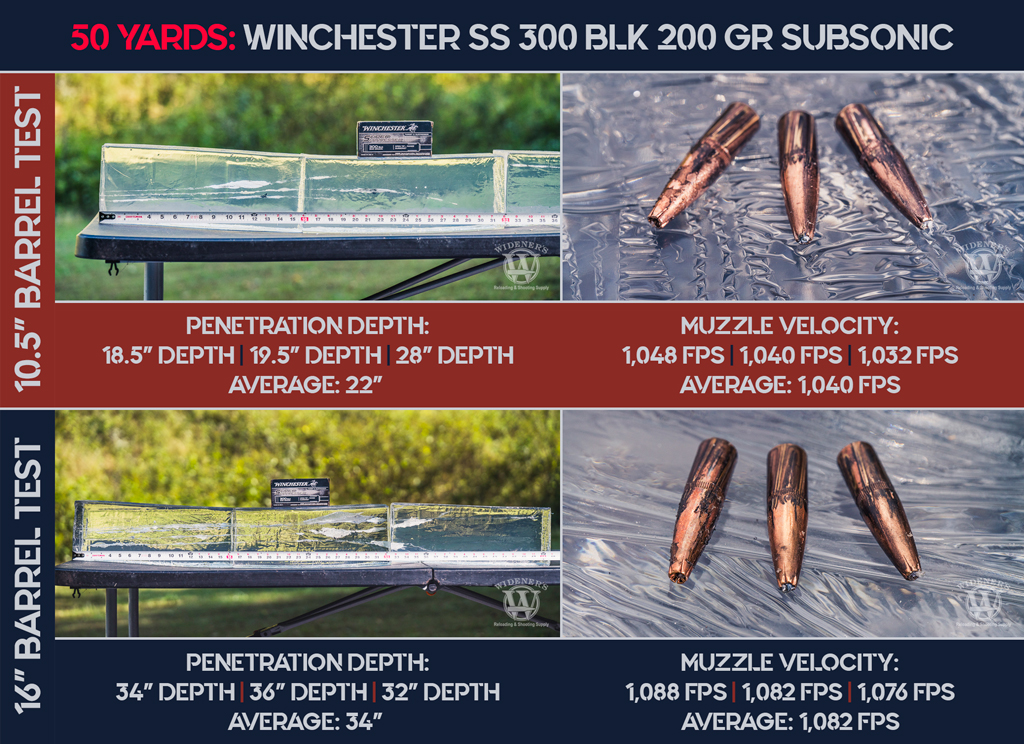
These rounds exited the gel blocks at a hard left at various penetration distances. Once we figured out where they were going, we set up additional gel blocks to capture them. Upon closer inspection, there was little to no tip expansion. This is typical and expected with OTM-style bullets. They also showed signs of minor deformation (5-10 degree flexure) and diesel effect (compression ignition), leaving blackened channels in their wake. Penetration depth was 12″ deeper from the 16″ barrel.
Performance At 100 Yards
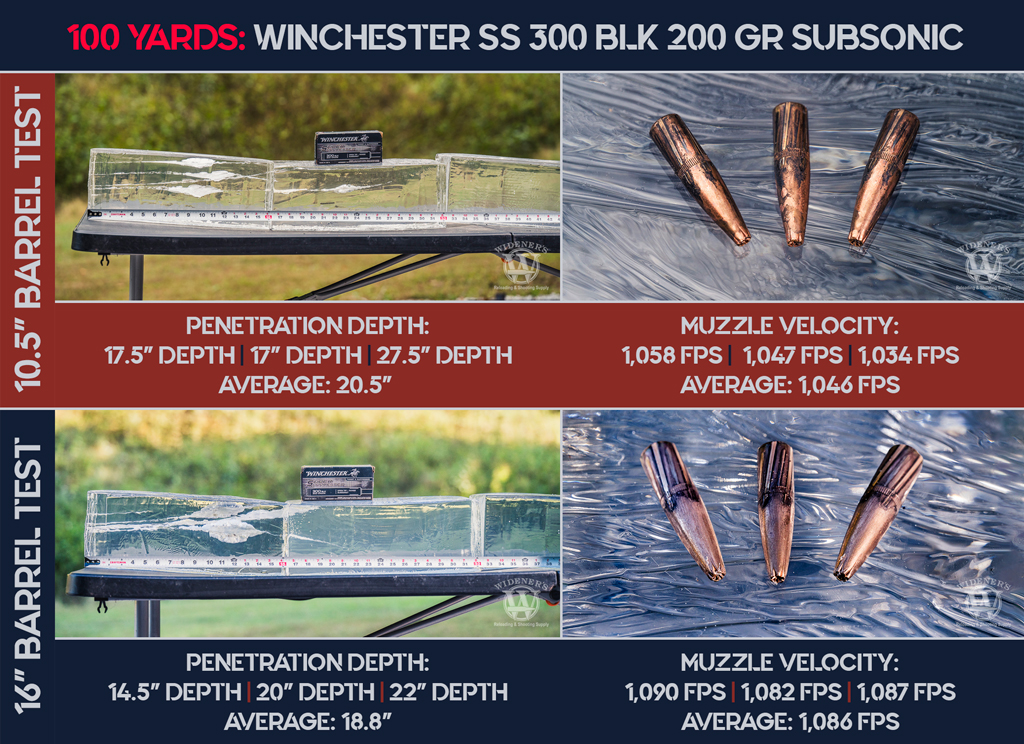
At 100 yards, these rounds performed a little more consistently. Again, there was little to no tip expansion. Deformations seemed to be more pronounced (10-15 degree flexure) and diesel effect (compression ignition), and wound channels were much cleaner. Penetration depth was 1.7″ deeper from the 10.5″ barrel because one round exited early from the top. However, had we captured an additional round from the 16″ barrel, we’re confident those numbers would be reversed.
Best Uses: Subsonic 300 Blackout Ammo
While inspecting these .300 Blackout rounds, it’s important to put them in their proper category. Choosing the wrong ammo is like wearing Crocs on a hunting trip. You might get away with it, but you’re setting yourself up for trouble. Subsonic .300 Blackout ammo is an excellent choice for shooters who prioritize noise reduction, manageable recoil, and performance at shorter distances.
- Suppressed Shooting
- Short-Range Shooting
- Training & Target Practice
- Home Defense
- Hog Hunting
- Short-Range Hunting
- Pest & Predator Control
One of the cartridge’s biggest advantages is compatibility with suppressors. This makes subsonic .300 Blackout a popular choice for target shooting and training in areas where noise reduction is a must. Winchester Super Suppressed 300 BLK and Hornady BLACK 208 Grain BTHP meet that need well.
.300 Blackout makes sense for home defense as well. It’s a popular choice for close-quarters applications due to its heavier grain weight and slower velocities. Hornady Sub-X 300 BLK and Federal Fusion-Tip options both work well in this category, as they are engineered to expand at lower velocities.
Gorilla Ammunition Subsonic and Lehigh Defense Subsonic don’t pull any punches in the hunting category. They work well for predators and game alike, expanding in soft tissue with devastating wound channels. These expanding bullets hit hogs hard and keep them down without disturbing the neighbors.
.300 Blackout History
The 300 Blackout remains a kind of unicorn when it comes to your typical rounds. Perhaps this is why it has a tendency to capture the imagination. The .300 Blackout was developed around 2009-2010 by Advanced Armament Corporation (AAC) and Remington Defense.
While there’s all sorts of lore out there about the birth of the 300 Blackout, the general idea was to create a round that provided more versatility and more punch (particularly when suppressed) than the standard 556 NATO. When you get down to it, a 300 Blackout cartridge is a 30 caliber bullet pushed into a 223/556 casing.
Of course, the 556 and 300 Blackout are by no means cross-compatible, but their similarities are one of the reasons the .300 Blackout is so admired. Even though the rounds have major differences in terms of performance, the casing between 556 and 300 Blackout is so similar that, with slight modifications, those who load or reload ammunition will use spent 556 brass for 300 Blackout bullets.
Finally, 300 Blackout was built specifically with the AR platform in mind. Those who are already familiar with an AR will find that grabbing a 300 Blackout (or updating your current platform to handle 300 Blackout) feels natural.
Subsonic 300 Blackout Compared
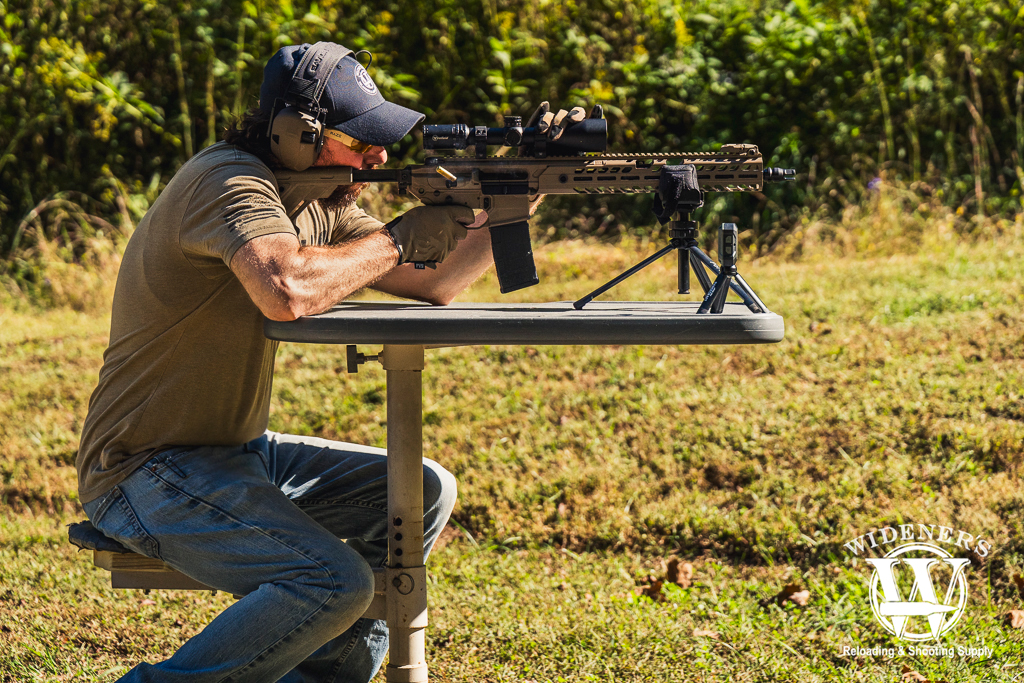
If your goal is to shoot suppressed, 300 Blackout is an excellent choice. Just be sure to use subsonic ammunition to get the most out of your setup.
We’ve tested six different subsonic 300 BLK cartridges, looking at them from various angles. Each has its own strengths and weaknesses. Some stayed in the subsonic range as advertised, while others were much more dependent on barrel length. For range work, the Winchester Super Suppressed 300 BLK will get you where you need to go. Hornady BLACK 208 Grain BTHP provides a similar experience.
For home defense, both the Hornady Sub-X 300 BLK and the Federal Fusion-Tip will do. However, keeping either round subsonic may be a challenge. All else being equal, Hornady probably has the slight edge for home defense, while Federal is also well suited for hunting.
Speaking of which, the Lehigh Defense HP Subsonic (3 Petal) and the Gorilla Ammunition HP Subsonic (4 Petal) produced devastating wound channels. They also produced very consistent penetration depth results. If you’re running them in an SBR, be aware that the petals may deform on impact. Either would make a great subsonic hunting round, in our opinion.
Of course, these opinions aren’t the only opinions. As with anything firearm-related, you’ve got to open the safe, get to the range, and form some ideas of your own.
You may also like
