


I’ve worn a badge, worked around firearms for most of my adult life, and spent time in emergency departments where seconds can change the outcome for a patient. In both law enforcement and emergency nursing, I’ve learned one lesson that applies to almost every serious bleeding emergency: I don’t want to be looking for the right equipment after someone starts losing blood.
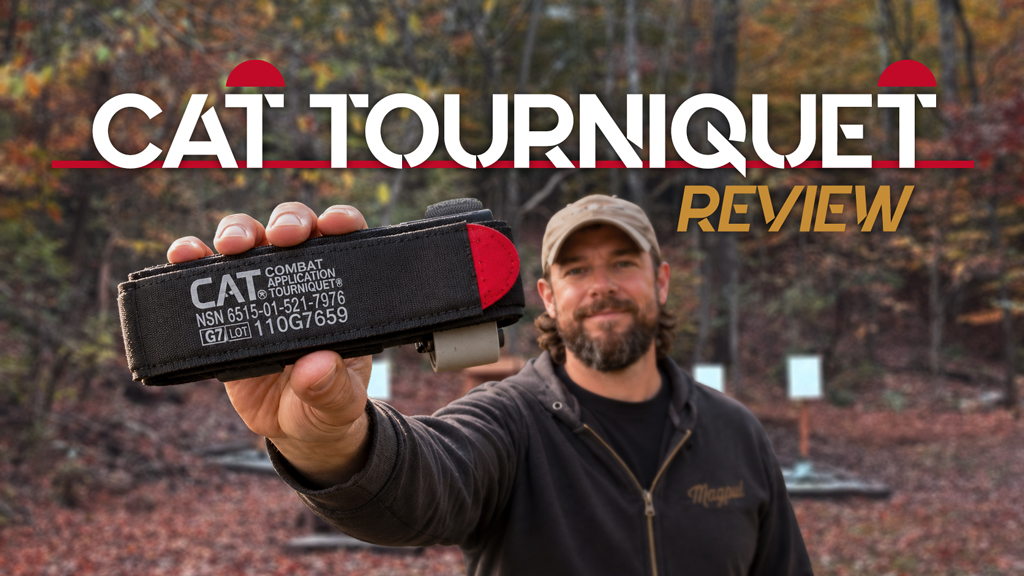
That’s why I consider a quality tourniquet one of the most important pieces of emergency equipment you can carry. The Combat Application Tourniquet, better known as the CAT or C-A-T, has become one of the most recognizable tourniquets available. Police officers, firefighters, EMS providers, military personnel, and civilians carry the device, manufactured by North American Rescue.
I’ve also seen plenty of confusion about when to use one, how tight it should be, and which tourniquet someone should actually buy. Here’s what you need to know.
What Is a CAT Tourniquet?
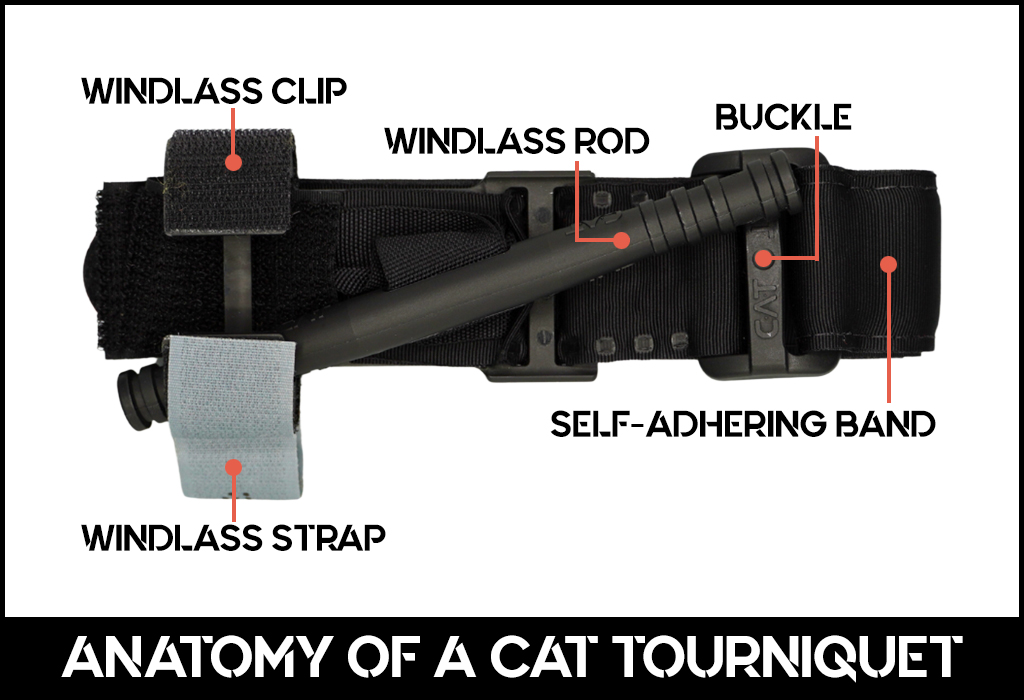
The Combat Application Tourniquet is a mechanical device to stop life-threatening bleeding from an arm or leg. The CAT Gen 7 is the latest model. It uses a strap, buckle, windlass rod, and stabilization plate to create enough circumferential pressure to stop arterial blood flow.
A key feature of the CAT is that it can be applied with one hand, which is essential when self-applying the tourniquet if one arm is wounded. The CAT is best known for military use. However, it’s a valuable tool for law enforcement, first responders, and civilian trauma care.
The American College of Surgeons’ Stop the Bleed program teaches tourniquet use as a primary method for controlling life-threatening bleeding.
What Is a CAT Tourniquet Used For?
I reach for a tourniquet when someone has severe, life-threatening bleeding from an arm or leg and I need to stop blood loss quickly. The bleeding can stem from a gunshot, a stab wound, an amputation, a penetrating injury, or any other damage that produces uncontrolled extremity hemorrhage. In those situations, direct pressure may not control bleeding adequately, especially when I need to do other tasks and free up my hands.
You should not use a CAT for minor cuts or ordinary bleeding. You can’t use it on the neck, chest, or abdomen. It is designed for use on limbs only.
How Does a CAT Tourniquet Work?
The Combat Application Tourniquet works by tightening a band around the injured extremity until the device compresses the arteries and stops blood flow. The windlass provides the mechanical advantage that lets you tighten the tourniquet much more than simply pulling the strap.
When applying the tourniquet, pull the strap as tight as you can. Then, twist the rod until bleeding stops. Secure the rod in the built-in clip and use the retention strap to keep everything in place.
The important word is tight. The tourniquet needs to be uncomfortably tight. In a tactical medical course I attended, which followed DHS curriculum, we were instructed to apply the tourniquet to ourselves and our training partners during various drills. These drills familiarized us with CAT tourniquets and showed how tight they need to be.
If bleeding continues after you tighten the tourniquet properly, apply another tourniquet above the first. Apply tourniquets between the wound and the heart. For instance, if the wound is on someone’s biceps, apply it above the wound, closer to the armpit. The tourniquet won’t work if it is on a bony joint, such as a knee or elbow.
How to Apply a CAT Tourniquet
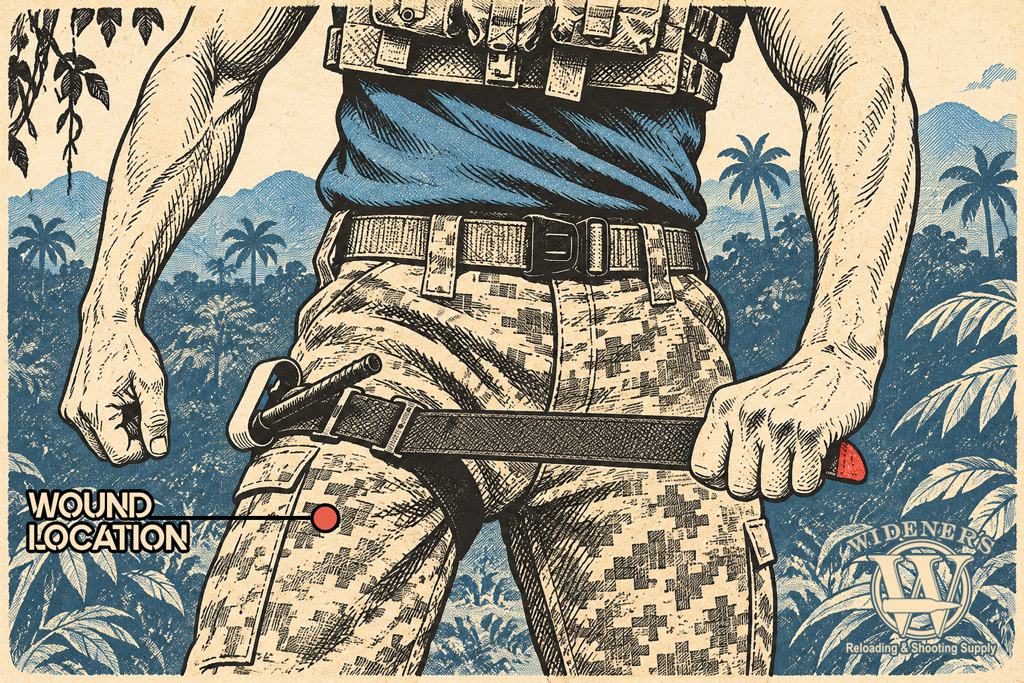
Application: Place the CAT at least 2-3 inches above the wound, directly against the skin, tighten the strap, and twist the windlass.
First, identify the source of life-threatening bleeding and place the CAT at least 2-3 inches above the wound, directly against the skin when circumstances allow. Never place it over a joint, such as a knee or elbow.
If you can’t quickly identify where the bleeding is on the limb, follow the high-and-tight rule. That means high up on the biceps or shoulder, but not on the AC joint, or high into the thigh or groin for a leg wound, but not on the hip bone.
Next, pull the CAT strap as tight as possible and secure it. Remove as much slack as you can before you touch the windlass. Then, twist the windlass until the bleeding stops. Secure the windlass and record the application.
If the bleeding continues, tighten the existing tourniquet if possible. If you have one, apply a second tourniquet. If possible, apply direct pressure to the bleeding site.
How Long Should a CAT Stay On?
If you are a bystander waiting for EMS, do not loosen or remove the tourniquet because you think it has been on too long. Leave it in place and tell arriving medical personnel when you applied it.
Do not put on a tourniquet and start a countdown to when you should take it off. Apply it, control the hemorrhage, and get the patient to a place where they can receive medical care.
CAT vs. SOF-T vs. SWAT-T
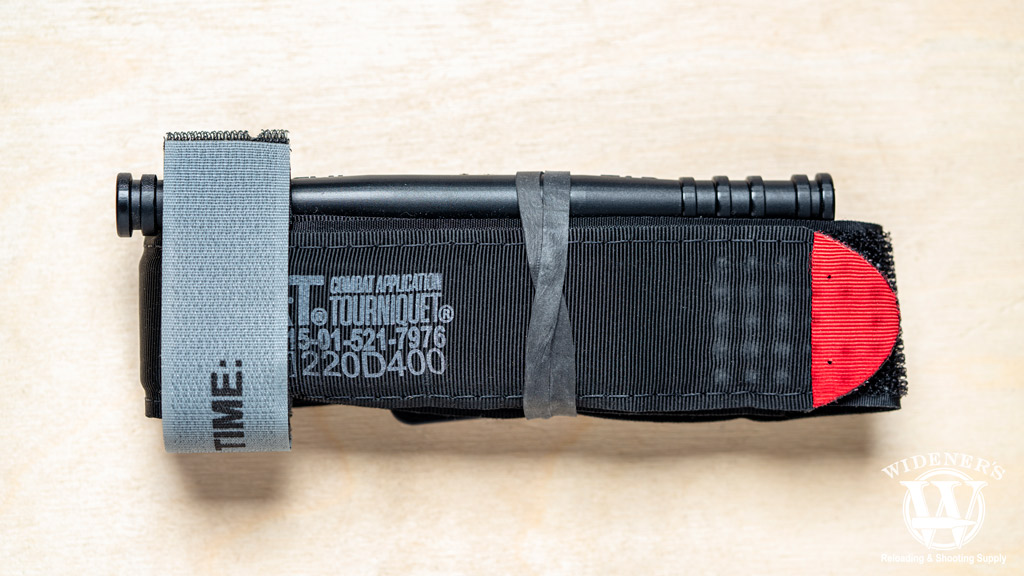
What is the Combat Application Tourniquet? Better known as the CAT or C-A-T, this first-aid item can potentially save a life.
The CAT is not the only quality tourniquet available. The Special Operations Forces Tactical Tourniquet (SOF-T or SOFT-T) also uses a windlass design. Like the CAT, it provides mechanical compression and can control severe extremity bleeding. The current SOF Tourniquet supports one-handed application and features an aircraft-grade aluminum windlass.
The Stretch, Wrap, and Tuck Tourniquet (SWAT-T) is what I was originally issued when I joined the police department. My agency favored the SWAT-T because it was compact, easy to stow in our vests, and cost-effective.
The SWAT-T reminds me of a bicycle tire inner tube. The elastic band is designed to be stretched, wrapped, and tucked around the limb, above the bleed. You can also use the SWAT-T as a pressure dressing or elastic wrap, which makes it more versatile in a trauma kit. One key benefit of the SWAT-T is that it has no minimum circumference, so you can use it on young pediatric patients with small limbs.
The major downside to the SWAT-T is that it’s extremely difficult to apply with one hand. Additionally, it gets very slippery when it gets bloody.
I like the CAT and SOF-T because I can apply them quickly, including with just one hand. Both tourniquets are great options. While the SWAT-T has its place in a trauma kit, I wouldn’t make it the only tourniquet I carry.
CAT Tourniquet Pros & Cons
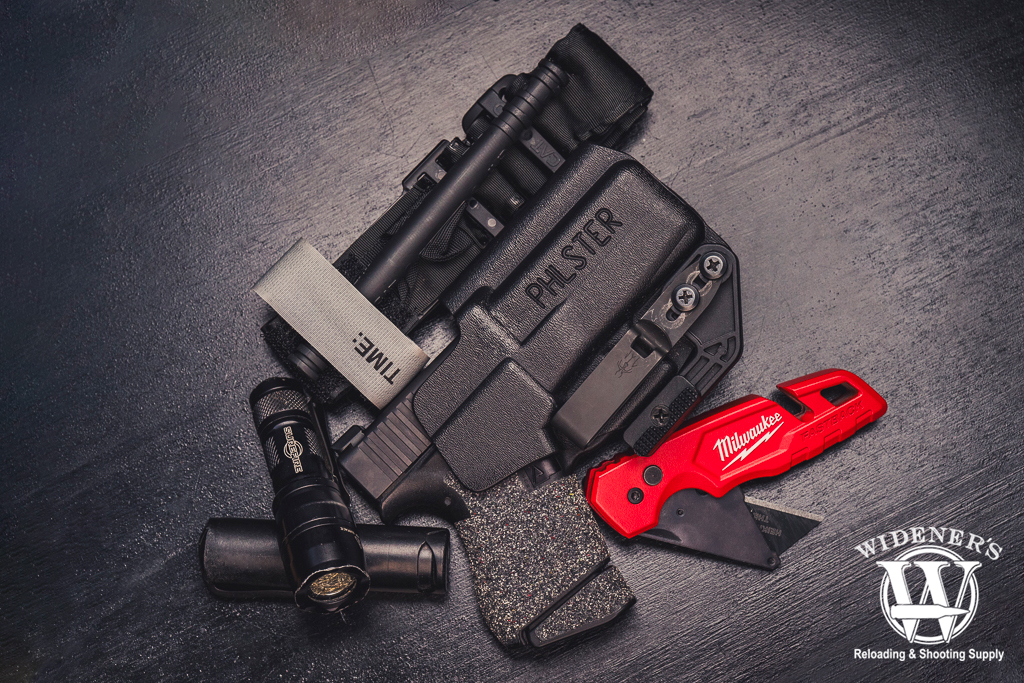
EDC: Consider adding a Combat Application Tourniquet to your everyday carry if you conceal carry a gun.
The CAT offers several perks, including:
- Rapid application
- One-handed use
- Easy to pack
- Long history of successful use in trauma care
The biggest disadvantage involves training. You need to practice with it to become proficient. However, a tourniquet, including the CAT, is relatively simple to use. You don’t need to devote hundreds of hours to become proficient. Spend a few hours practicing and familiarizing yourself with the components.
Some critics have concerns about the plastic windlass. While I shared these concerns with earlier generations, the most recent CAT (Gen 7) has a more robust windlass. It is still plastic. The SOF-T features an aircraft-grade aluminum windlass, which is exceptionally durable.
I also worry about counterfeit tourniquets. If I buy a CAT or SOF-T, I buy it from the manufacturer or an authorized distributor. Knockoffs may not hold up when someone’s life depends on it, so buy the real thing.
Should You Carry One & How?
I think more people should carry a quality tourniquet. I do not say that because everyone should walk around expecting to suffer a traumatic injury or encounter someone who is bleeding out. I say it because a tourniquet takes up very little space and can save a life.
I keep one in my vehicle and carry it where I can reach it quickly if I am doing any outdoor adventuring like hiking or camping. If you carry one, make sure it’s accessible and know how to use it. The Stop the Bleed course is a great option for most people. And remember, a tourniquet represents only one part of hemorrhage control. You need to recognize dangerous bleeding, call for help, and do what you can to control the bleeding.
My Recommendations: CAT or SOF-T
If you are going to buy a tourniquet, I strongly recommend the CAT or SOF-T. I am slightly partial to the CAT because I’ve used it in the field and seen it used up close. However, the SOF-T is also a great tool.
If you want to build a trauma kit that includes more than just a tourniquet, I also recommend a SWAT-T and Celox hemostatic gauze. Keeping a few basic items readily available could save a life, and it might be your own or someone you love.
You may also like
