


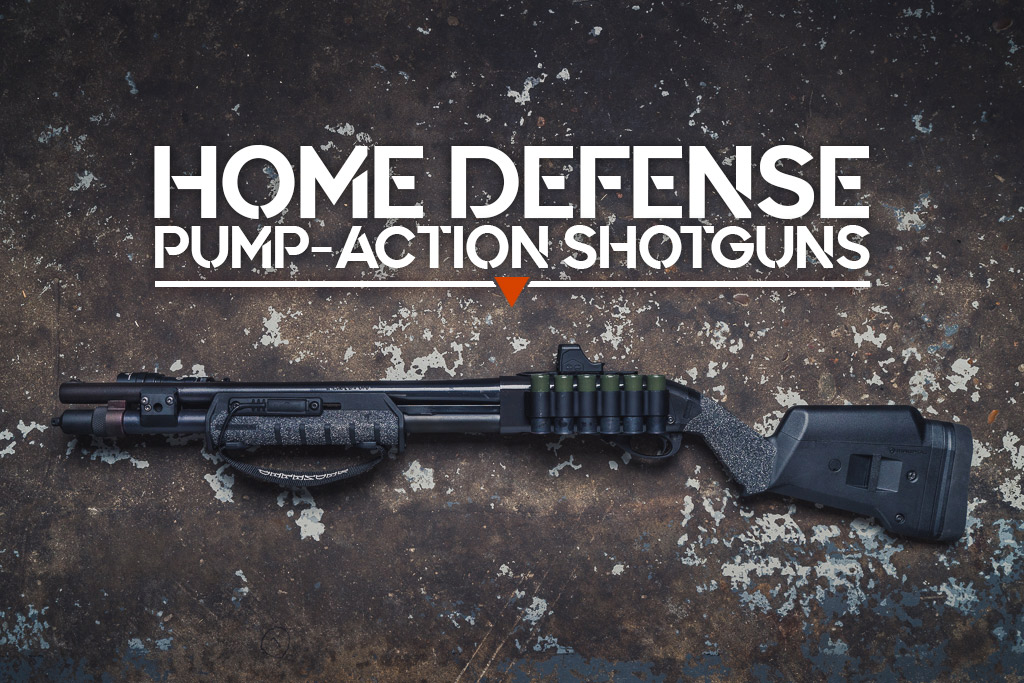
Pump-action shotguns have long held a reputation as one of the most practical and effective tools for home defense. From law enforcement use to civilian ownership, their blend of reliability, simplicity, and raw stopping power makes them a compelling option.
But like any defensive firearm, they come with tradeoffs that you should carefully consider before making a decision. This roundup explores why pump-action shotguns remain popular, where they fall short, and highlights several proven models—including the legendary Remington 870.
Home Defense: Why Pump-Action Shotguns Work
At their core, pump-action shotguns are valued for one reason: reliability. Unlike semi-automatic firearms that depend on ammunition power to cycle, pump guns are manually operated. That means they can reliably run a wide range of loads, from light target shells to heavy defensive buckshot, without worrying about cycling issues.
This mechanical simplicity also translates into durability. Many pump guns will function after decades of use with minimal maintenance, which is why designs like the Remington 870 and Mossberg 500 have been in continuous production for generations.
Another major advantage is close-range effectiveness. In a home-defense scenario—typically confined spaces and short distances—a shotgun loaded with buckshot delivers significant stopping power. While many overestimate the spread, it still offers a margin of forgiveness compared to a single projectile fired under stress.
Pump shotguns are also generally affordable, especially compared to semi-auto defensive shotguns or rifles.
Finally, there’s an oft-discussed psychological factor: the unmistakable sound of racking a pump. While not something to tactically rely on, it still has a reputation for deterrence.
Potential Drawbacks
Despite their strengths, pump-action shotguns aren’t perfect. The biggest issue is their dependence on the user. Because the operator cycles the action manually, any error, especially short-stroking, can cause malfunctions.
There’s also the rate of fire. Pump shotguns are inherently slower than semi-autos, which can matter in multi-threat scenarios.
Recoil is another factor. Without a gas system to absorb energy, pump guns tend to kick harder, which can slow follow-up shots and intimidate newer shooters.
Size and maneuverability can also be concerns. Shotguns are longer than handguns and many carbines, making them harder to handle in tight indoor environments.
Finally, the classic “rack” sound can give away your position—something to keep in mind tactically.
The Top 5 Pump-Action Home Defense Shotguns
Remington 870
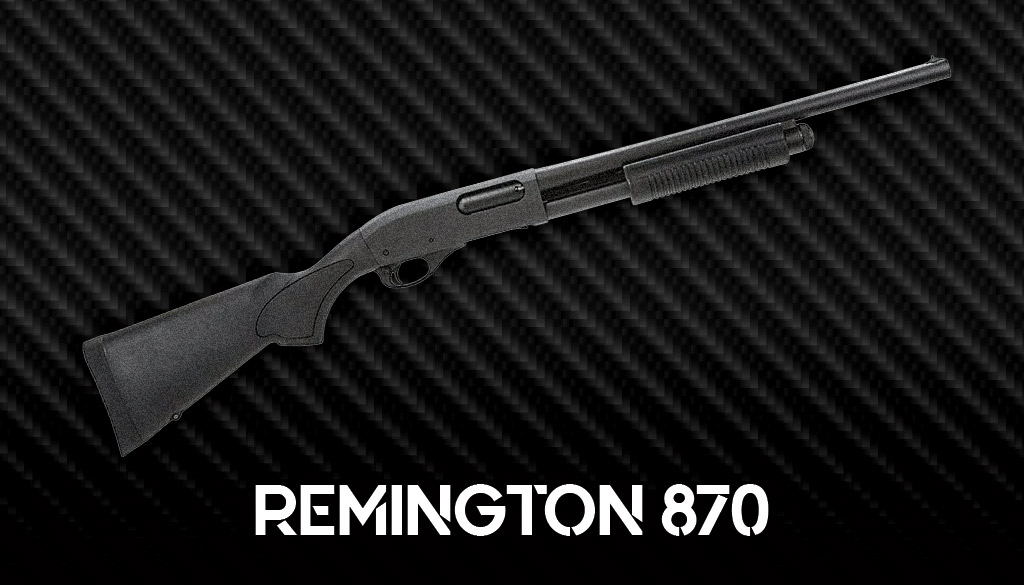
Built for rugged reliability and trusted for generations. The Remington 870 gets the job done every time.
MSRP: $450–$900, based on variants
The Remington 870 is arguably the gold standard of pump-action shotguns. Introduced in 1950, it has seen widespread use across military, law enforcement, and civilian markets.
Its steel receiver and rugged construction give it exceptional durability, while one of the largest aftermarket ecosystems in the firearms world makes it endlessly customizable. Defensive variants typically feature 18.5-inch barrels and 4+1 or 6+1 capacity.
Best for: Shooters who want a proven, duty-grade platform with unmatched aftermarket support.
Mossberg 500 / 590 Series
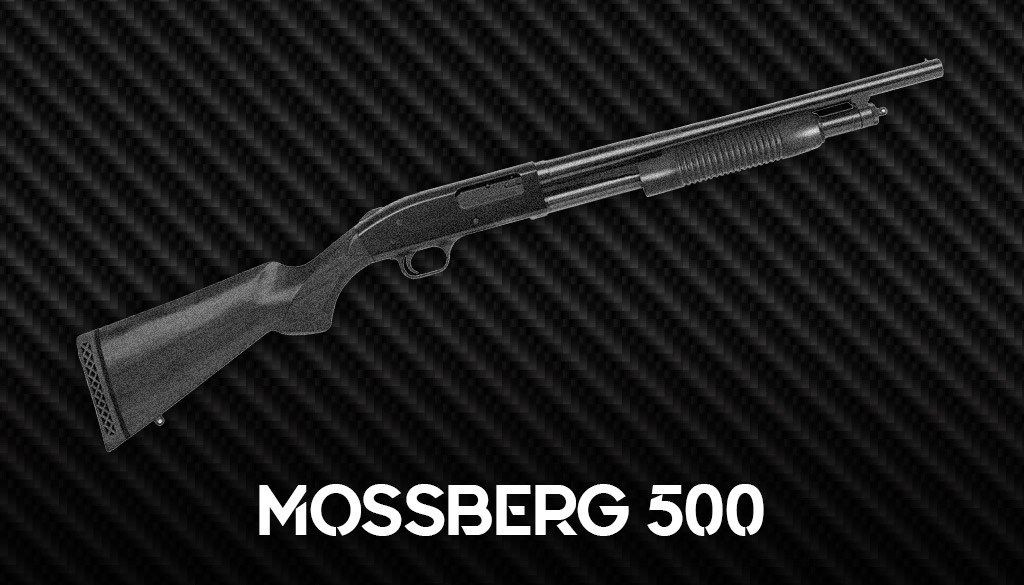
Proven pump-action performance, the Mossberg 500 is ready when it matters most.
MSRP: $400–$700 based on model number
In many ways, the Mossberg 500 series is the Remington 870’s closest competitor, and in a few ways, more user-friendly. Its ambidextrous tang safety stands out as one such shooter-friendly feature, especially for left-handed shooters. Mossberg also incorporates dual extractors and an anti-jam elevator for added reliability.
The 590 and 590A1 variants add heavier-duty components and higher capacities. These variants are so well respected that the US military has even adopted them. You can often find surplus options available online.
Best for: Users who value ergonomics and out-of-the-box defensive features.
Winchester SXP Defender
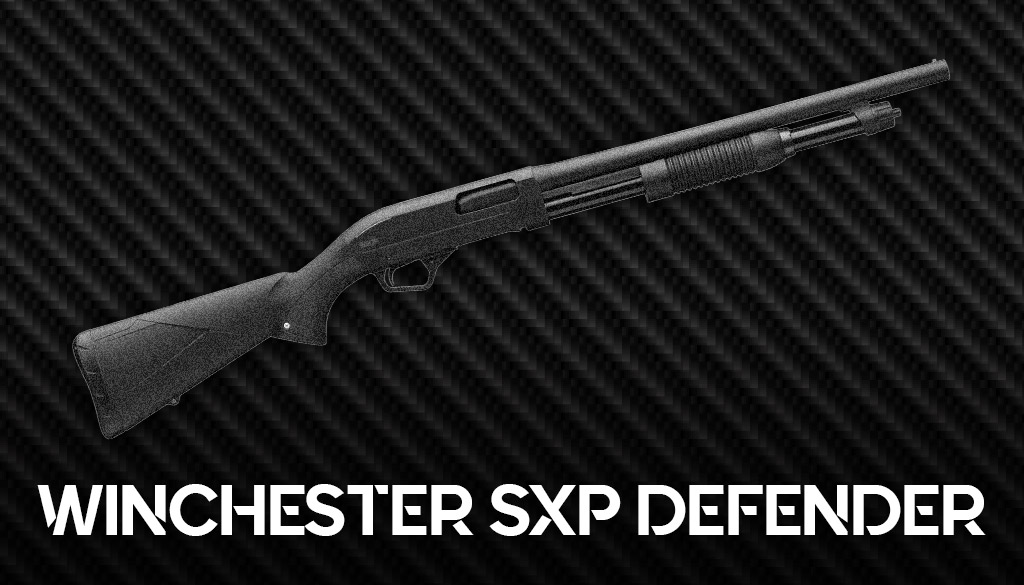
Fast-handling, hard-hitting, and built for home defense, the Winchester SXP Defender stands ready.
MSRP: $350–$450
The Winchester SXP Defender is known for its fast-cycling action, thanks to a rotary-bolt design that helps the action unlock quickly after firing.
This makes it one of the smoothest and fastest pump guns on the market. It’s also lightweight and typically configured with defensive-friendly features like shorter barrels and higher capacity.
Best for: Shooters who prioritize speed and smooth operation.
Mossberg Maverick 88
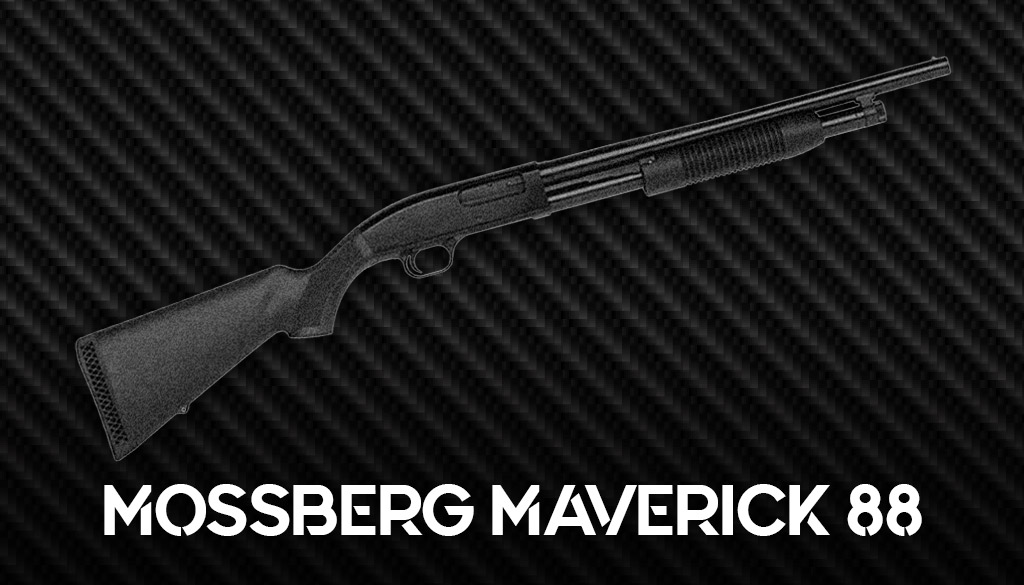
Affordable, dependable, and always ready to go hot, the Mossberg Maverick 88 delivers where it counts.
MSRP: $250–$300
The Maverick 88 is often called the “budget Mossberg,” sharing much of the Model 500’s internal design but at a significantly lower cost.
It lacks some refinements, like the tang safety, but delivers where it counts: reliability and simplicity. It’s one of the most affordable entry points into pump-action shotguns without sacrificing function.
Best for: Budget-conscious buyers who still want a dependable defensive firearm.
Stevens 320 Security
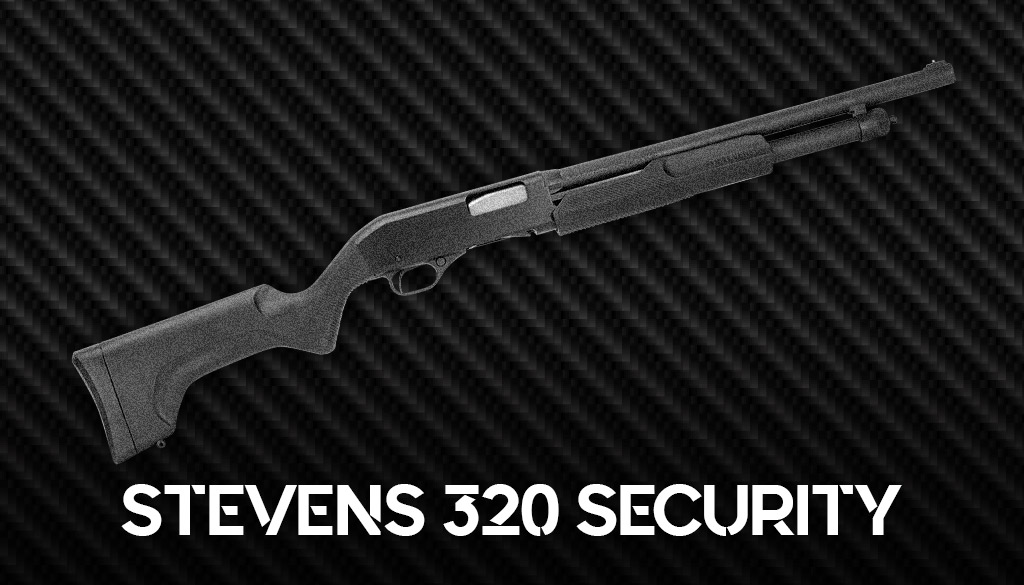
Rugged, reliable, and ready for home defense, the Stevens 320 Security punches above its price tag.
MSRP: $200–$300
The Stevens 320 is a value-driven option that punches above its weight class.
Despite its low price, it often includes features such as ghost-ring sights, which improve target acquisition in defensive scenarios. It’s a no-nonsense shotgun that delivers solid performance for the money.
Best for: Entry-level users or those seeking maximum value.
Purchase Considerations
Most pump-action shotguns sold today are budget guns. Meaning, they cost well under $1,000 and serve a basic, general-purpose. If you want a general-purpose pump-action shotgun, you can pick them up for well under $500. If you want something more mission-specific, you’ll pay more to have a model set up that way from the manufacturer. There’s also a third option. You can take a budget gun and upgrade it to meet your ergonomic needs and defensive requirements.
The basis of this article started with the purchase of a Remington 870 Express Tactical pump-action shotgun. The price was right, so I bought it, shot it a couple of times, then tossed it in my gun safe. Every so often, I’d see it in there and tell myself I should upgrade it for home defense. The problem was that I didn’t really know what to upgrade because I hadn’t defined my needs for a home-defense shotgun.
Upgrades & Rabbit Holes
After some research, time at the range, and careful consideration, I decided on the top 5 needs I had for a pump-action home-defense shotgun. For each of these needs, I decided to address the upgrades required in stages. That way, the cost was spread out, and I had time to test each new addition to make sure it performed well. Note that your needs will likely be different than mine, and that’s fine. My short list ended up being:
- Simplicity
- Reliablity
- Visibility
- Useability
- Managable Recoil
Simplicty
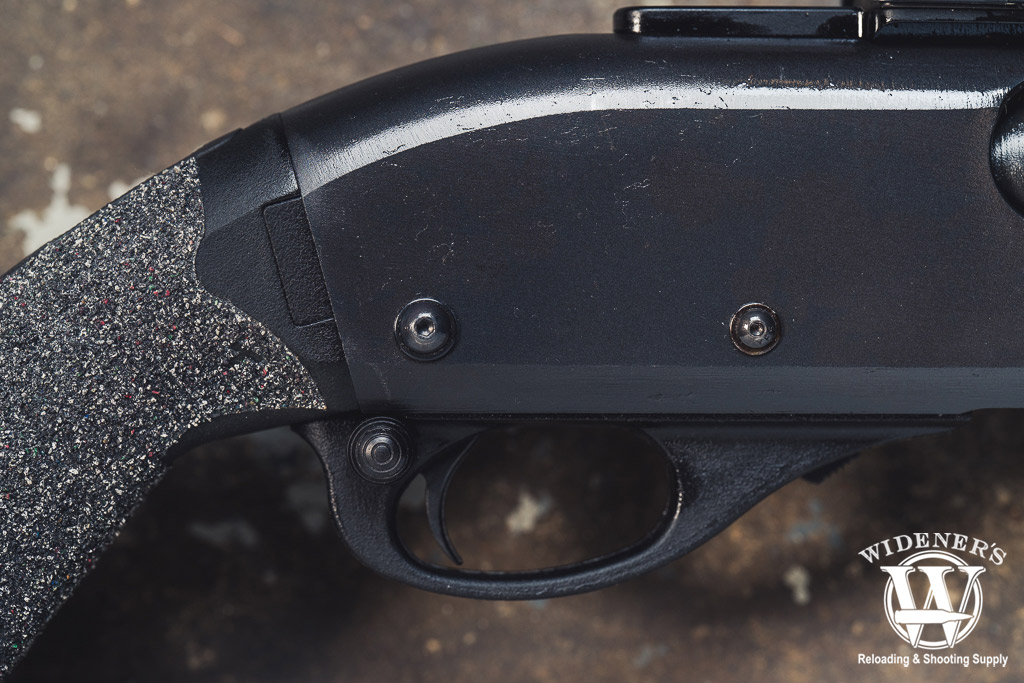
Wilson Combat’s Dome Head Safety is a must-have upgrade for any Remington 870 owner.
If it ain’t broke, don’t fix it, right? The Remington 870 is a classic for a reason. It’s a relatively simple pump-action design that anyone can learn how to operate in a matter of minutes. The idea was to keep it as true to its intended form as possible. Since my wife would also be using the gun, I knew the ergonomic upgrades needed to be simple and work for her as well. They are as follows:
- Magpul SGA Remington 870 Stock
- Magpul MOE M-LOK Remington 870 Forend
- Magpul SGA Cheek Riser (Low)
- Talon Grips Pro – Remington 870 Stock & Forend Set
- Wilson Combat Dome Head Safety
Reliability
You always hear about the action bars failing on pump-action shotguns; thankfully, mine remain intact. However, I did break a few things in my quest to improve reliability. Specifically, the factory extractor (It was piercing the rims of the brass and causing failures), and the factory trigger pins (vibration stripped them out). Reliability upgrades are as follows:
- Volquartsen Exact Edge Extractor
- Mesa Tactical Anti-Walk Trigger Pin Set
- PTG Stainless-Steel Magazine Follower
Visibility
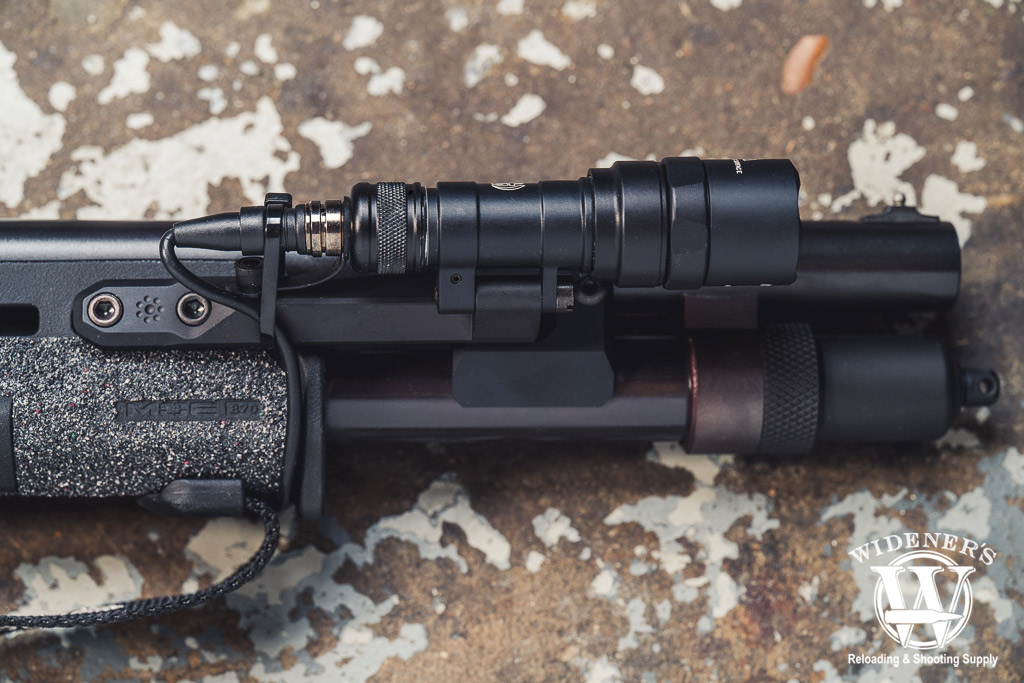
The T-Rex Arms Lightbar PRO Mount allows you to mount a light to your forend in a forward position.
You can go down a lot of deep rabbit holes when it comes to mounting optics and lights on a shotgun. For optics, the general consensus is that direct mounting to the receiver is best; however, you may need a mount adapter depending on your model. When it comes to mounting a light on a pump action, there’s no good long-term solution. Eventually, recoil, vibration, and aggressive cycling will cause the light to fail.
Surefire and Streamlight both make dedicated forends with lights embedded for the Remington 870. However, you can’t easily attach anything to the forends, and the lights are fixed under the barrel, casting barrel shadows. I opted to try the T-Rex Arms Lightbar PRO Mount, which allows you to attach your light to the Magpul M-LOK forend in a forward position, eliminating most of the shadow issues. Visibility upgrades below:
- Scalarworks Sync-4 Red Dot Mount
- Holosun 508T Red Dot (Use what you’ve got, right?)
- Optic Guard Red Dot Cover
- Surefire Mini Scout Pro Flashlight
- Surefire UE07 Momentary Tape Switch
- Magpul Tape Switch Mounting Plate
- T-Rex Arms Lightbar PRO Mount – M-LOK
Usability
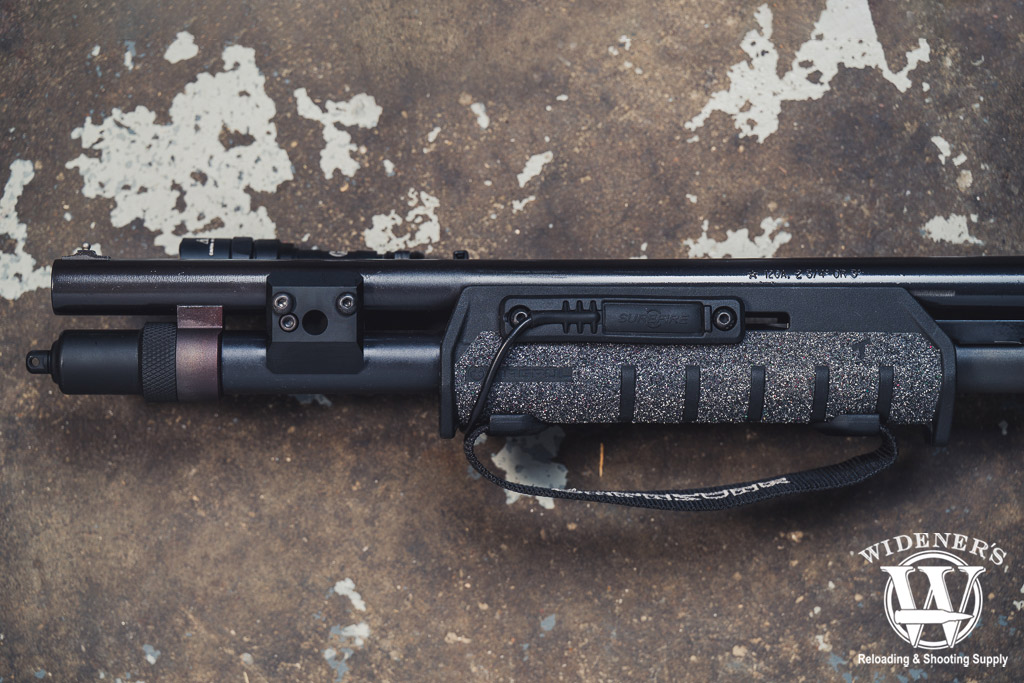
Defender Tactical’s Swage Tool Kit allows you to remove the indents from your Remington 870 Express Tactical magazine tube.
Increase the capacity of the Remington 870 Express Tactical by +1. Sounds easy, right? This one took a surprising amount of time to work out. There were many trips to the range, in both rain and shine, along with a lot of research, trial, and error. In a nutshell, Remington didn’t intend for the Tactical model to be modified. In fact, they added (inner) indents to the end of the magazine tube to discourage it. Thankfully, the internet finds a way.
Defender Tactical makes a handy kit to remove the dents and increase the magazine tube’s capacity. It includes a swage tool, a +1 magazine cap (be sure to also update your magazine spring), and a removable dual accessory rail. They have easy-to-follow instructions, and after cycling several hundred mixed rounds, the reliability has been solid. The +1 cap takes your Express model from 6+1 to 7 +1, and evens out the aesthetic gap between the barrel and magazine tube.
I’ve also been impressed with their M-LOK compatible front hand strap kit. It’s much beefier than the Remington one, and the nylon material goes through the studs for additional security. Mesa Tactical’s Sureshell Ammo Side Mount is another winner. The rubber inner tubing keeps your shells securely in place, and the orientation makes violin-style reloads a breeze. Usability upgrades:
- Defender Tactical Swage Tool Kit (Indent Remover Tool, +1 Magazine Cap, Dual Accessory Rail)
- Wolf Stainless-Steel +1 Magazine Spring
- Defender Tactical Front Hand Strap For Magpul M-LOK
- Mesa Tactical Sureshell Ammo Side Mount (with rubber inner-tube)
*Note: The Mesa Tactical Magazine Clamp was also installed for photos, but removed afterward. My defined needs didn’t include a sling or additional accessories.
Managable Recoil
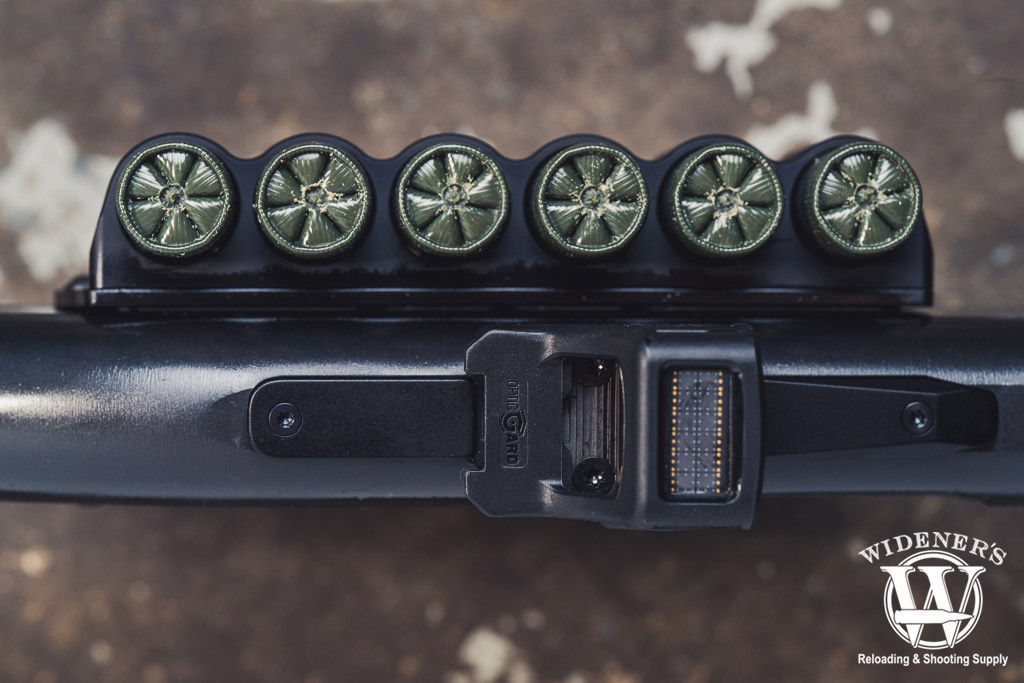
Discovering the right ammo for your home defense shotguns is a critical part of defining your home defense needs.
It’s all about the ammo, right? Finding the right ammo for home defense shotguns takes time and patience. There’s no magic formula, but I can tell you what felt right and ran well at the gun range. The Remington 870 Express Tactical in the photos weighs in at 8lbs and 5oz, unloaded. It does a fair job of absorbing recoil, but nothing like a gas-operated semi-auto. That’s why managing recoil with ammo selection is critical.
- Federal Premium Personal Defense x2 00 Buckshot (9-Pellet)
- Hornady Critical Defense 00 Buckshot (8-Pellet)
- Federal Premium LE Tactical Hydra-Shok 00 Buckshot (9-Pellet)
- Hornady American Gunner Reduced Recoil 438gr Rifled Slug
- Federal Premium LE 438gr Rifled Slug
Is Upgrading Worth It?
That’s a question you’ll have to answer for yourself. It depends on your needs, your budget, and intended use. Remington makes a Remington 870 Express Tactical model with Magpul furniture installed. That’ll get you halfway there. If you want to pay up, Vang Comp also has the Model 077, an optic-ready Remington Tactical modified with 7 +1 capacity, and Magpul furniture installed.
Ultimately, upgrading my factory Remington 870 Express Tactical provided me with a much more usable gun that meets my defined needs and home defense purposes. Not only did upgrading increase the reliability, but also the usability, for my wife and me. Now we have a home defense shotgun that’s easy to use, even in the dark, without having to look down at the gun to manipulate it.
In all honesty, it’s also more enjoyable to shoot. Reloads are easier, you can cycle the pump-action with confidence, and the red dot makes acquiring targets a breeze. The Magpul furniture with the Talon Grips allows you to get a solid purchase, even when it’s wet outside. The adjustability of the stock means you can set it up to keep the butt against your chest, instead of wearing out your shoulder. I’d call that a win-win.
Pump-Action Shotguns: Home Defense
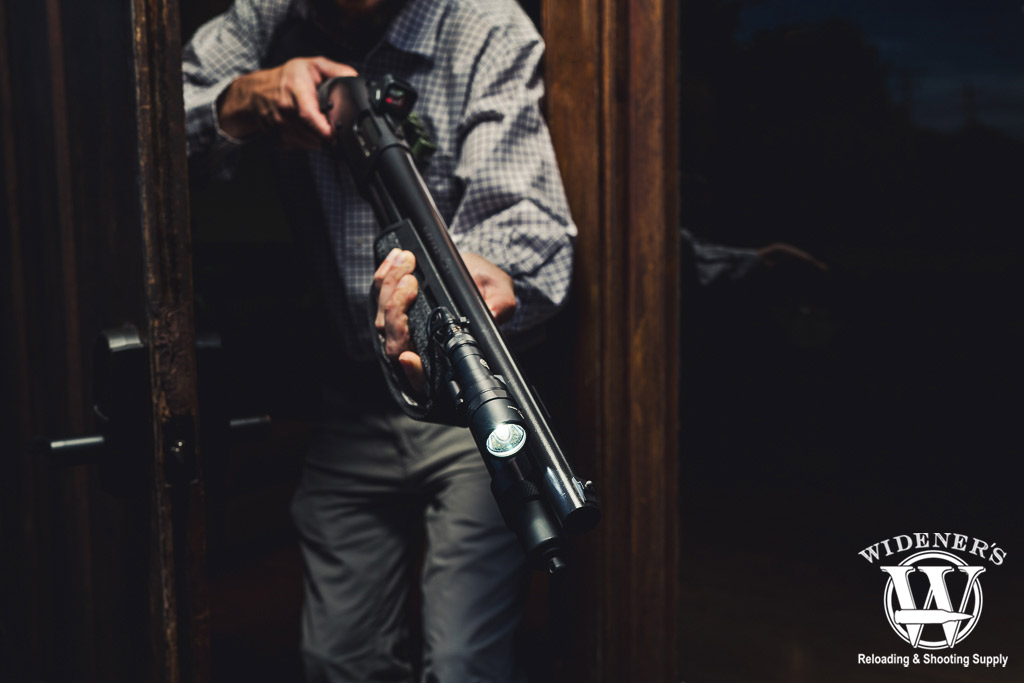
Reliability, stopping power at close range, and affordability make pump-action shotguns a solid option.
Pump-action shotguns remain a viable and effective choice for home defense, but they’re not a one-size-fits-all solution.
Their strengths—reliability, affordability, and close-range effectiveness—make them appealing, especially for those willing to train. However, their weaknesses—manual operation, recoil, and longer size—mean they demand more from the user than some modern alternatives.
If you choose home defense shotguns, of the pump-action variety, the key is practice. Running a shotgun is harder than it looks. Learn to run the action smoothly, manage the recoil, and operate the firearm under stress. When used correctly, platforms like the Remington 870 or Mossberg 500 can be exceptionally effective defensive tools.
For many homeowners, the pump-action shotgun still represents a balance of simplicity and power that’s hard to beat, but only when paired with realistic expectations and consistent training.
Looking for a guide to understanding different 12-Gauge shotgun load types? Check out our helpful article at this link.
You may also like
