
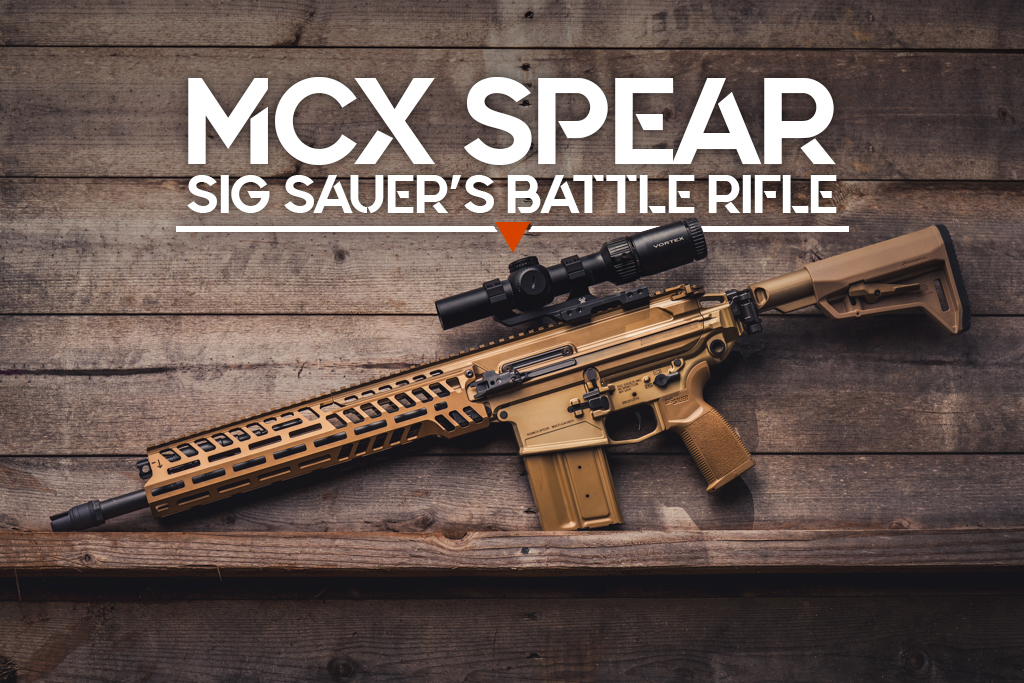
The military’s adoption of the SIG Sauer MCX Spear sparked a serious dust-up. As with many issues these days, people have drawn their battle lines and chosen their sides. In this article, you’ll get a full overview of the MCX Spear, insight into what the fuss is all about, and some understanding of whether this rifle is worth buying yourself.
The SIG Sauer MCX Spear is the rifle SIG Sauer submitted to the military for consideration as the Next Generation Squad Weapon (NGSW). The rifle proved effective, and SIG was awarded the contract in 2022. The idea behind the MCX Spear was to offer a rifle for modern warfare—one with more power, range, and battlefield adaptability than previous systems.
Did the SIG Sauer MCX deliver on all the promises? Well, they certainly delivered; however, whether they delivered something that satisfies all members of the firearm community is another story. Let’s get into it.
Overview: SIG Sauer MCX Spear (Civilian Model)
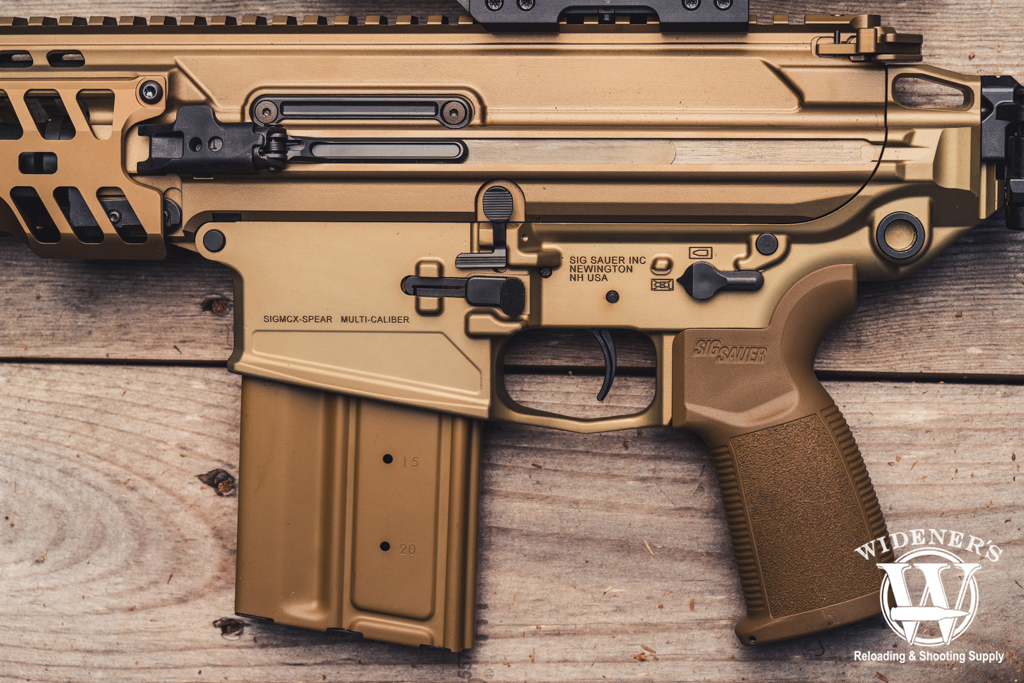
Multi-Caliber: The MCX Spear comes in a variety of centerfire calibers and tactical barrel lengths.
Before we go any further in discussing the details of the SIG Sauer MCX Spear, let’s get something out of the way: this is neither a rant nor a rave review. The goal of this article is to discuss what the MCX Spear was made to do, what it’s good at, what it’s not so good at, and where it fits within both a civilian and military arsenal.
One more thing to keep in mind: whenever something new hits the market (be it a gun, a phone, a law, or even a restaurant), there’s a break-in phase as well as a honeymoon phase. On one side of the aisle, you have people who are averse to change and so upset about the shortcomings that they don’t even want to give the company a chance to correct them.
Of course, you also have people in the honeymoon phase. They’re excited about something new and want to find a way to accept it; however, these perspectives sometimes overlook important negative feedback.
The solution? Maybe we all lay down our stones (guns?) for a moment and meet in the middle. Then we could objectively look at the data and work to draw honest conclusions.
Here’s what we’ll cover in this article:
- History of the MCX Spear
- Specifications of the MCX Spear
- Special Options, Calibers, and Variations of the SIG Sauer MCX Spear
- Points of Controversy for the SIG Sauer MCX (And Military Version)
- Who Should Buy the SIG Sauer MCX Spear?
Note: Guns have many names. To keep this article from becoming confusing, we’ll stick to two main names for this rifle: the M7 for the military version and the MCX Spear for the civilian model. We’ll mention all the variants and updates where we can, but some are still placeholder names and may change in the future.
History: SIG Sauer MCX Spear
The MCX Spear was born from the Army’s quest to update the M4 rifle. They began this program in 2017, and it wasn’t until 2022 that SIG won the contract to produce the weapon.
To understand how we got to where we are, we need to look at some of the pitfalls of the M4 chambered in 5.56. As it stands, 5.56 is a far cry from the 30-06 that chambered the M1 Garand during WW2 and beyond. It’s much smaller, has less overall power, and has a limited range.
On its face, all those things might seem like a bad thing. But as you’ll see, that all depends on the perspective. On the negative side, the military received complaints from troops who felt outgunned in certain situations. Let’s look at two examples.
First, there was the issue of the kind of wide-open warfare often seen in the Middle East. Here, you might have soldiers ambushed in a vehicle. They would exit the vehicle and attempt to return fire, only to find they lacked the range needed to engage the enemy.
Second, the development of increasingly sophisticated body armor has raised concerns that the 5.56 is becoming less effective, particularly beyond 200-300 yards.
All of these concerns are what led us to the MCX Spear. A gun that’s bigger, heavier, and ultimately more powerful. At what cost? We’ll talk about that a little later. Right now, let’s look at some specs.
Specs: SIG Sauer MCX Spear
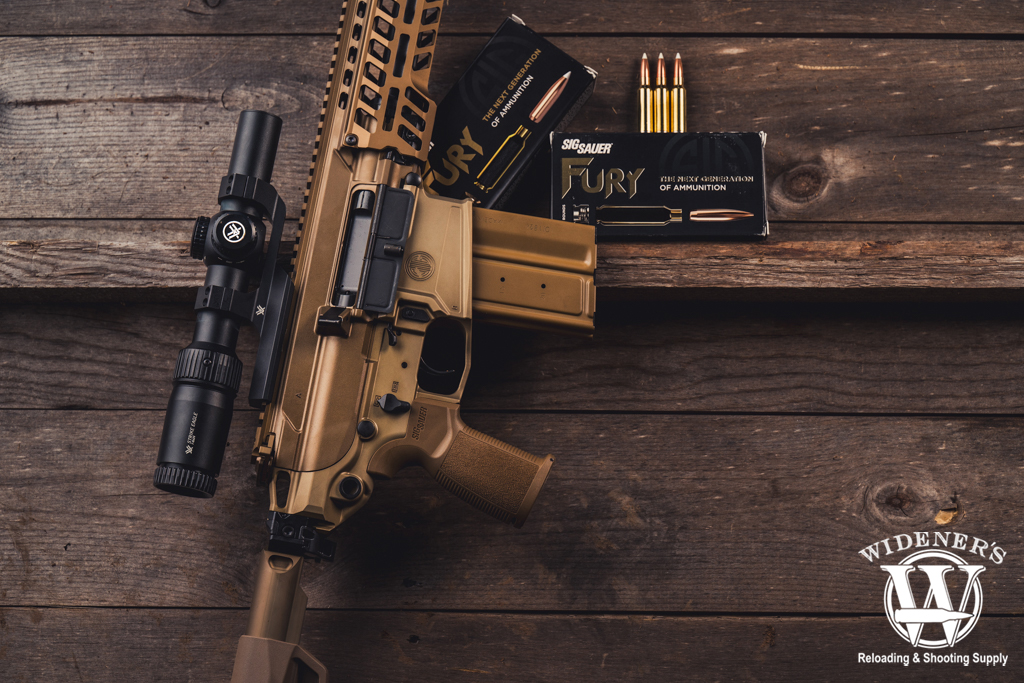
Modular Mayhem: The MCX Spear can swap barrels to utilize a variety of centerfire cartridges.
In the next few sections, we’ll discuss some of the specifications of the MCX Spear. We’ll list the rifle’s major points and discuss the most common calibers. However, keep in mind that the very nature of this rifle begs for variation, so you’ll see specs vary depending on how the MCX is set up.
Also, we should point out that not all features available to the military will be available on the civilian market (fully automatic fire, for example). And features available on the civilian market may not come standard when you initially purchase the MCX Spear (e.g., optics, special ammunition).
Here’s a quick overview of the specs on the SIG MCX Spear:
- Caliber Options: 7.62 x 51 NATO, 6.5 Creedmoor, 6.8 x 51 NATO (.277 SIG Fury)
- Length overall: 38.1 Inches
- Barrel Length: 13 inches, 16 inches on some models
- Weight: 9.2 lbs.
- Controls Left or Right: Fully ambidextrous
- Charging Handle: rear and side charging handles
- Safety: ambidextrous
- Trigger: Two-stage match trigger
- Stock: 6-position foldable Magpul SL-M
- Magazine capacity: Ships with 20-round AR-10 magazines
- Cost: Price varies widely based on model and features
Now let’s look at a few common variations and special options. If you enjoy little extras and bonuses, you’ll find many on the SIG MCX Spear.
Special Options & Variations for the SIG Sauer MCX Spear
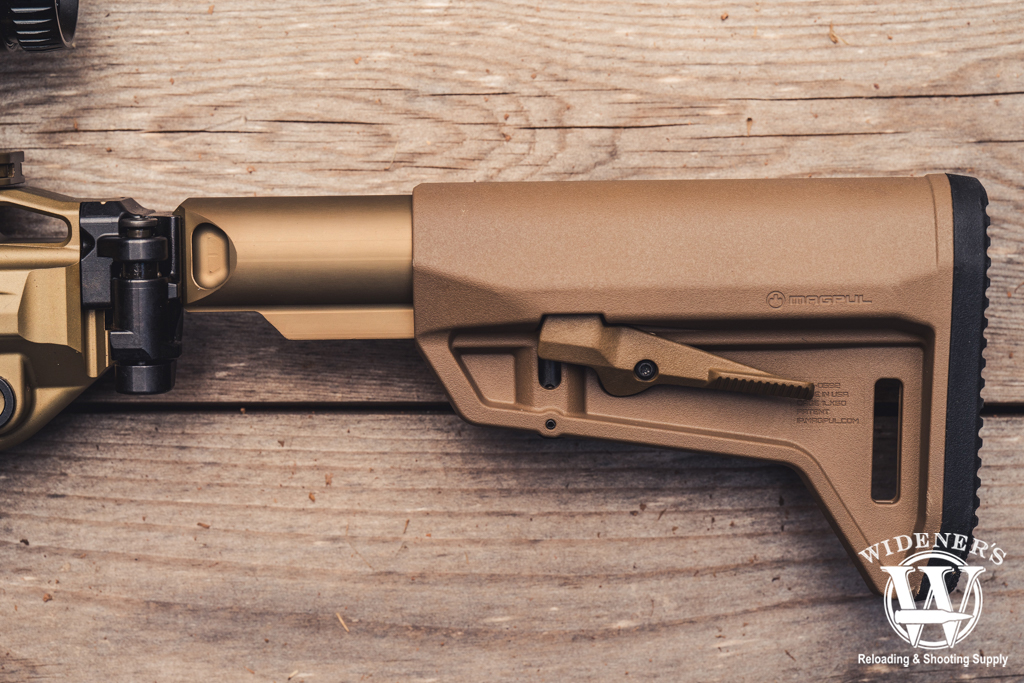
The unique folding-stock design of the MCX Spear is made possible by eliminating the buffer tube.
On the civilian side of things, you can purchase the SIG MCX in three main variations: a short-barreled rifle with a 13-inch barrel, a pistol version also with a 13-inch barrel, and a longer-barreled rifle at 16 inches.
On the pistol version, the folding stock isn’t standard. This option will also be the lightest of the bunch, at a sturdy 8.5 pounds. Other than these two differences, the pistol variation is essentially the same.
With the 16-inch barrel version, you get pretty much all the same features as the 13-inch barrel, just with a slightly different forend.
You may be wondering: what about a version chambered in SIG 277 Fury? Yep. It’s now available on the commercial market. Depending on why you’re interested in the MCX Spear (the platform or the round), this might be a reason for buying it. The 6.8x51mm is a spicy cartridge.
Points of Controversy for the MCX Spear (Including the Military Version)
As we mentioned earlier, anytime there’s something new, there are positive and negative opinions. This is certainly the case with the MCX Spear. If we boil all the criticism down to one sentence, it would be: this is a good gun, but not for all situations.
It seems that many think the military overcorrected for issues with the M4, and that the result may be impractical for mass use. Let’s look at a few points of controversy regarding specific parts of the MCX Spear.
- More weight
- Less ammo carrying capacity
- Recoil and high internal pressures with a short barrel
- Misstep on armor penetration
Key point: Anytime the military adopts a new firearm, there will be both good and bad things. The hope is that when manufacturers receive feedback, they take it and make the necessary adjustments. When this happens, we can end up with a rifle that is actually much better than it was before.
In fact, this is exactly what SIG has tried to do with the MCX/M7 rifle. In new and forthcoming models, there are reports that they’ve taken steps to reduce weight by milling out excess material from the receiver, shortening the barrel, and shortening the suppressor.
With these adjustments, people report a noticeable reduction in weight on the newest models. Some have said that the updated weapon feels better in the hand, is less front-heavy, and more easily maneuverable in tight places.
Less Ammo Carrying Capacity & More Overall Weight
Not only is the rifle bigger and heavier than the M4, but there’s concern that the larger cartridge reduces the number of rounds each soldier can carry. While this number will vary slightly based on the situation, reports are that soldiers can carry about 40 percent fewer rounds with the new firearm. Of course, the counter-argument is that these rounds are more effective at long distances.
Placing the reduced ability to carry ammunition aside, many believe the rifle was just too heavy overall. Whether this is true in a combat situation is hard to say. But these complaints must have had some merit, since newer variants of the gun now weigh less.
Recoil & High Internal Pressures
One of the selling points of the SIG MCX Spear is that it’s built to withstand higher internal pressures, aiming to deliver greater power while remaining compact. There are many opinions on this, but some have raised an alarm about reported pressures ranging from 80,000 to 120,000 PSI.
SIG seems to maintain that the rifle can handle these pressures. Critics state that this will negatively impact long-term reliability, particularly barrel life. They also mention that the increased recoil seems difficult to justify.
Armor Penetration Methods
The MCX Spear puts a premium on the ability to pierce armor. Many people understand this desire, as modern warfare has seen a jump in ballistic vest technology. However, some critics say that modern warfare has moved beyond the need for increased armor penetration in a standard-issue rifle. They state that drones will fill this need, particularly for long-range encounters—but this is just one opinion.
Critics also argue that more attention should have been paid to the bullet design rather than cranking up the pressures. And even with the armor penetration of the MCX Spear, some people have voiced doubts about its effectiveness.
What’s the response from SIG? SIG says the steel that civilians test their ammunition on is not comparable to the steel actually found on the battlefield. The types of armor that these weapons are designed for include light armored vehicles. The weapon isn’t designed to take down tanks.
Opinions vary on whether this goal was accomplished, and some say that armor-piercing rounds should have been a higher priority than the rifle’s overall power.
Suppressor Performance
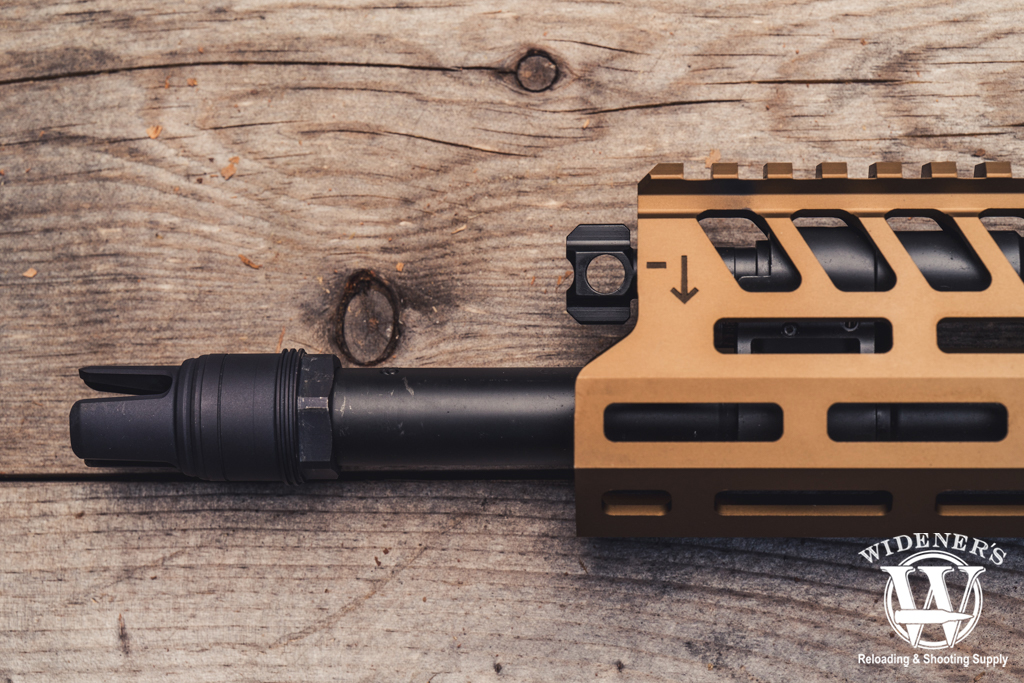
The two-position adjustable gas system feels like a cheat code. You can run a suppressor and swap between grain weights with a simple twist.
Suppressor enthusiasts should take note. The SIG MCX Spear is one of the most suppressor-oriented battle rifles currently available. Unlike many AR-10 pattern rifles that simply accept a suppressor, the Spear was designed from the outset to operate with one. In fact, the military M7 rifle issued to the U.S. Army is intended to be fielded with a suppressor as standard equipment. Sig’s own SLX model suppressor fulfills the contract for the standard issue M7.
The short-stroke gas piston system has an adjustable gas regulator that’s easy to set up. The barrel utilizes a standard 5/8×24 TPI thread pitch, making it compatible with a variety of .30 caliber cans. When suppressed, the rifle produces comparatively little gas blowback and offers a smoother shooting experience than many traditional AR-10-style rifles. That being said, the .277 Fury is a loud cartridge. You’ll still want to have your ears on when operating the rifle, even with heavier-grain ammunition.
Who Should Buy the SIG Sauer MCX Spear?
After reading the last section, you might think that people don’t like this gun. On the contrary, almost everyone who’s tested the firearm seems to walk away liking the system; they just think it might not be the best fit for mass-issue to the modern soldier.
It’s worth noting that many of these complaints come from a military perspective. As a civilian, issues about armor penetration and weight become somewhat less important.
With all that said, who should consider buying the SIG MCX Spear?
Well, if you’re a collector who enjoys military rifles, then this is a no-brainer. Also, if you’re a civilian who has had frustrations with the “underpowered 5.56,” and maybe even has an eye on hunting with the platform, then the MCX Spear gives you a robust option for firing the higher-powered 308 and 277 Fury. Finally, there’s no doubt that the SIG MCX passes the “cool” test, so if you’ve got the cash, it could end up being one of your favorite guns to take to the range.
Last Take: Getting to Know the SIG Sauer MCX Spear

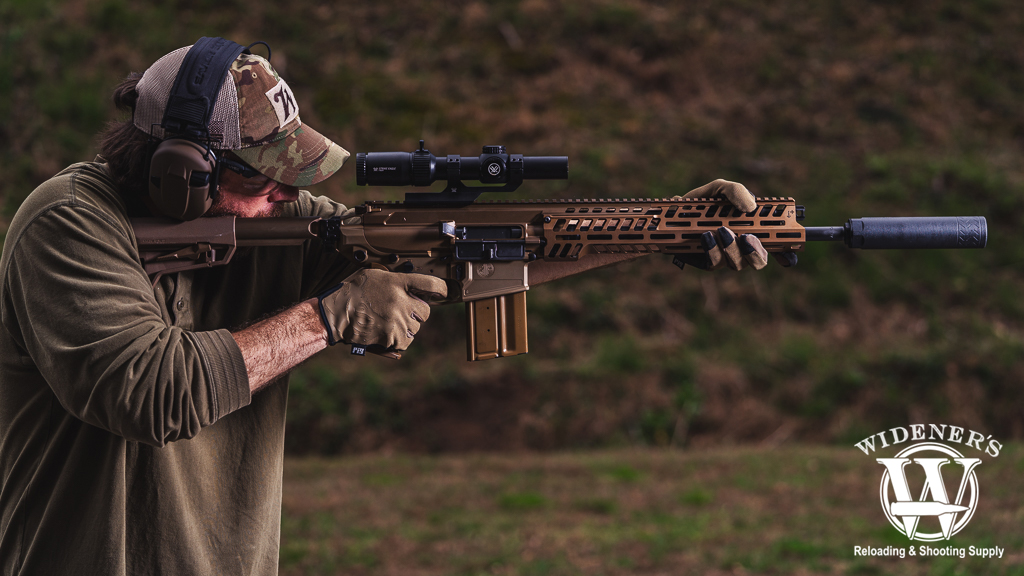
If a multi-caliber, suppressor-friendly, modular AR-10 is on your wish list, the SIG Sauer MCX Spear is a great option.
The MCX Spear was recently adopted by the Army as part of its Next Generation Squad Weapon Program. The vision behind the MCX was a more powerful, further-reaching battle rifle that wouldn’t limit soldiers as they meet the modern battlefield.
The MCX Spear offers big power in a relatively small package. For all the controversy you may hear about this rifle, the truth is that new things elicit both positive and negative reactions. SIG is still working out the details—we would expect this rifle to be even better in the years to come. For what it’s worth, most people who handle this rifle seem to like it.
If you like all this rifle talk, look at our article on the AR-10 battle rifle.