


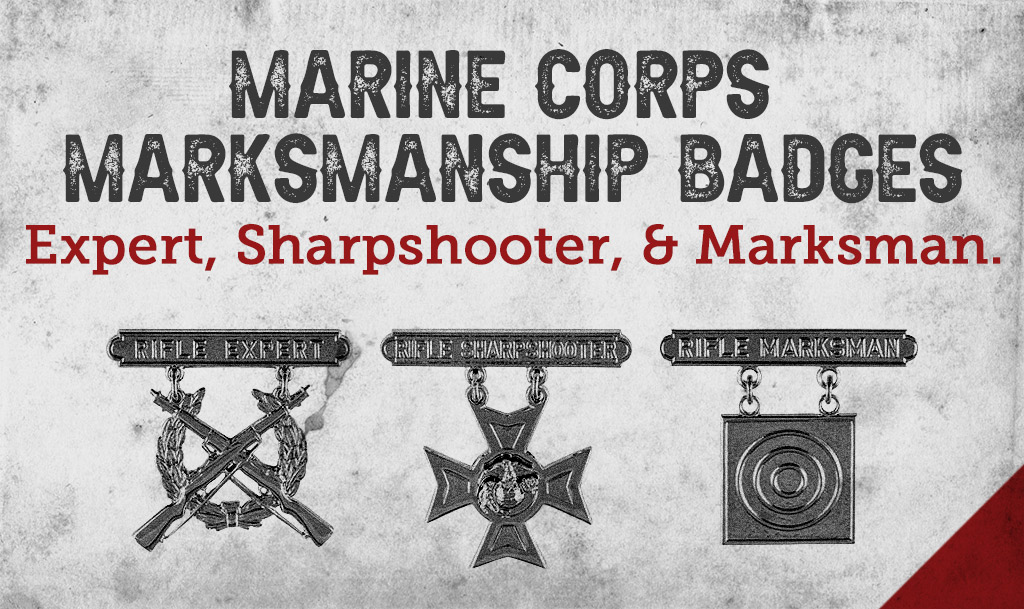
The United States Marine Corps’ marksmanship has long set it apart from other branches. This focus has created a culture in which every Marine is primarily a rifleman. Rifle accuracy has often been the deciding factor in battles in American military history. The Marine Corps marksmanship badges program is one of the toughest and most respected ways to learn how to use a rifle in the world. It has created generations of expert sharpshooters who live by the warrior spirit of America’s expeditionary force.
Marine Corps Marksmanship Badges & Their Meanings
The Marine Corps gives marksmanship qualification badges to people who are good at shooting. They wear these badges with pride on their dress uniforms. Marksmanship badges, on the other hand, must be earned again every year, ensuring that Marines keep their skills sharp throughout their careers.
Three Levels of Marine Corps Marksmanship Qualification
- Expert: This is the highest level of qualification. To become an Expert, Marines must get 220 to 250 points out of a possible 250 on the annual qualification course. The Expert badge features a wreath design with two crossed rifles in the center, and people who earn it can wear special badges. Expert shooters can hit targets with precision from any shooting position and at any distance, often within a set time limit. Getting an Expert qualification is a big deal and something that Marines are proud of for the rest of their careers.
- Sharpshooter: To get the intermediate qualification level, Sharpshooter, you need to score between 210 and 219 points. The Maltese cross design on the Sharpshooter badge stands for good, reliable shooting. Sharpshooter Marines have shown above-average skill and consistency with their service rifles, even though they haven’t reached the highest level.
- Marksman: To be a Marksman, you need to get at least 190–209 points. The Marksman badge is the lowest level of qualification, but it still shows that you passed a challenging course of fire. For a Marine to be considered good with their service weapon, they must at least pass the Marksman test.
Badge Components & Re-qualification Bars
Marksmanship badges have hanging bars that show that the person requalified at the same level. Every time a Marine re-qualifies at their current level, they get another bar. Depending on the time period and the rules in place, these bars indicate the score or whether someone is qualified. Some Marines rack up a lot of bars over their careers, creating a visual record of how well they shoot.
The badges are made of metal and go on the left side of dress uniforms, below ribbons and medals. The weight and arrangement of several qualification bars can create a unique look. Senior Marines with long careers often have impressive collections of re-qualification bars under their badges.
Distinguished Badges in Marine Corps Marksmanship
The Marine Corps gives special badges for outstanding performance in competitions, in addition to basic qualification levels. The Distinguished Rifleman Badge and the Distinguished Pistol Shot Badge are two of the highest honors for marksmanship. These badges go to Marines who have performed very well in formal shooting competitions and earned scores that place them among the Corps’ best shooters. Distinguished badges are rare and indicate that someone has been practicing for years and has a natural talent for shooting.
Historical Foundations
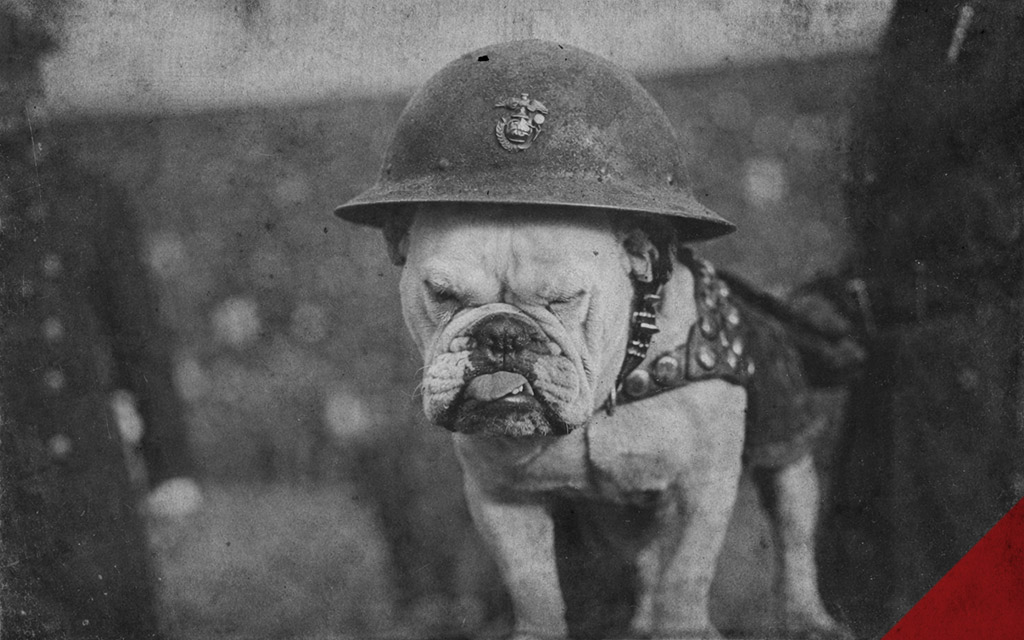
The “Devil Dogs” of the U.S. Marine Corps have used an English Bulldog as their mascot since 1922.
The Marine Corps has always placed great emphasis on marksmanship, but it wasn’t until the early 1900s that it became official and organized. During the Spanish-American War and the Philippine Insurrection that followed, Marine leaders knew that better shooting skills could make up for having fewer troops and give them an edge in battle. But the modern marksmanship program didn’t start to take shape until the years before World War I.
The Marine Corps set up its first official marksmanship qualification standards in 1908. Doing so made it possible to judge and reward Marines fairly for their shooting skills. This groundbreaking move made Marines different from other branches of the military. The program focused not only on accuracy but also on quickly and effectively engaging targets in a variety of situations. This early training would be beneficial for Marines in World War I, when being a good shot could mean the difference between life and death in the trenches of France.
Timeline Of Notable Events
Early 20th Century (1900-1920)
During the early years of Marine Corps marksmanship, they created qualification courses and standardized training methods. The Corps officially adopted the qualification badges in 1911. These badges would later become famous symbols of Marine shooting skill. During World War I, Marine snipers became renowned for their accurate rifle fire at battles like Belleau Wood in 1918. Here, they shocked German troops, earning the Marines the nickname “Devil Dogs.” The Corps’ stories of Marines fighting enemy soldiers at ranges of more than 500 yards became part of its history and underscored the importance of marksmanship training.
Interwar Period (1920-1941)
The Marine Corps continued to develop its marksmanship program between the two World Wars. The Corps competed in national shooting competitions and always came out on top, further building its reputation. Training ranges got better, and the Known Distance (KD) course became the standard at all Marine bases.
The M1903 Springfield rifle remained the Marines’ primary weapon, and they learned a great deal about how it worked. During this time, the Marine Corps also formed the Rifle Team. They competed at Camp Perry and other national venues, which brought honor to the service.
World War II (1941-1945)
World War II‘s island-hopping campaigns put marine marksmanship to the test across the Pacific. The marksmanship program also taught basic skills and discipline. These secondary skills were instrumental, even though combat conditions often made it impossible to employ the long-range precision shooting stressed in peacetime training.
Marines had to change their training when they switched from the M1903 Springfield to the M1 Garand semi-automatic rifle, but they did so quickly. Even though they used a variety of weapons in close-quarters combat, legendary snipers like John Basilone showed the warrior spirit that comes from training to shoot.
Cold War Era (1945-1991)
There were significant changes to the marksmanship program after World War II. The Marines adopted the M14 rifle in the 1950s, and the M16 in the 1960s. This change required updating training protocols. The Vietnam War showed both the strengths and weaknesses of marksmanship training in jungle warfare. In response, the Corps changed its program to focus on quickly finding targets and shooting from different positions. The Rifle Qualification Course, as we know it today, was created during this time. It included more realistic combat scenarios while still focusing on the basics.
Modern Era (1991-Present)
The Gulf War, operations in Iraq and Afghanistan, and evolving combat needs led to ongoing changes in Marine Corps marksmanship. The M16A4 service rifle and, later, the M4 carbine, as well as advanced optics such as the Advanced Combat Optical Gunsight (ACOG), were significant technological advances.
The Annual Rifle Training (ART) program replaced older programs. It included more realistic combat situations, stress shoots, and engagements at unknown distances. In recent decades, there has also been more focus on combat marksmanship skills. These include shooting from behind barriers, quickly engaging multiple targets, and switching between weapons systems.
The Rifleman’s Creed
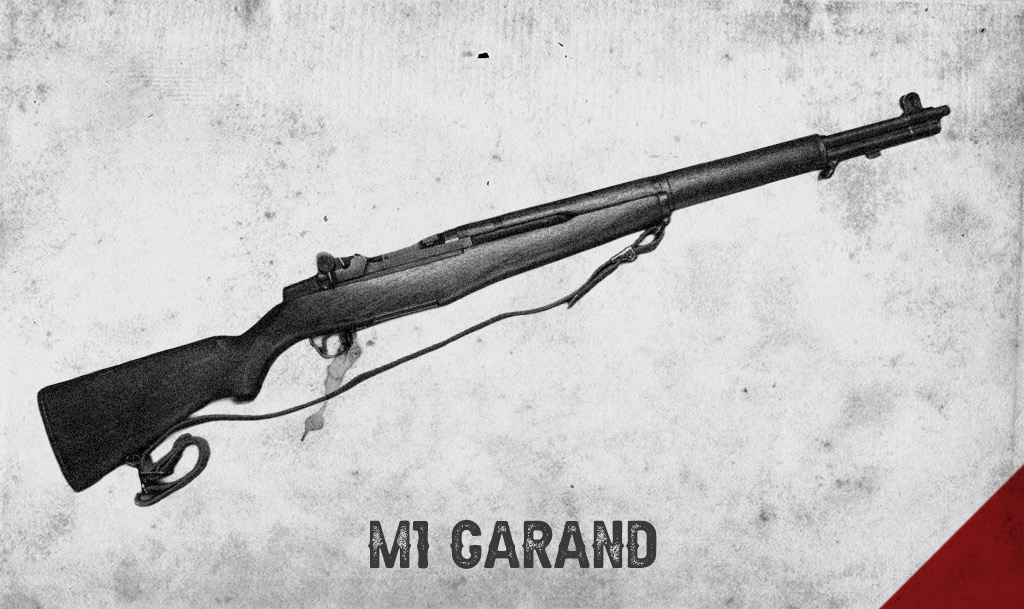
Marines switched from the M1903 Springfield to the M1 Garand semi-automatic rifle during the defense of the Philippines.
The Rifleman’s Creed, also known as “My Rifle” or the Creed of the United States Marine, is essential to the culture of marksmanship in the Marine Corps. Major General William H. Rupertus wrote this powerful statement during World War II. It sums up the Marines’ relationship with their weapons and their dedication to being the best in arms.
This is my rifle. There are many like it, but this one is mine.” -Major General William H. Rupertus, USMC
The Creed starts with the simple statement, “This is my rifle.” This one is mine, but there are many others like it. This opening makes it clear that every Marine is responsible for their weapon and how well they use it. The Creed goes on to say that the rifle is the Marine’s best friend and the only way to stay alive, and that they must learn to use it as well as they learn to live their own lives.
The most important thing the Creed says is, “My rifle and I know that what matters in war is not the rounds we fire, the noise of our burst, or the smoke we make.” We know that the hits matter. We will hit. This passage stresses accuracy over volume of fire, a key difference between Marine Corps marksmanship training and simply getting used to guns.
Marine Corps Marksmanship Badges: The Ultimate Military Skill?
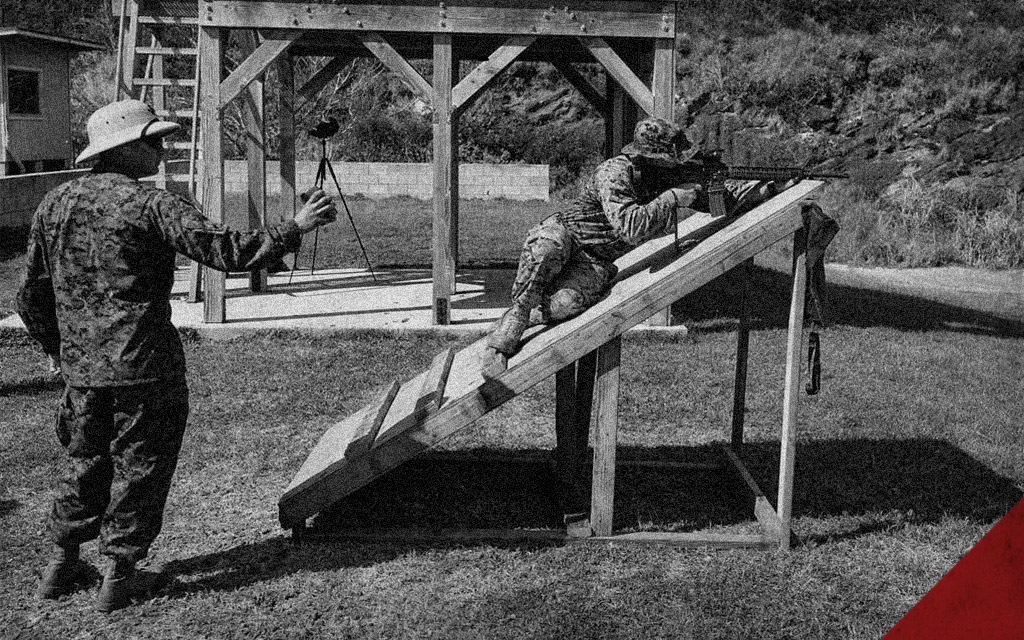
All Marines, regardless of MOS, must qualify annually in marksmanship using iron sights and optics. (Credit: U.S. Marine Corps photo by Sgt. Jesus Sepulveda Torres) The appearance of U.S. Department of Defense (DoW) VI does not imply or constitute DoW endorsement.
Marine Corps marksmanship is more than just a military skill. It’s a part of Marine culture that defines what it means to be a Marine. The focus on accurate, effective rifle fire has stayed the same from the first days of formal training to modern combat operations, even though weapons and tactics have changed. The Rifleman’s Creed is the philosophical basis of this culture, and qualification badges are a way to show that someone has done well and continues to do well.
Every Marine, whether they are a foot soldier, an aviator, or work in administration, must show that they can use a rifle every year. This rule reinforces the basic idea that there are no rear-echelon Marines; everyone may have to fight with a rifle in hand. The marksmanship program builds the Marine Corps’ unique warrior ethos, discipline, and confidence while ensuring they are always ready.
The Marine Corps marksmanship badges program will evolve as warfare evolves. It always emphasizes accuracy, discipline, and the rifleman’s duty to make every shot count. Marine Corps marksmanship has been a part of the Corps for more than a hundred years, and it’s still a source of pride for everyone who earns the title of Marine.
You may also like
