

Army marksmanship has always played a key role in American military readiness, starting with musket drills in the Revolutionary War and continuing through today’s precision rifle competitions. The Army’s firearms training has evolved from a basic battlefield skill into a comprehensive program that encompasses training, competition, and recognition. Understanding this history shows how Army marksmanship badges maintain strong combat skills and set a standard that also shapes civilian shooting sports.
Historical Foundations: Army Marksmanship Badges
The American military has valued marksmanship since its earliest wars. During the Revolutionary War, frontier riflemen demonstrated the importance of accurate shooting, but formal training was not always consistent. During the Civil War, many soldiers lacked strong marksmanship skills. Studies showed that thousands of rounds were fired for each casualty. This led military leaders to recognize that winning in battle required more than just giving soldiers weapons.
The Army began to focus more on marksmanship after the Spanish-American War, when it was clear that American soldiers often did not shoot as well as their opponents. In response, the Army set higher training standards and started keeping records of who qualified. In the early 1900s, the Army introduced standardized courses in which soldiers demonstrated their skills at various distances and in different positions.
World War I accelerated these changes. The Army realized that good marksmanship required organized training, not merely prior hunting or shooting experience. Training camps added rifle ranges, and marksmanship became an essential part of basic training. This was also when qualification badges were introduced to recognize shooting skill, a tradition that continues today.
Timeline Of Notable Developments
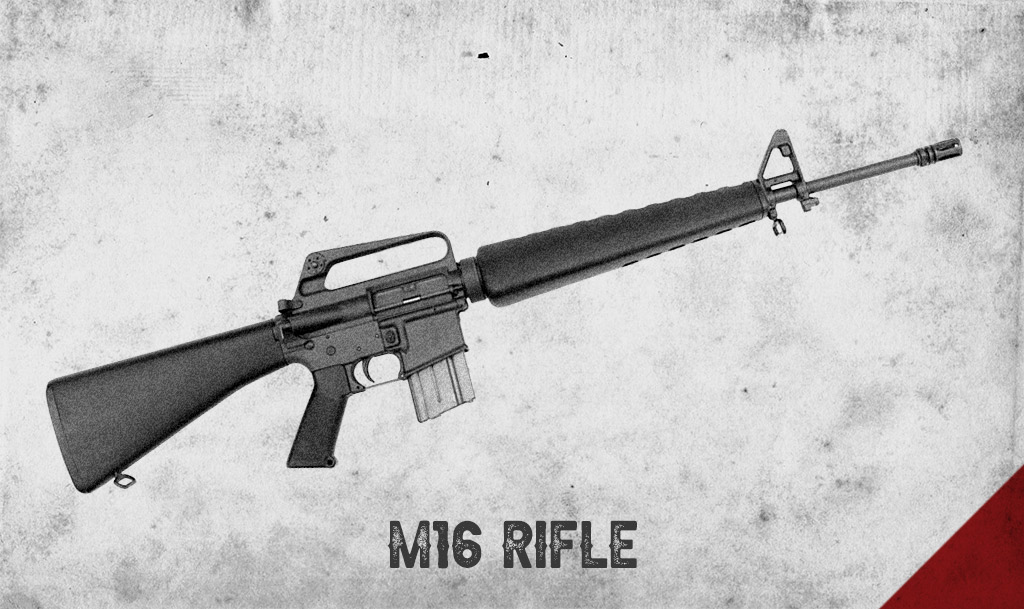
Developed by Eugene Stoner at Armalite in 1957, the M16 replaced heavier weapons and became the military’s standard-issue battle rifle.
World War II
This era saw large-scale mobilization, so the Army made marksmanship training uniform across all bases. The M1 Garand became the primary infantry rifle, and training courses focused on its use. Training also became more realistic, with time limits and added stress to better prepare soldiers for combat.
1956
The Army started the United States Army Marksmanship Unit (USAMU) at Fort Benning, Georgia. This unit was created to improve marksmanship throughout the Army and to compete in shooting competitions both in the U.S. and internationally. The USAMU has produced numerous Olympic medalists and world champions, thereby establishing a strong reputation among military shooters worldwide.
During The Vietnam War
The Army adopted the M16 rifle, which was lighter and had less recoil than the M14. This change meant soldiers had to learn new shooting techniques. Training began to focus more on combat skills, such as moving while shooting, engaging multiple targets, and practicing in realistic scenarios. The Army stopped training exclusively with stationary targets and then adopted more active methods.
Since The 1980s
The army’s marksmanship programs have continued to improve. New equipment, such as better rifle optics, night vision, and laser sights, led to changes in training. The wars in Iraq and Afghanistan made combat marksmanship even more important, as soldiers had to hit targets at different distances in both cities and rural areas. Today’s training includes practicing under stress, making quick decisions, and combining shooting with other combat skills.
The USAMU remains a leader in American competitive shooting. Its Service Rifle, Action Shooting, and International Rifle and Pistol Teams have won many national championships and Olympic medals. In addition to competing, the USAMU is the Army’s primary center for marksmanship, developing training methods and equipment that support soldiers across the Army.
Civilian Marksmanship Program Connection
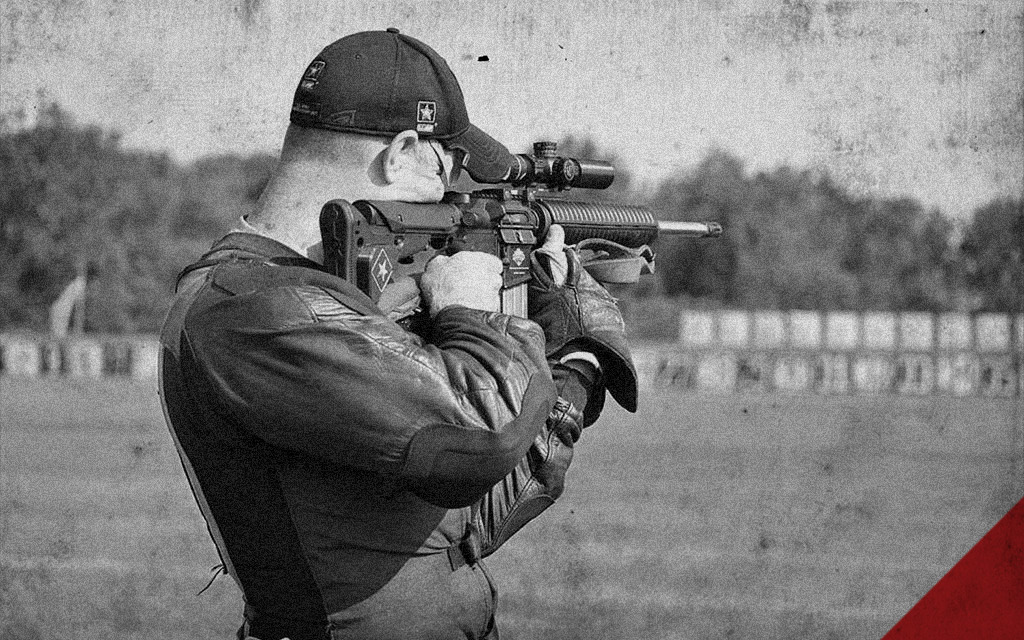
Sgt. 1st Class Brandon Green, Bogalusa, with the U.S. Army Marksmanship Unit’s Service Rifle Team. (Credit: Defense Visual Information Distribution Service)
The Army’s link to civilian shooting sports is managed through the Civilian Marksmanship Program (CMP). Congress started the CMP’s earlier version in 1903, believing that citizens who could shoot well would help national defense. The Army initially operated the program but transferred it to a federally chartered nonprofit organization in 1996.
The CMP’s mission remains closely linked to military readiness. It provides firearms safety training and rifle practice for citizens, especially young people. Through the CMP, civilians can purchase surplus military rifles, participate in shooting competitions, and receive marksmanship training. Many CMP matches use courses similar to those in the Army, directly linking civilian practice to military skills.
Army marksmanship teams often compete with civilian shooters at CMP events. The National Matches at Camp Perry, Ohio, bring both groups together in what some call the “World Series of Shooting.” These events allow Army shooters to compete with top civilians and help spread marksmanship culture across the country. Many soldiers continue to compete in civilian matches after leaving the Army, so skills and experience are shared both ways.
The CMP also runs programs in schools and shooting clubs across the country, often with help from Army marksmanship experts. Because of this community approach, many recruits already possess basic shooting skills when they begin basic training, so qualification takes less time and effort.
Marksmanship Qualification Badges
The Army displays shooting skill with qualification badges worn on uniforms. These badges recognize individual achievement, encourage soldiers to improve their performance, and set clear standards for marksmanship.
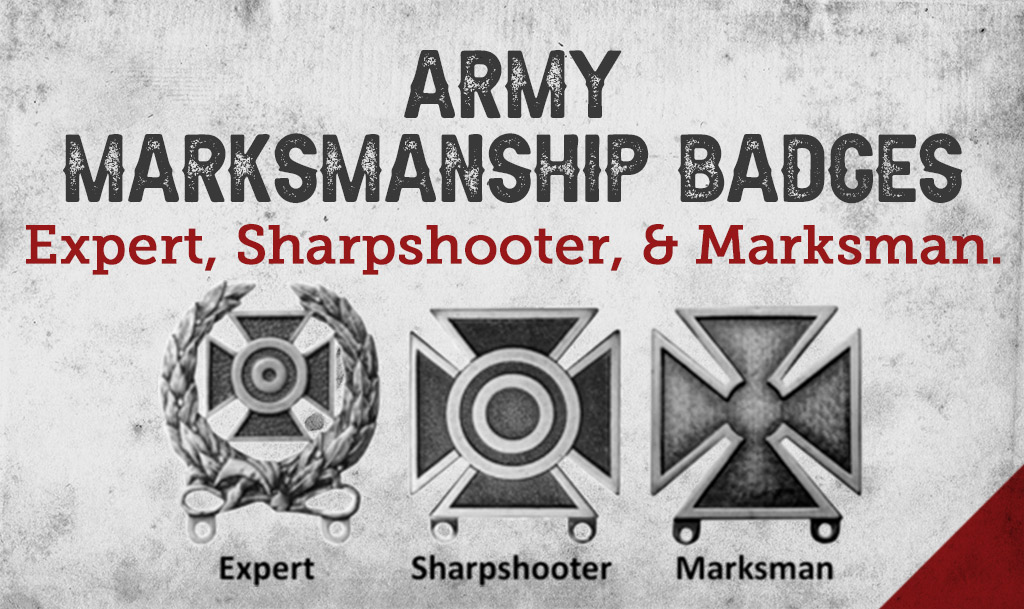
Marksman Badge
The basic qualification level is awarded to soldiers who meet the minimum standards on the Army’s weapons course. It still requires safe handling and the ability to hit targets at different distances. This badge’s design is a squared-off cross.
Sharpshooter Badge
This award is the middle level and requires better performance on the qualification course. Soldiers who earn it demonstrate consistent accuracy and strong foundational skills. The badge resembles the Marksman badge but adds a set of target rings to the center. Many soldiers see the Sharpshooter badge as a true mark of skill, not just the minimum standard.
Expert Badge
The highest regular level, indicating exceptional marksmanship. To earn it, soldiers must hit targets at long range, do well under time limits, and show strong shooting skills. The Expert badge is a source of pride, and many units hold friendly competitions to see who can earn and keep it. This badge takes the sharpshooter design and adds a laurel wreath around it to indicate its highest status.
Each badge can be awarded for different types of weapons. The Army gives badges for rifles, pistols, machine guns, and more. Bars hanging below the badge show which weapon the soldier qualified with. For example, a soldier might wear an Expert Rifle badge with several bars for different rifle types.
Distinguished Badges
These are above the regular qualification levels and honor outstanding marksmanship. The Distinguished Rifleman and Distinguished Pistol Shot badges are the highest awards outside of competition teams. To earn one, a soldier must collect points by placing high in several matches over time. These badges are rare and highly respected in the Army.
Soldiers who earn Distinguished badges often become marksmanship instructors for their units and share their skills with others. The selection process ensures that only those who demonstrate consistent excellence, not merely a single exceptional performance, receive this honor.
Army Marksmanship Badges: Heritage & Prospects
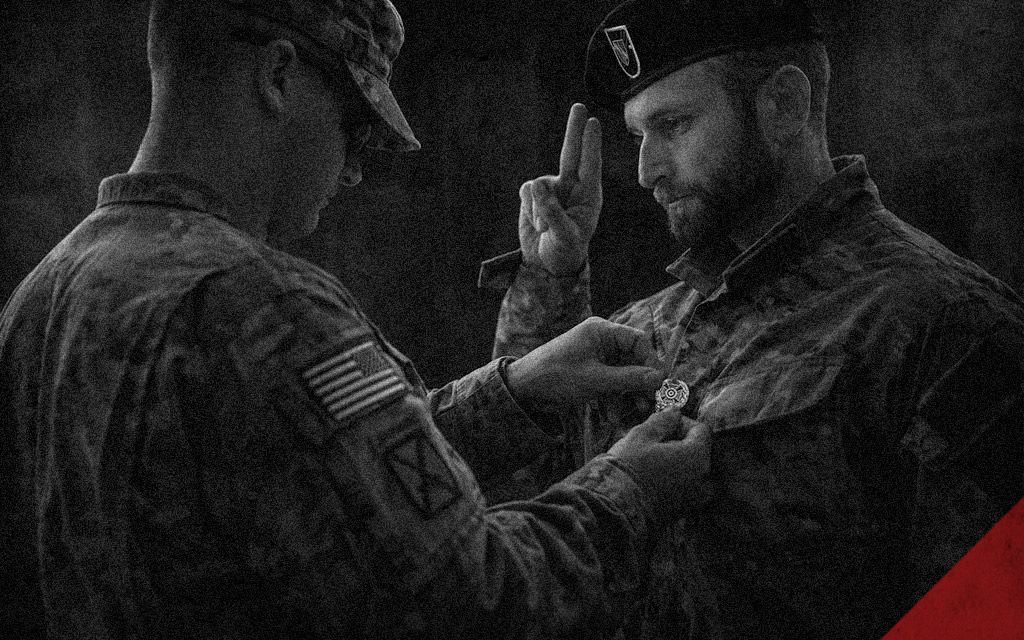
Army Marksmanship Badges: Soldiers earn marksmanship badges to recognize achievement and encourage excellence.
The program continues to change to meet new challenges. Today’s training draws on lessons from recent wars and focuses on integrating shooting with movement, communication, and decision-making. Advanced simulators enable soldiers to practice scenarios that are difficult or impossible to reproduce on conventional ranges.
The connection between military marksmanship and civilian shooting sports remains strong. The CMP continues to help Americans improve their shooting skills. Army shooters who compete internationally continue a tradition of excellence that is over a hundred years old, representing both their service and the wider American shooting community.
The badge system is updated periodically to reflect new weapons and training, but its primary goal remains the same: to recognize achievement and encourage excellence. Whether a soldier earns a Marksman badge through hard work or a Distinguished badge after years of competition, these awards show the Army’s ongoing commitment to marksmanship as a key military skill.
Even as technology and warfare change, the basics of Army marksmanship remain the same: disciplined training, standard testing, and recognizing achievement. These principles help American soldiers keep the shooting skills they need to succeed and set a high standard that extends across the Army and into civilian life.
You may also like