



Have you always wanted to become a police officer? Perhaps you feel a strong urge to help others or have always wanted to help your community. Maybe being an officer is a family tradition. Or, you might be seeking camaraderie after leaving the military. These are common reasons why many people become officers. However, believe it or not, another reason I’ve heard from people is “Because I think it’ll be cool.”
Is Being an Officer the Job for You?
First, ask yourself, “Why do I want to do the job?”
I know it’s a little cliché. But it’s a good idea to have a clear reason for wanting to become a police officer. I would often ask my classes this question when teaching at the police academy.
It’s kind of funny being on the other side of that question. When I was in the academy, I never liked answering it and felt like every instructor would ask it. However, from the other side, it makes total sense to ask. The answers give you a good feel for the class and a sense of how to go about instructing them.
It’s also a good idea to do a few ride-alongs with different agencies. This helps you gain a sense of the job and how various agencies operate. For those unfamiliar, a ride-along is a program that allows individuals to accompany an officer during their shift, providing insight into their daily activities and duties. It’ll also give the individual a look into some of the daily challenges officers face.
Standards to Meet to Become a Police Officer
Depending on which state you live in, there are different standards and qualifications you’ll have to meet before becoming a police officer. While there is no single national standard, each state establishes its own certification requirements through its POST (Peace Officer Standards and Training) board or equivalent agency. The basic minimum standards to become an officer are that you must be at least 19 years old, a U.S. citizen, and hold a high school diploma or its equivalent.
Below is a quick list of the minimum statewide requirements to become a police officer that are common across the United States.
| Requirement | Minimum Standard | Overview |
|---|---|---|
| Minimum Age | 21 years old (some states allow 18–20) | Several states allow applicants at 18. |
| Citizenship | U.S. citizen | Required in nearly every state. |
| Education | High school diploma or GED | Many agencies prefer or reward college degrees. |
| Driver’s License | Valid state driver’s license | Required in every state. |
| Criminal History | No felony convictions | Required in every state. |
| Background Check | Yes, extensive | Required in every state. |
| Fingerprint Check | Yes, state and federal | Required in nearly every state. |
| Drug Test | Yes | Must pass pre-employment drug testing. |
| Medical Eval | Yes | Must meet vision, hearing, and general health standards. |
| Psychological Eval | Yes | A licensed psychologist must evaluate for duty. |
| Fitness Eval | Yes | Common in most states. |
| Written Exam | Yes, aptitude | Measures reading, writing, reasoning, and judgment. |
| Stress Exam | Yes, polygraph or voice | Required in nearly every state. |
| Police Academy | 600–900 training hours | The national average is 21 weeks of training. |
| Firearms Qualification | Yes | Must qualify with duty weapons before certification. |
| State Certification Exam | Yes, most states | Must pass before becoming a certified peace officer. |
| Field Training Program (FTO) | 8–20 weeks after police academy | Must work under experienced FTO officers before solo patrol. |
How to Become a Police Officer
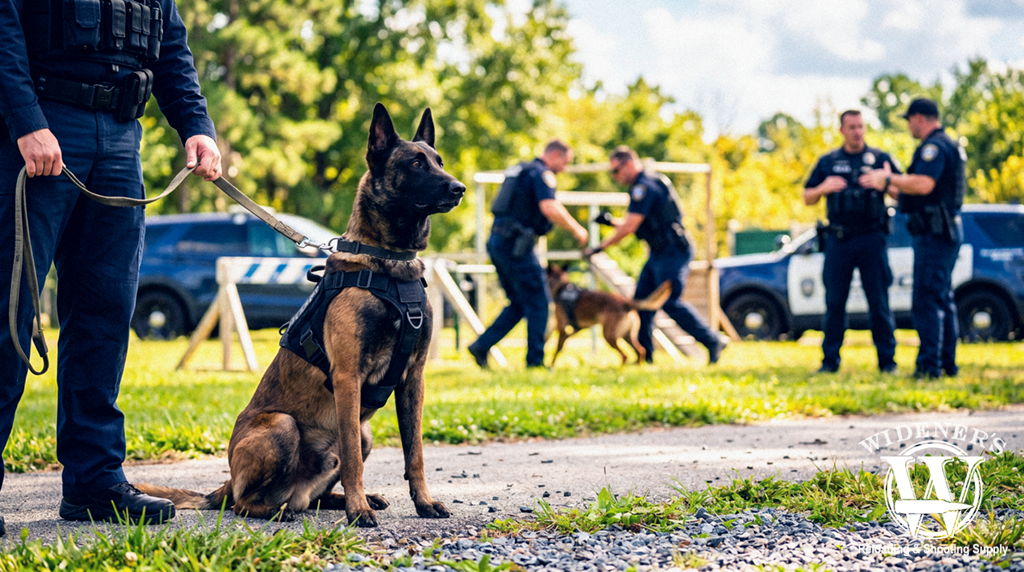
First Steps: You’ll need to get accepted into a police academy program if you want to become a police officer.
First things first, you’ll need to get accepted to a police academy. In most states, there are one of two ways to go about this.
You can get hired by an agency and have them pay for you to go to the police academy, which is known as getting “sponsored”. Also, if you’re sponsored, you’ll receive a paycheck from the agency paying for you to attend.
Once sponsored, you’re an employee of that agency. Or, you can pay for yourself to go to the police academy. In my opinion, option one is the best. I mean, having your tuition to the police academy paid for, while receiving a paycheck, is a kind of win-win situation. Plus, you know you have a job once you graduate and pass your state certification.
Option two is paying for yourself to attend, which can add up quickly. In most states, attending the academy can range from $3,800 to $5,000, not including additional expenses such as uniforms, books, and other related costs. However, there are grants you can obtain to pay for the academy, but that will require some legwork by you to see which ones you can get. After all of that, you’ll still need to look for a job after getting certified. So if you can get sponsored, that’s the way to go.
Police Academy
Attending the police academy is not as easy as applying and getting accepted, as it is for a local college. In most states, you’ll have to pass a background test, a Physical Abilities Test (PAT), and a Criminal Justice Basic Abilities Test (CJBAT). Also, some may require a Test of Adult Basic Education (TABE). However, the CJBAT can be waived for certain applicants. Applicants who are veterans with an honorable discharge or who hold an associate degree or higher from an accredited college or university are exempt from taking the CJBAT.
While attending the academy, you’ll take several law classes along with multiple “high liability” courses, which are firearms, defensive tactics, driving, and first aid. Each course requires you to score 80% or higher (including the state certification test). Once again, this is for most states. You’ll have to check the academy’s rules and regulations for the state in which you are in.
Also, research, research, research! You don’t want any surprises when applying to the police academy. For example, in most states, if you’re not a resident, the cost of the academy increases from $3,800-$5,000 to $9,000-$10,000. So it will benefit you to be a resident of the state where you plan to attend the academy.
What Happens After the Police Academy?
Applying to an agency can and will seem overwhelming, but you have to remember why you’re doing it. The applications are in-depth, time-consuming, and they ask many questions about periods of your life. One common question (never good for people who moved around a lot as a kid, like myself) is, “List every place you’ve ever lived.” For some, this can be an overwhelming question. Especially for people who consider themselves “Army Brats” and have moved around a lot.
Once an agency accepts your application, you’ll have to pass a polygraph test, a background test, a drug test, and a psychological test, along with others. Some agencies require you to take a basic math, reading, and spelling test.
Some good-to-know information about the background check is the criminal history portion. Anything misdemeanor-related won’t necessarily knock you out of the running for getting hired. Anything regarding domestic violence will disqualify you right away. Those traffic tickets you may have? Take it from me, you still have a chance, speaking from personal experience. I may have had my share back in the day.
Do You Need a Degree to Become a Police Officer?
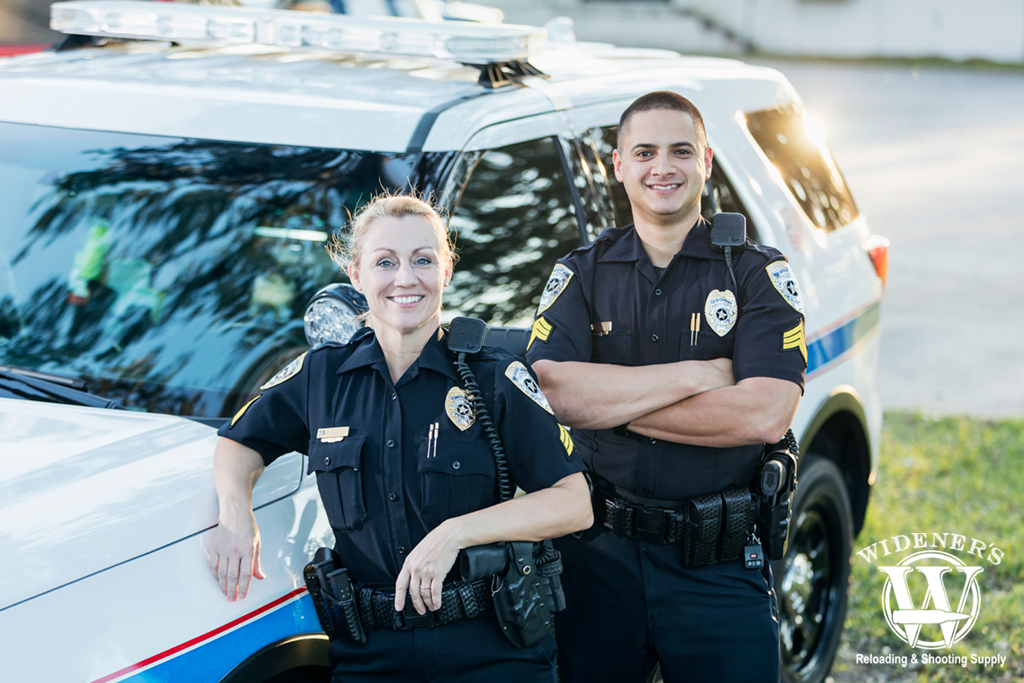
Becoming a police officer requires a GED or high school diploma, and for some specific duties, a completed associate’s or bachelor’s degree.
Whether you need a degree or not depends on the state or agency you’re applying to. Most states and agencies require a high school diploma or a GED. Depending on the individual agency you’re applying to, they may require a college degree or a certain number of college credits. But that would fall under their policies.
Recent information shows that only 1% of agencies in the United States require a four-year degree. About 80% only require a high school diploma, which leaves just over 15% preferring a college degree or a certain amount of college credits. Still, it won’t hurt to have a degree or a few credits to set yourself apart from other applicants.
Military Applicants
If you’re prior-service or currently serving in the National Guard or Reserves (like me), you can claim Veterans’ Preference. Veterans can receive a 5-point or 10-point preference in the hiring process based on their status and discharge.
A 5-point preference is given when you have either served during a war, served for more than 180 consecutive days on active duty and received an Honorable Discharge, or a campaign for which a campaign medal was authorized.
As for the 10-point preference, it is given to those who are service-connected disabled or who received a Purple Heart. To receive this preference, you’ll need to submit a copy of your DD-214 and documentation of your disability from the VA (Department of Veterans Affairs).
There is also a Sole Survivorship Preference, which is when the applicant is the only surviving child of a parent ot sibling who served and was killed or permanently disabled.
Be Patient When Trying to Become a Police Officer
Patience is a virtue! Applying to a police department is no quick process. I’ve spoken to many people, all of whom have different time lengths for getting hired. Some have said it took about a month or two, and others (like me) have had to wait much longer before getting hired at my first agency. You have to keep your foot on the gas and keep applying until you get hired. Some advice that helped me was to apply to a small agency and, after gaining some experience, apply for a larger agency.
Smaller agencies are a great way to get started as an officer. It allows you to hone your skills and explore your interests, such as narcotics investigation, violent crimes, and traffic enforcement. Also, you’ll have a smaller workload, which allows you to see if this is the right field for you.
Hiring Process

Be Patient: Applying to a police department is no quick process. There are numerous training sessions, tests, and classes to complete.
All in all, it’s not a quick process to get hired. There are numerous training sessions, tests, and classes to complete, as well as forms to fill out. And don’t forget the waiting around for a call from the agencies to which you applied. But you mustn’t forget why you started the process in the first place. Keep at it, and when you get the call, take action. It takes a special person to do the job, so why not you?
Learn more about police firearm training and the ammo they carry in our ongoing series.
Guest writer Anton Jefferson served 15 years in the Army, 10 years in law enforcement, and 5 years on the SWAT team. He is a former police officer who works as a firearms and defensive tactics instructor.
You may also like
