


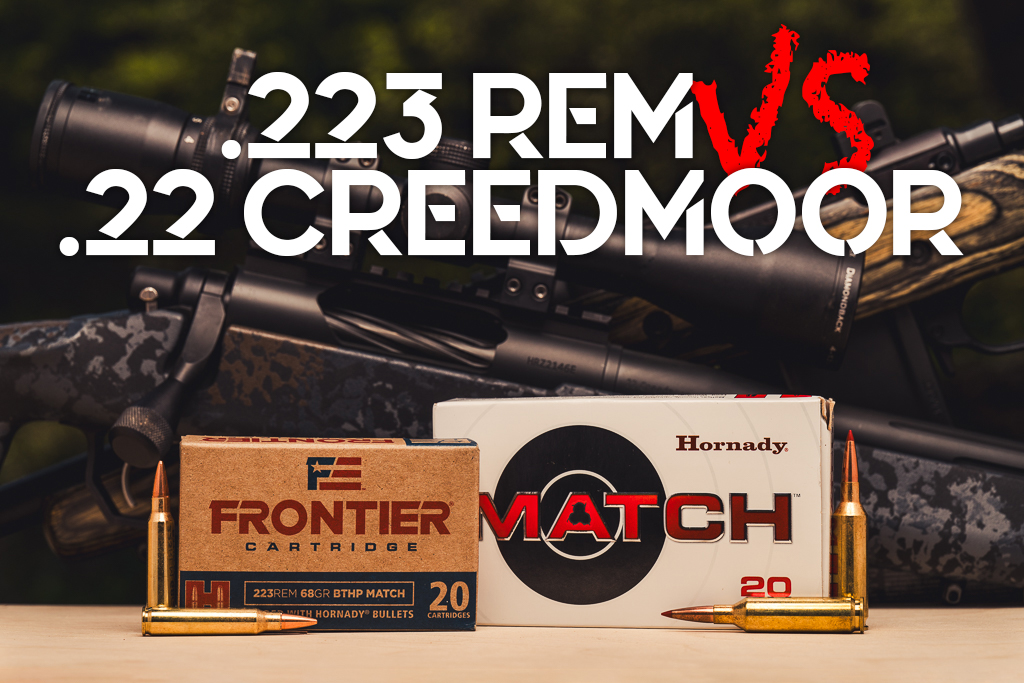
The .22 Creedmoor vs. .223 Remington conversation compares two very different approaches to .224-caliber performance. One is a modern high-velocity cartridge designed for extreme speed and long-range efficiency. The other is one of the most widely used rifle cartridges in the world. It’s known for being readily available, affordable, and reliable.
The .223 Remington has been a staple for decades in hunting, target shooting, and military applications. The recoil is quite manageable. You can find it at just about any gun store or sporting goods location, and it delivers solid accuracy out to 500 yards.
The .22 Creedmoor is a much newer cartridge. It was created by necking down a 6.5 Creedmoor case and holds a 0.224-inch diameter bullet. The result is a high-capacity case that can propel heavier bullets at extremely high speeds.
22 Creedmoor VS 223 Remington
The .22 Creedmoor is essentially a necked-down 6.5 Creedmoor, which means it has a larger case capacity than the .223 Remington. That larger case allows the .22 Creedmoor to burn more powder and generate higher velocities with heavier bullets. However, it also requires a short-action bolt rifle and is generally not compatible with standard AR-15 platforms.
The .223 Remington, on the other hand, was designed for lightweight rifles and semi-automatic platforms. You can find magazines and other accessories just about anywhere guns and ammo are sold.
Although both cartridges fire .224-diameter bullets, there are some noticeable differences in their cases:
| Cartridge Specs | .22 Creedmoor | .223 Remington |
|---|---|---|
| Parent Casing | 6.5mm Creedmoor | .222 Remington |
| Bullet Diameter | .224″ | .224″ |
| Neck Diameter | .256″ | .253″ |
| Base Diameter | .470″ | .376″ |
| Case Length | 1.92″ | 1.76″ |
| Overall Length | 2.45″ | 2.26″ |
| Grain Weight | 65gr-95gr | 36gr-77gr |
| Max Pressure (SAMMI) | 62,000 PSI | 55,000 PSI |
22 Creedmoor Dimensions:
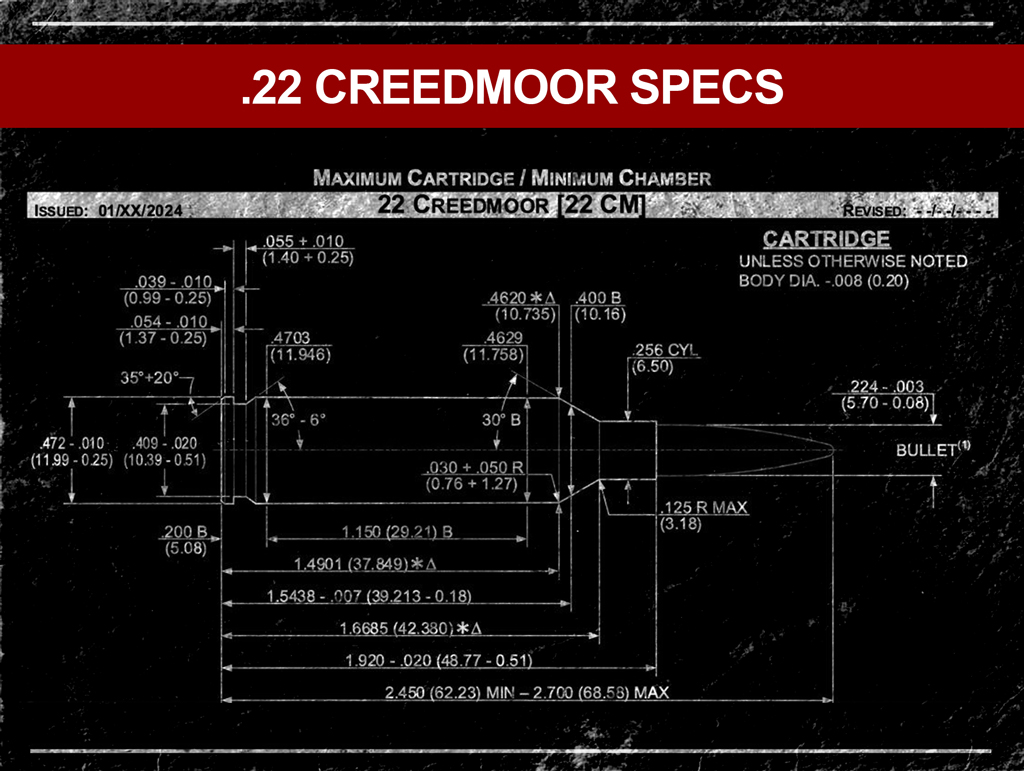
It may be the new kid on the block, but .22 Creedmoor holds its own ballistically.
- Designed: 2023
- Designer: Hornady & Derrick Ratliff
- Type: Centerfire Rifle
- Case capacity: 52.6gr H2O
223 Remington Dimensions:
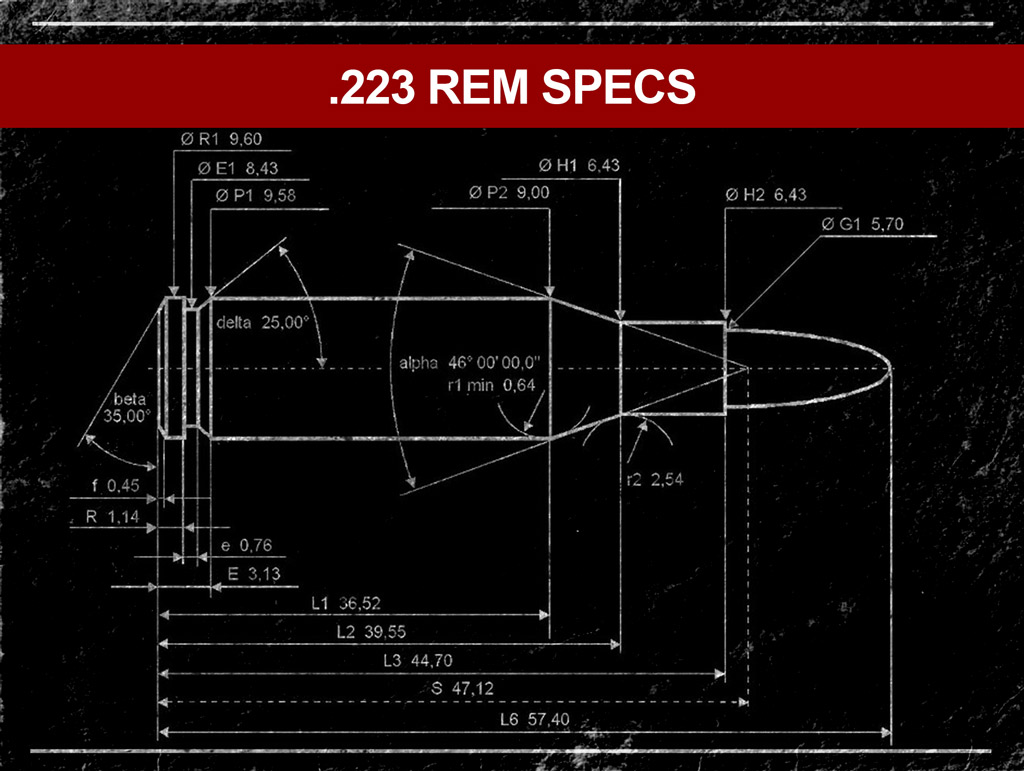
The .223 Rem is an industry-standard when it comes to centerfire rifle cartridges.
- Designed: 1962
- Designer: Remington Arms
- Type: Centerfire Rifle
- Case capacity: 28.8GR H2O
Cartridge Comparison
There are plenty of centerfire ammo options out there for both the .22 Creedmoor and the .223 Rem. I selected these loads because they’re produced by the same manufacturer and have similar bullet weights, which results in a more meaningful comparison. I chose the best apples-to-apples comparison I could find, which are the .22 Creedmoor 69 gr ELD-VT V-Match and the .223 Remington 68 gr BTHP Match Frontier. Take a look at how they match up below:
.22 Creedmoor – 69 gr ELD-VT V-Match
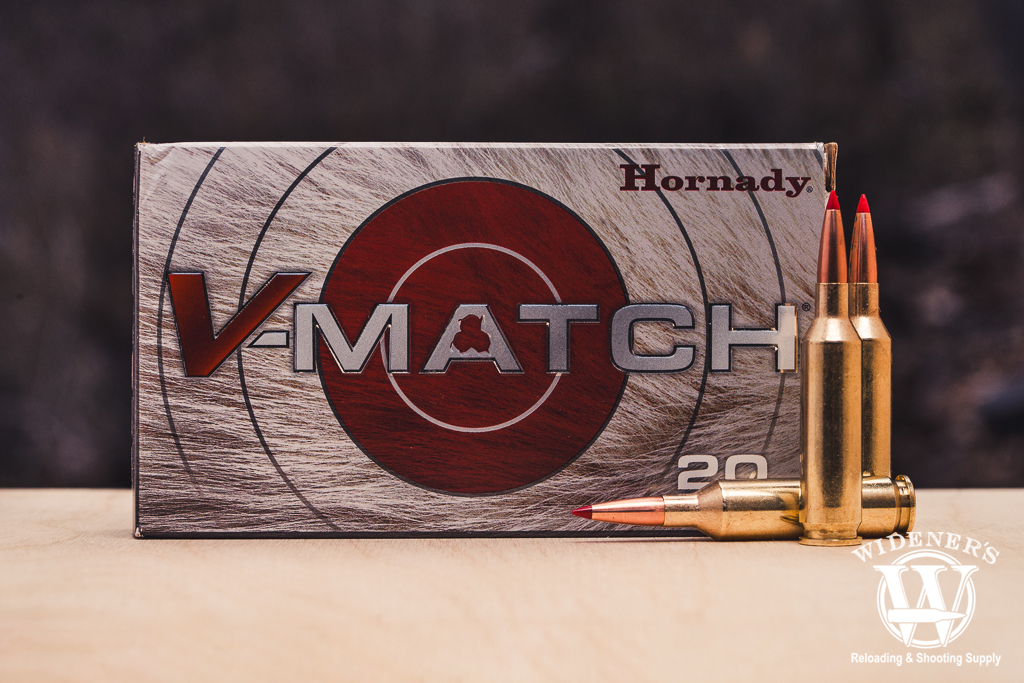
Hornady V-Match ammo gets its reputation from the innovation and precision built into each cartridge.
The 69-grain Hornady ELD-VT .22 Creedmoor load achieves over 3,500 FPS muzzle velocity and nearly 2,000 ft-lbs of energy— extremely fast for a .22-caliber projectile. That velocity advantage is the defining feature of this cartridge. With significantly more powder capacity than a .223 Remington, the .22 Creedmoor can launch a similar bullet weight hundreds of feet per second faster.
| Caliber | Bullet Type | Bullet Weight | Velocity (Muzzle) | Energy (Muzzle) | 100 Yards (Velocity/Energy) | 200 Yards (Velocity/Energy) | 300 Yards (Velocity/Energy) |
|---|---|---|---|---|---|---|---|
| .22 Creedmoor | Poly | 69gr | 3,550 FPS | 1,931 FT LBS | 3,296 FPS/1,664 FT LBS | 3,057 FPS/1,432 FT LBS | 2,832 FPS/1,229 FT LBS |

Hornady Match 6.5mm Creedmoor 140 Grain ELD - 20 Rounds
$38.85
Shop Now

Hornady 6.5 Creedmoor 147 Grain ELD Match – 20 Rounds
$38.85
Shop Now

Hornady 6.5 Creedmoor 147 Grain ELD Match – 200 Rounds
$374.85
Shop Now

Hornady 6.5 Creedmoor 140 Grain ELD Match – 200 Rounds

Hornady 6.5 Creedmoor 120 Grain ELD Match – 200 Rounds
$389.85
Shop Now

Federal Gold Medal 6.5 Creedmoor 140 Grain MatchKing HPBT – 20 Rounds
$39.85
Shop Now

Federal Gold Medal 6.5 Creedmoor 140 Grain Sierra MatchKing BTHP – 200 Rounds
$379.85
Shop Now

Hornady 6.5 Creedmoor 120 Grain ELD Match – 20 Rounds
$38.85
Shop Now


.223 Remington – 68 gr BTHP Match Frontier
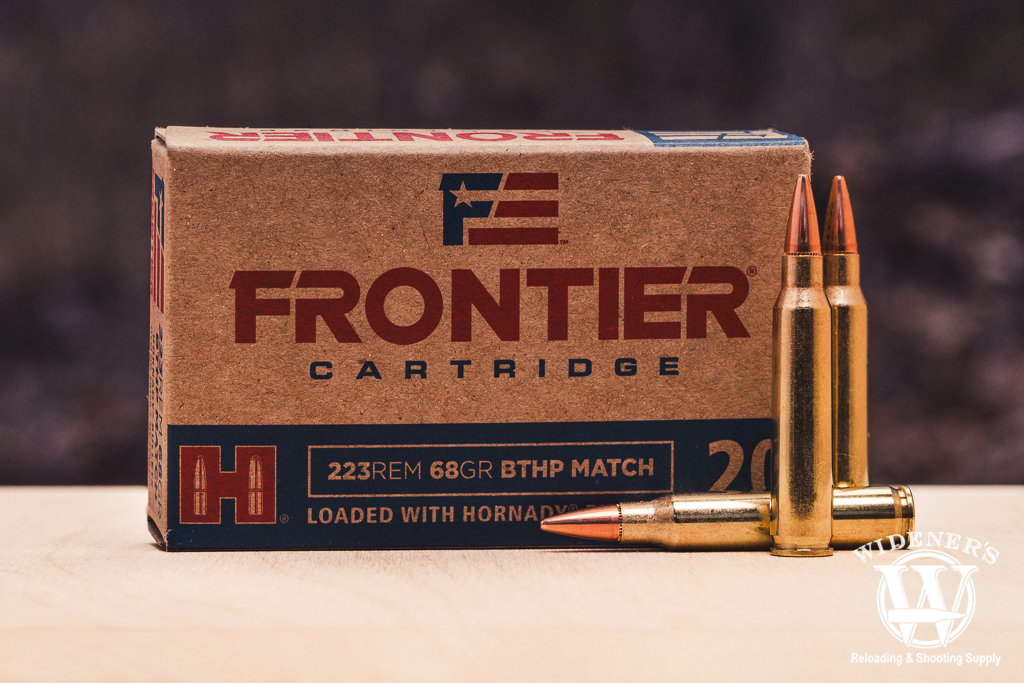
The Hornady Frontier line is configured for plinking, target shooting, hunting, law enforcement training, and self‑defense.
Meanwhile, the .223 Remington loads with similar bullet weights typically operate in the 2700-2900 FPS range, depending on the load type and barrel length. The sample data in the table above is provided by Hornady, which uses a 24” barrel in its testing. You’re seeing 2,960 FPS at the muzzle, and 1,323 FT LBS, giving it about 31% less energy than the .22 Creedmoor round.
| Caliber | Bullet Type | Bullet Weight | Velocity (Muzzle) | Energy (Muzzle) | 100 Yards (Velocity/Energy) | 200 Yards (Velocity/Energy) | 300 Yards (Velocity/Energy) |
|---|---|---|---|---|---|---|---|
| .223 Rem | BTHP | 68gr | 2,960 FPS | 1,323 FT LBS | 2,697 FPS/1,098 FT LBS | 2,449 FPS/906 FT LBS | 2,215 FPS/741 FT LBS |

PMC 223 Rem 55 Grain FMJ-BT – 1000 Rounds

PMC 223 Rem 55 Grain FMJ - 20 Rounds
$12.55
Shop Now

Fiocchi 223 Rem 55 Grain FMJ – 50 Rounds
$29.85
Shop Now

Fiocchi 223 Rem 55 Grain FMJ – 1000 Rounds
$467.85
Shop Now

Federal 223 Rem 55 Grain American Eagle FMJBT - 20 Rounds
$15.85
Shop Now

Federal American Eagle 223 Remington 55 Grain FMJ-BT – 500 Rounds

Federal American Eagle 223 Rem 62 Grain FMJ-BT – 20 Rounds
$15.85
Shop Now

Hornady 223 Rem 55 Grain FMJ-BT - 500 Rounds
$259.85
Shop Now

Federal American Eagle 223 Rem 62 Grain FMJ-BT - 500 Rounds
$264.85
Shop Now

PMC Battle Pack 223 Rem 55 Grain FMJ - 1000 Rounds
$479.85
Shop Now

Hornady BLACK 223 Rem 62 Grain FMJ – 200 Rounds
$169.85
Shop Now

Winchester USA 223 Rem 55 Grain FMJ – 1000 Rounds
$499.85
Shop Now

Winchester USA 223 Rem 55 Grain FMJ – 150 Rounds
$83.85
Shop Now

Winchester USA Target 223 Rem 55 Grain FMJ – 20 Rounds
$13.85
Shop Now

Winchester USA Target 223 Rem 55 Grain FMJ – 1000 Rounds
$509.85
Shop Now

Winchester USA 223 Rem 55 Grain FMJ – 600 Rounds
$309.85
Shop Now

Hornady Frontier 223 Rem 55 Grain FMJ – 500 Rounds
$304.85
Shop Now

Fiocchi 223 Rem 62 Grain FMJBT – 50 Rounds
$30.85
Shop Now

Winchester USA 223 Rem 62 Grain FMJ - 20 Rounds
$15.85
Shop Now

Winchester USA 223 Rem 55 Grain FMJ – 800 Rounds
$398.85
Shop Now
Ballistics Overview: 22 Creedmoor vs. 223 Remington
The story of these two cartridges shows through in the ballistics data. As outlined above, the .22 Creedmoor leaves the muzzle faster and with more muzzle energy. In Hornady’s testing, the .22 Creedmoor experienced 27.5” of drop at 500 yards, compared to 45.4” of drop at 500 yards for the .223 Remington. The .22 Creedmoor flies flatter for longer.
Additionally, the .22 Creedmoor can still deliver nearly 900 ft-lbs of energy at 500 yards, compared to just 482 ft-lbs for the .223 Remington. When you want to reach out and touch your target with a light, fast-moving projectile, the .22 Creedmoor delivers.
Pros & Cons: 22 Creedmoor vs. 223 Remington
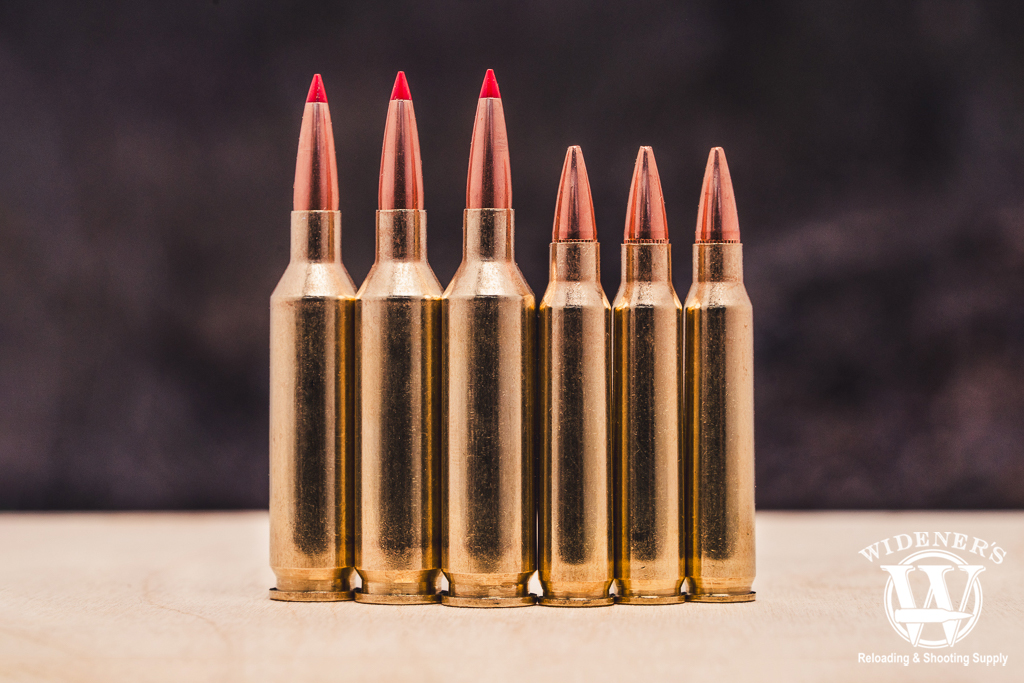
22 Creedmoor VS 223 Remington: The more modern .22 Creedmoor (Left) outpaces the classic .223 Rem (Right).
Here’s a quick rundown of what each cartridge does well, and where it may be lacking.
.22 Creedmoor Pros
- Extremely high muzzle velocity
- Flat trajectory at long distances
- Excellent wind resistance with heavy bullets
- Strong energy retention
.22 Creedmoor Cons
- Shorter barrel life due to high velocity
- Ammunition availability is limited
- Higher cost per round
- Requires a bolt-action rifle
.223 Rem Pros
- Extremely common and affordable ammunition
- Compatible with AR-15 rifles
- Low recoil and easy to shoot
- Excellent accuracy within normal hunting distances
.223 Rem Cons
- Lower velocity and energy
- More wind drift at long range
- Reduced effectiveness past 500 yards
Best Uses of Each Cartridge
Each cartridge excels in certain areas. Here’s what you could use each of these cartridges for.
Best Uses for .22 Creedmoor
The .22 Creedmoor excels in situations where you need long-range performance. Common uses include:
- Long-range varmint hunting
- Hunting small to medium-sized predators (i.e., coyotes)
- Precision rifle competitions
- High-velocity target shooting
The cartridge’s ability to push heavier bullets very fast allows shooters to maintain energy and accuracy well beyond distances typical for .223 Remington.
Best Uses for .223 Rem
The .223 Remington remains one of the most versatile rifle cartridges ever produced. Typical applications include:
- Training and competition
- Varmint hunting inside 300 yards
- Recreational shooting
- Defensive rifle applications
The .223 offers mild recoil, and the round is incredibly affordable. If you are going to be shooting frequently, it’s tough to beat the .223.
Key Differences: 22 Creedmoor VS 223 Remington
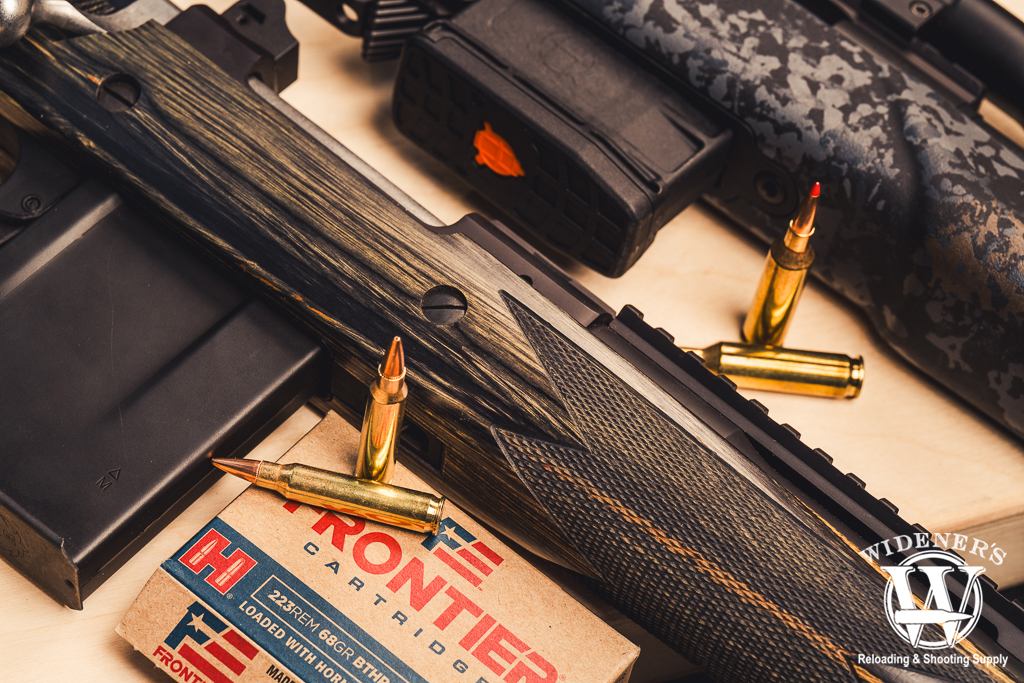
22 Creedmoor VS 223 Remington: Despite their differences in size, the two centerfire cartridges have a lot in common.
Despite being of similar weights and identical diameters, there are some major differences between these two cartridges. Here are the differences that have the biggest impact on your decision-making process.
Velocity
The .22 Creedmoor produces impressive velocity and maintains it for hundreds of yards. It’s simply faster and flatter flying than the .223 Remington. While the .223 is respectable, it is also slower than the newer round. The .22 Creedmoor wins the velocity match-up by a landslide.
Case Capacity: 22 Creedmoor vs. 223 Remington
Since the Creedmoor case is significantly larger, it allows for more powder and greater velocity potential. The .22 Creedmoor is nearly 2 tenths of an inch longer. That leaves plenty of room for extra gunpowder. However, the longer case length can be viewed as both a pro and a con. It’s beneficial because of the extra powder capacity, but the longer length means shooters will need a bolt-action gun to fire the .22 Creedmoor.
Platform Compatibility
The biggest downside to the .22 Creedmoor is that it’s primarily used in bolt-action guns. While bolt guns offer plenty of value in their own right, they are not as customizable or versatile as AR-pattern rifles. I consider this a win for the .223 Remington, as it is the hallmark cartridge for the AR-15.
Cost: 22 Creedmoor vs. 223 Remington
The cost per round varies depending on which cartridge you purchase. However, during my research, .223 Remington was consistently cheaper than .22 Creedmoor. Many .223 Remington cartridges are around $0.60 each. I couldn’t find any .22 Creedmoor cartridges for less than $1 a round, with many ranging from $1.60 to around $3 each. The .223 Remington wins the cost battle.
Range
So far, each cartridge has won two of the five comparison categories. The .22 Creedmoor wins the range battle, outperforming the .223 Remington across all performance metrics. You can deliver meaningful energy at longer distances and with much less bullet drop.
Brief History: 22 Creedmoor VS 223 Remington
Learning how each cartridge got its start may not play into your decision-making process, but it’s important to understand the origin of the .223 Remington and .22 Creedmoor.
History of .223 Remington
The .223 Remington was developed in the late 1950s as part of the U.S. military’s search for a lightweight, high-velocity cartridge. It eventually became the civilian counterpart to the 5.56×45 NATO round used in the M16 rifle. Over the decades, it became one of the most popular cartridges in the United States due to its:
- Mild recoil
- Low cost
- Compatibility with AR-15 rifles
Today, it remains a standard for sport shooting, hunting, and law enforcement. The .223 Remington isn’t going anywhere.
History of .22 Creedmoor
The .22 Creedmoor is a much newer cartridge that originated as a wildcat design before being standardized. Hornady officially introduced and standardized the cartridge in 2024, building it from the 6.5 Creedmoor case necked down to .224 caliber. The design goal was to produce a high-velocity .22-caliber cartridge capable of propelling heavy bullets for long-range shooting.
Since its introduction, the .22 Creedmoor has gained popularity among precision rifle shooters. If it continues to gain traction, .22 Creedmoor cartridge prices should eventually come down. However, it will likely remain more costly than the .223 Remington.
22 Creedmoor VS 223 Remington: Which Is Better?
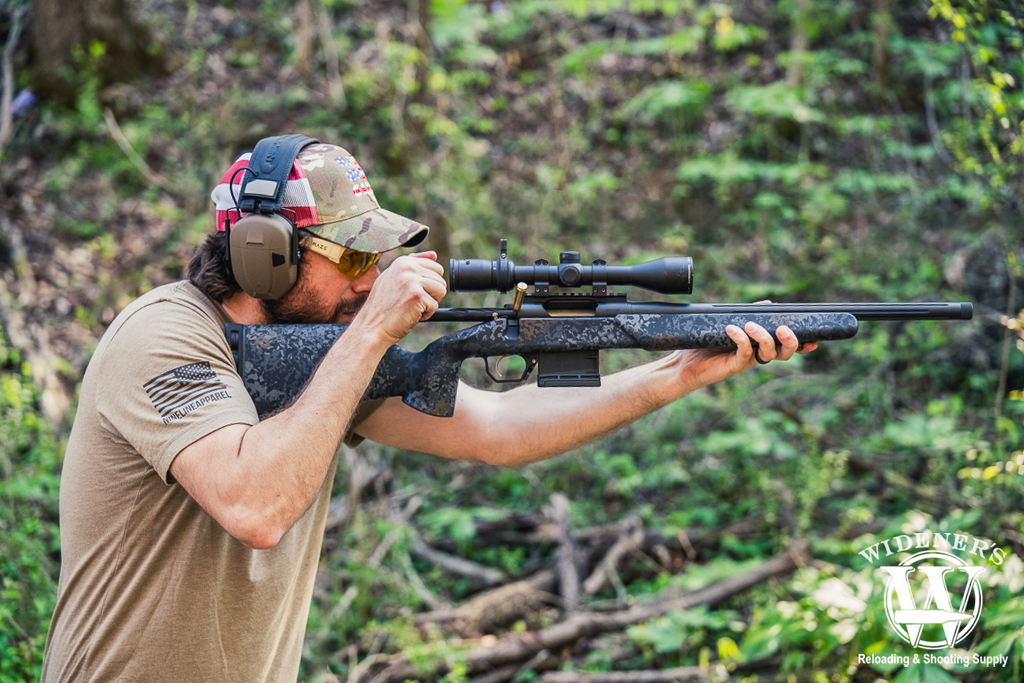
Both options have bolt-action platforms, but you’ll need to step up to the AR-10 platform for a .22 Creedmoor semi-auto.
As always, your buying decision comes down to what you need (or want) to use the rifle for.
The .223 Remington is affordable and widely available. It’s a staple cartridge that should be part of any shooter’s arsenal. If bulk pricing and compatibility are at the top of your list, the .223 Rem is an easy choice. You can find a bolt-action rifle or an AR-15 to run it in any gun store. It’s been around for more than sixty years and shows no signs of losing popularity in the market.
The .22 Creedmoor is a more niche round, but it is incredibly capable. With more speed and energy than the .223 Rem, it opens the door to more opportunities for hunters and competitors. You can find sub-$1K bolt-action rifles to run it in; however, AR-10 options for semi-auto are still somewhat limited (and pricey). If your priorities include extreme velocity, long-range accuracy, and a flatter trajectory, you will be hard-pressed to beat the .22 Creedmoor.
You may also like
