
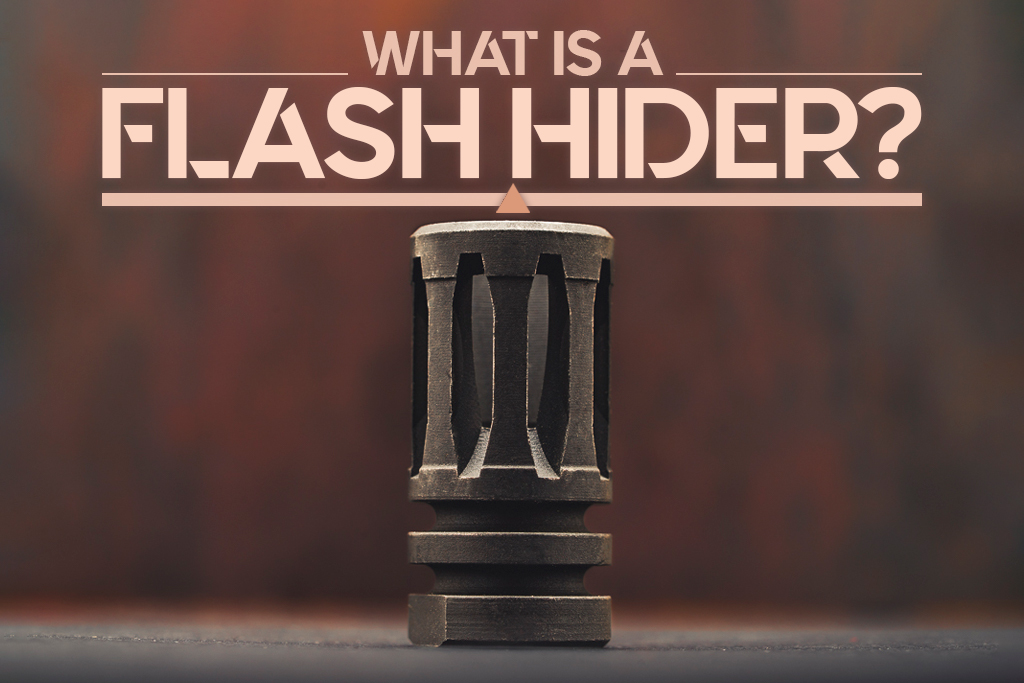
Along with muzzle brakes, suppressors, and compensators, a flash hider is an option you can attach to the end of a gun. But what do they really do? And are they really worth your time? This article will dive into the specifics of flash hiders.
A flash hider is a firearm accessory that attaches to the end of the gun’s barrel and works to reduce muzzle flash by cooling gases and unburned powder as they exit the muzzle. A flash hider is often a key tool for those who are operating at night, as the reduction in muzzle flash improves their sight picture and reduces the chance of an enemy discovering their position.
In the following sections, we’ll provide more details on why flash hiders are so popular and how they differ from other firearm accessories like muzzle brakes.
How Does a Flash Hider Work?
What is a muzzle flash? And why do we need to use something to suppress it? These are both great questions. First, let’s go over the muzzle flash.
When you fire a single cartridge of ammunition, the resulting explosion burns up the powder while propelling the bullet out of the gun’s barrel.
The problem is when the barrel of the gun is too short to allow the powder to fully burn. When this occurs, we get the muzzle flash, essentially a ball of fire “flashing” out the end of the barrel, following the bullet. That’s where the flash hider comes in, attaching to the end of the barrel to help dissipate gases and reduce visual flash.
Note: The keyword here is “reduce.” Flash hiders do not eliminate muzzle flash; they simply make it more manageable.
In the older days, when firearms had particularly long barrels, muzzle flash was less of an issue. However, as gun barrels became smaller, particularly with the rise of carbine weapons, the issue of muzzle flash became more and more serious. The answer to this problem is the humble flash hider.
However, the flash hider (or flash suppressor, as it’s often called) is not the only answer. Let’s talk about it.
What Are The Benefits of a Flash Hider?
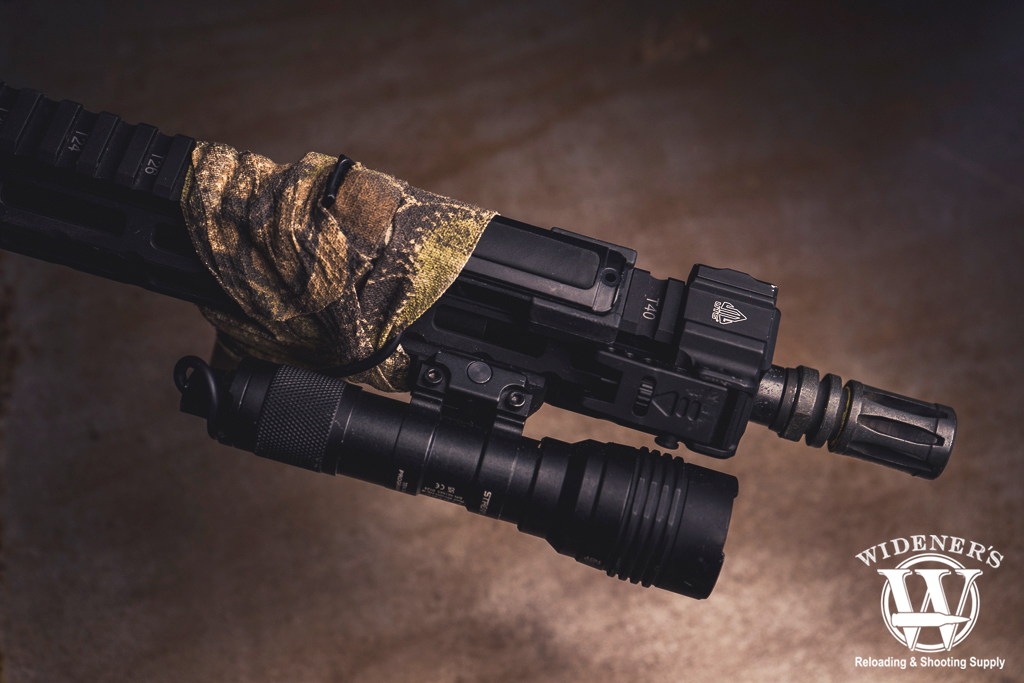
Flash hiders are inexpensive, easy to install, and do not reduce power, accuracy, or maneuverability.
While flash hiders aren’t the only solution to muzzle flash, they’re probably among the best. To understand why we use them, let’s look at a couple of other “answers” and highlight why they are ultimately unsatisfactory.
Think about what’s happening with a muzzle flash. You have too much powder and too short a barrel. There are really only two things you can do.
You can reduce the amount or power of the powder in the cartridge. This can work up to a point, but it comes with some drawbacks. First, you lose a good amount of power. Second, you lose some accuracy, since the bullet won’t fly as flat with that lessened power.
On the other hand, you could lengthen the barrel. But that defeats the whole point of the carbine-length firearm: reduced weight and better control, particularly in tight spaces.
That’s why the flash hider stands out as the middle ground that wins the battle. They’re cheap, simple to install, and don’t sacrifice power, accuracy, or maneuverability. There are many types, and they work differently from muzzle brakes or compensators.
Different Types of Flash Hiders?
Depending on the manufacturer, you will find all sorts of claims about differences in quality, capabilities, and effectiveness. We’re giving you an overview of the main types of flash hiders so you have something to go on as you shop around.
Here are the three main kinds of flash hiders:
- Duckbill
- Birdcage
- Hybrid Flash Hider / Compensator / Muzzle Brake
Let’s look at these in a bit more detail. Also, here’s a good video explaining several types of flash hiders. Prepare yourself for a lot of bird references.
What is a Duck Bill Flash Hider?
First, we have the duckbill. One could better describe this flash hider as “pronged.” However, the term duckbill is more memorable, and when you look at it from the side, it does sort of look like a duck’s bill.
This device often consists of three or four prongs that extend out from the end of the barrel. Typically, there is no specific direction that a duckbill tries to disperse the gases. Duckbill flash hiders are cheap, effective, and reasonably durable.
What is a Birdcage Flash Hider?
The bird cage differs from the duckbill in two ways. First, instead of being “pronged” like the duck bill, the birdcage flash hider has a ring of metal on the end. This ring ensures that the prongs don’t accidentally become misaligned (should the firearm be dropped or struck) and also reduces the chances of getting caught on twigs or underbrush.
Another difference is that it can have a directional component. This means that sometimes it will have a solid side, usually meant to be positioned toward the ground. The idea is that this solid edge (where there is no venting) prevents the gases from going downward, reducing dust plumes.
What is a Hybrid Flash Hider?
The hybrid flash hider is meant to do a little bit of everything. It will act as a muzzle brake and also provide some flash suppression. These can be a good option for operators who need to split the difference and reduce recoil and muzzle rise while keeping flash down.
Flash Hider VS Muzzle Brake VS Compensator?
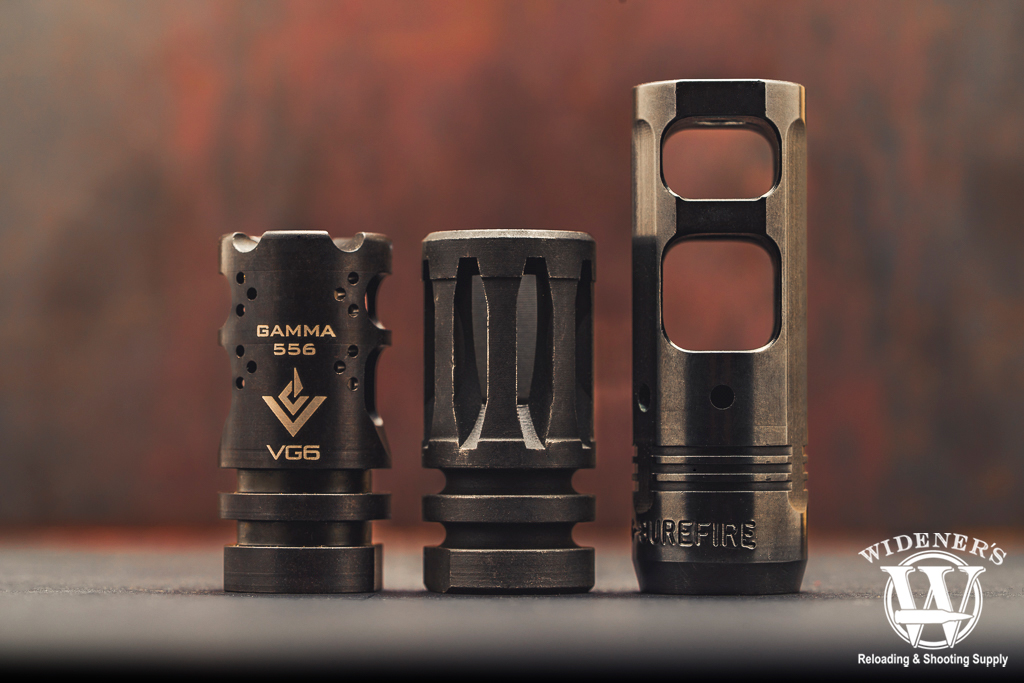
From Left to Right: Muzzle Brake, Flash Hider, and Compensator.
The flash hider reduces the visual “fireball” that appears at the end of the muzzle after firing a round. A muzzle brake reduces the felt recoil of a firearm. A compensator, unlike the muzzle brake, is designed to reduce the muzzle rise of a firearm.
The muzzle brake, compensator, and flash hider are often separate attachments, though some firearms have flash hiders built into the barrel. Still, there are “hybrid” options that attempt to do a little bit of everything.
How to Install a Flash Hider
To install a flash hider, follow the manufacturer’s guidelines for both the gun and the device. The variations between firearms and flash hiders are too numerous to list all the details here, but they’re typically not difficult to install.
Here are a few principles to keep in mind.
What type of flash hider are you installing? If you buy one that doesn’t have a particular set point when you’re threading it to your firearm, it will be a universal fit.
However, there are some cases where you may need to twist the flash hider into a specific position, so be mindful of this during the install.
If you’re someone who intends to fire a lot of rounds from the prone position, consider a specific type of flash hider for this purpose. These devices have a solid undersurface, which means they will redirect fewer gases into the dirt.
If you don’t have a bird cage flash hider and you fire often from the prone position, you’ll create a big dust cloud. Not only does this give away your position (not ideal in tactical or military operations), but you also hinder your own site picture during follow-up shots. This is a bigger deal in dry, desert regions or anywhere with loose sand and dirt.
Concealment Considerations

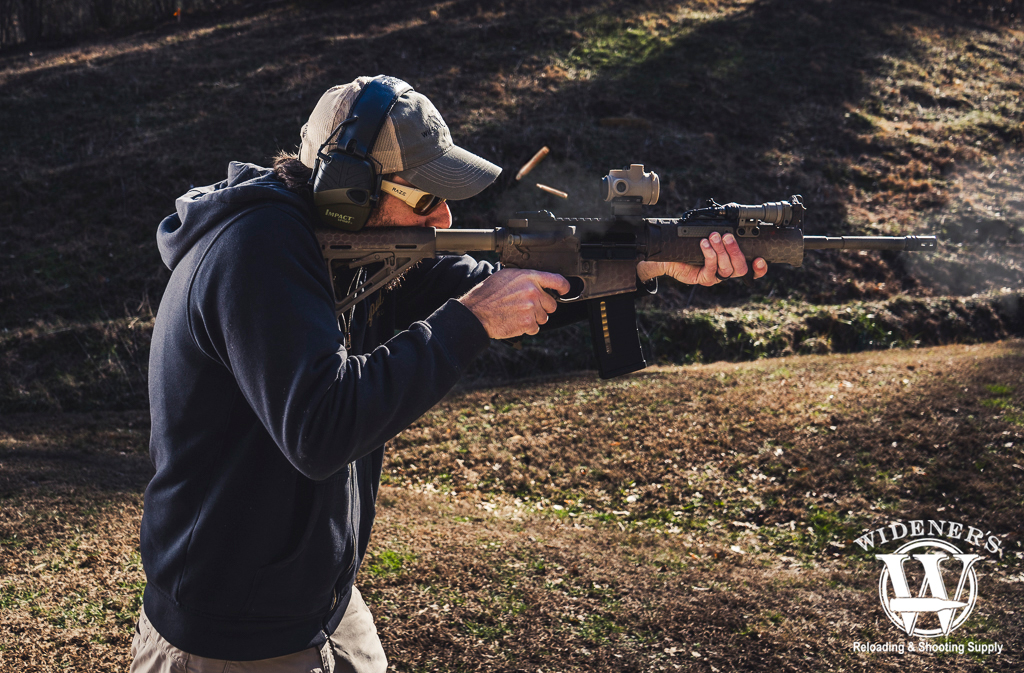
A flash hider reduces the flash from unburned gunpowder exiting a firearm’s barrel, while reducing dust and improving concealment.
For anyone operating at night or in dusty environments, some kind of flash hider is important. They work by cooling those gases at the end of the barrel, reducing the amount of light that flashes at the muzzle. Flash hiders improve concealment and offer a clearer sight picture for the firearm user.
Keep in mind that these devices will not completely hide the flash at the end of the barrel, which is why some people prefer the term flash suppressor. If you’re curious to learn more about firearm accessories, check out our guide to muzzle brakes.