
Law enforcement today uses a wide variety of police vehicles, ranging from sedans to SUVs and even pickup trucks. Ford and Chevy are among the most common brands. Some of the most common makes and models include Dodge Charger, Ford Taurus, Ford Crown Victoria, Ford Explorer, Chevy Tahoe, and Chevy Impala.
Officers make high demands of police vehicles. These include long daily hours, patrolling, extensive mileage, various weather conditions, different types of terrain, and vehicle pursuits. Therefore, these vehicles need to be durable and, most importantly, reliable.
To ensure these vehicles can handle the demand and strain placed on them, police vehicles often come with an “interceptor package.” This is a specialized, enhanced version of a standard vehicle—most commonly a Ford Police Interceptor—designed and built for law enforcement use.
Some core features of an interceptor package include upgrades to the engine, transmission, cooling system, brakes, suspension, and alternator. These police vehicles also come with heavy-duty tires, a reinforced frame, a durable interior, a column shifter, and equipment mounts.
I already mentioned it as the Ford Interceptor package, but the Interceptor also has a “Police Package” called 9C1. This option serves as its police-specific “Interceptor” package. It features heavy-duty brakes and suspension, along with a unique electrical system designed for high-speed emergencies and pursuit operations. This option is only available to law enforcement and government agencies, and not to the general public.
Cars & Trucks: Police Vehicles Over the Years

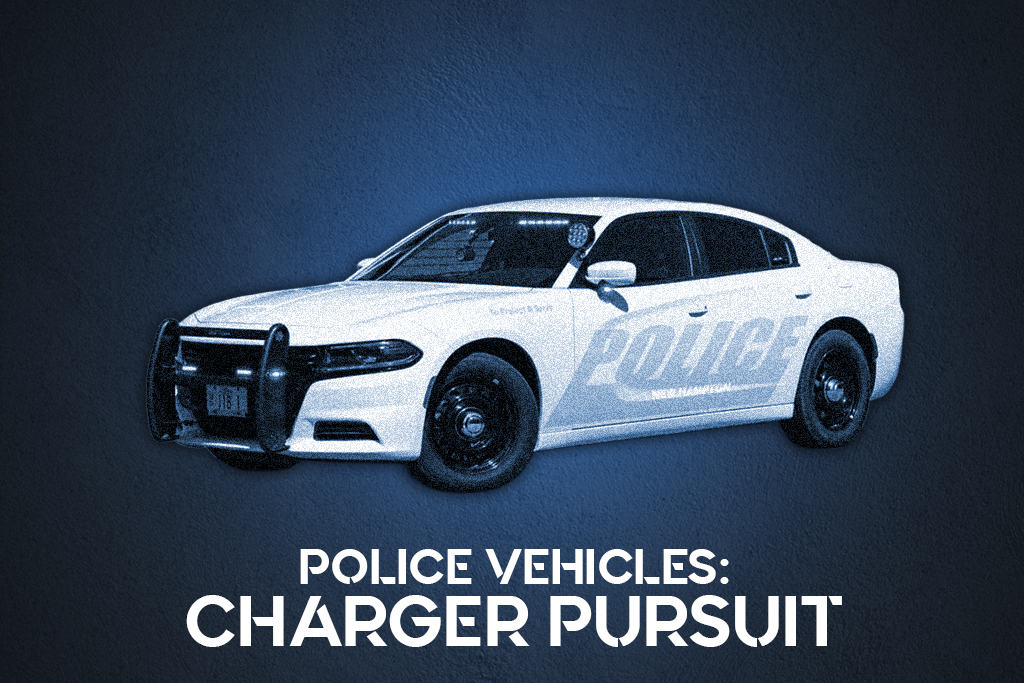
The Dodge Charger Pursuit is a purpose-built sedan, with either a 3.6L V6 or 5.7L HEMI V8, used as a high-speed response unit.
Starting in the early 2000s, law enforcement began to shift away from the Crown Vic, Chevy Impala, and Ford Taurus. The respective auto companies retired the Ford Taurus and Chevrolet Impala around 2020, and the Crown Vic around 2011. The last vehicle to retire was the Dodge Charger, around 2023. Even though these vehicle models retired, the ones in use saw continued service.
One of the main reasons precincts are switching from these vehicles to SUVs is the increased space for occupants and equipment. SUVs also provide all-wheel and four-wheel drive options. These options are vital when driving in poor weather conditions or on different types of terrain.
Pick-up Trucks as Police Vehicles
Law enforcement has used pick-up trucks for decades. Still, the first production law enforcement pursuit-rated truck was the Ford F-150 Police Responder, introduced in 2018. The Ford F-150 Police Responder received an upgrade in 2021 that improved handling, making it faster. Then, in 2022, Chevy introduced the Silverado Police Pursuit Vehicle.
Patrolling VS Vehicle Pursuits
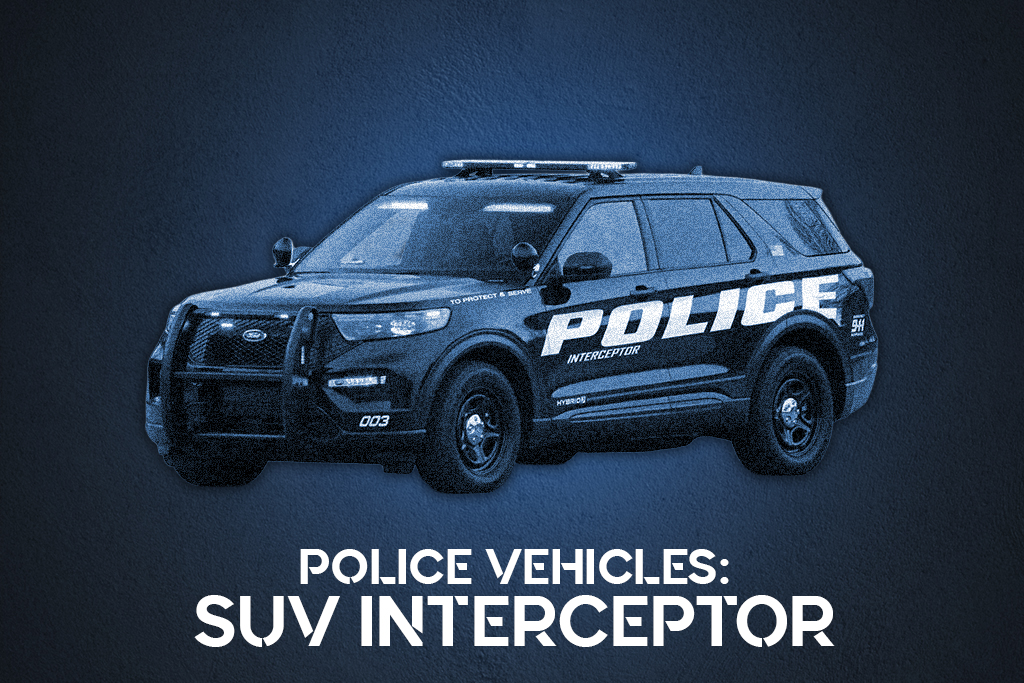
The Ford Explorer Police Interceptor Utility is an AWD SUV designed for law enforcement, with a specialized powertrain.
For daily patrols, any working vehicle will do fine. When completing your daily patrols or responding to non-emergency calls, the officer drives normally, just as one would in their POV (Privately Owned Vehicle). The difference comes into play when you have to respond to emergency calls while driving with lights and sirens, or when actively pursuing a vehicle.
When pursuing a vehicle (a car chase), several factors come into play:
- How well you drive
- Your understanding of how your vehicle performs at different speeds on various roadways
- The environment around you
During a vehicle pursuit, the officer must have complete confidence that their vehicle will perform as needed. This includes driving at high speeds, making sharp turns, and going across different road surfaces.
In my experience, the Ford Explorer Interceptor is best for vehicle pursuits. It has serious speed, is smaller than the Chevy Tahoe, and I feel it handles better, especially when turning.
The Ford Explorer is more spacious than a sedan, so it’s comfortable to be in. But when pursuing a vehicle, it handles like a sedan. The Chevy Tahoes are top-heavy, and when driven at higher speeds, especially around corners, they can feel to me as if they’re going to roll over.
Police Vans (Paddy Waggon)
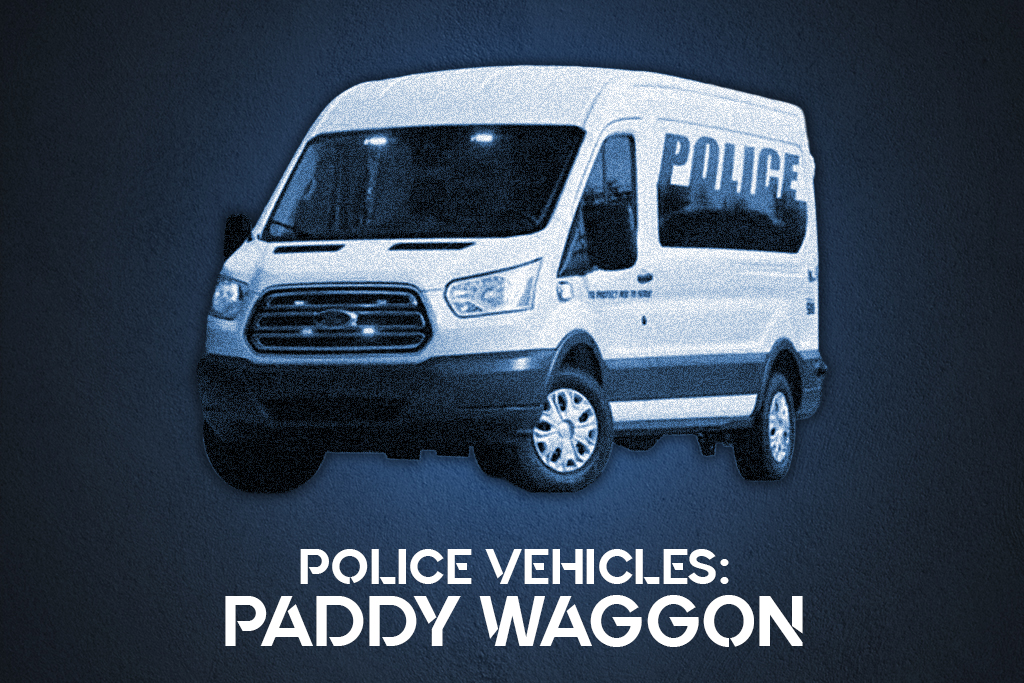
Police vans are versatile LEO vehicles designed for transporting multiple prisoners, deploying teams of officers, and carrying specialized equipment.
The “Paddy Waggon” is a van used by law enforcement to transport prisoners. The term was first used in the late 19th through the early 20th centuries in cities such as New York and Boston. The most common use of the police van is to transport prisoners. Inside are several secured, caged sections, where each individual can sit, separated from the officers and from one another.
Another common use for the police van is as a mobile command center. A Mobile Command Center is a customizable vehicle that serves as a self-contained communication center. In a command center, coordination and decision-making during emergencies or critical situations can be carried out. It’s also equipped with advanced communication systems, data management tools, and workspace configurations.
Armored Police Vehicles
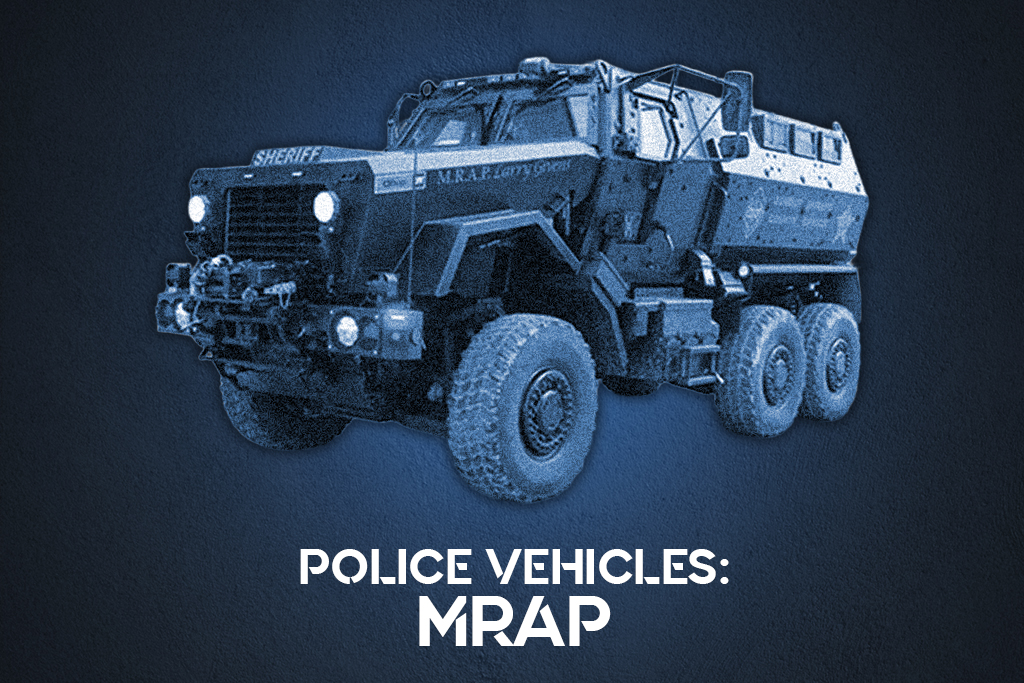
Police MRAPs are heavy-duty, military-surplus armored vehicles designed for maximum occupant protection against IEDs, mines, and gunfire.
Specific situations call for specific equipment. When the going gets tough, situations are escalating, and the danger level rises, there are certain tools one would want in their toolbox. Let’s talk about the BearCat and the MRAP.
The BearCat
The BearCat stands for Ballistic Engineered Armored Response Counter-Attack Truck. Over 1,000 BearCats are used by law enforcement agencies. Along with law enforcement, the BearCat is also used by military and government agencies worldwide. The BearCat is used to safely and quickly transport law enforcement officers in hostile or high-risk situations.
The BearCat is rated to withstand multi-hit attacks from 7.62 AP (armor-piercing) rounds and .50 caliber ammunition. In addition to being able to withstand rounds in multiple calibers, the BearCat is equipped with several shooting ports on all sides, so if officers are taking fire, they can return fire from a covered position.
The MRAP
Now, let’s dive into the MRAP (Mine-Resistant Ambush Protected). The MRAP is a heavily armored law-enforcement vehicle used to protect officers during high-risk situations. These include active shootings, barricaded suspects, or serving warrants. Along with high-risk incidents, this vehicle is often used to rescue civilians. Law enforcement often receives this vehicle from military surplus. The MRAP gets its name from the military, due to its V-shaped hulls to deflect explosions and is equipped to withstand numerous threats from gunfire and improvised explosive devices (IEDs).
When it comes to the use of the MRAP in law enforcement, it’s mostly used for rescue operations. For instance, evacuating people from their homes due to flooding during a hurricane. MRAPs have All Wheel Drive, the ability to cross deep water, and drive well across rough terrain due to their high ground clearance. These qualities make the MRAP a great rescue vehicle for law enforcement.
Motorcycle Police Vehicles
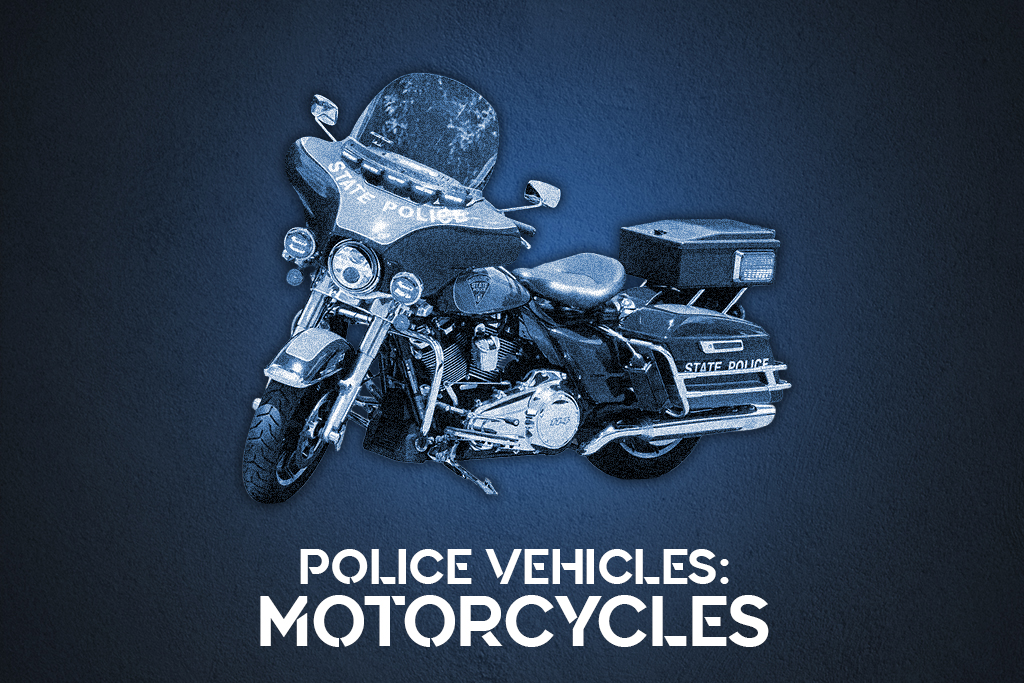
Police motorcycles are engineered for law enforcement use. They are designed for durability, high-speeds, and maneuverability in tight urban traffic.
Law enforcement agencies have been using motorcycles since the early 20th century. In fact, the Los Angeles Police Department’s motorcycle squad has already celebrated its 100th anniversary. Their motorcycle unit, the Speed Squad, formed in 1909. The primary role of motorcycle units is enforcing traffic laws and providing police escorts for funeral processions, motorcades, and marathons, among others.
There are three main types of motorcycle manufacturers that law enforcement use: Harley-Davidson, BMW, and Yamaha. Law enforcement motorcycles are heavy-duty touring bikes, equipped with upgraded safety features, enhanced safety systems, communication gear, storage compartments, and comfortable seating for long patrols.
Honda and Kawasaki are also used by agencies worldwide, but Harley-Davidson is the leading manufacturer of law enforcement motorcycles, especially here in the States.
Health Concerns Resulting from Police Vehicles
When it comes to patrol vehicles, many are unaware of the daily health concerns officers face. With all the gear officers wear around their waist, it puts a lot of strain on the lower back. Personally, I weigh 170 pounds, and with all my equipment on, I weigh around 190. Now, when seated in a patrol car for hours, all the weight is pressing on the lower back and hips. An officer’s duty belt alone can be 20-24 pounds.
When it comes to officers and lower back pain, it’s not a matter of if it’ll happen; it’s when. It is well known that many officers experience lower back pain due to the weight of their duty belts, as well as prolonged sitting and driving.
Due to these problems, many newer police vehicles have been designed to accommodate officers while they’re seated in their patrol cars, allowing them to sit comfortably.
Different Police Vehicles for Different Scenarios
At the end of the day, there is no “best” patrol vehicle to use. It all depends on which unit you’re in and on your agency’s needs. Also, if you’re a larger build person, I’m sure your agency will offer you a Tahoe or a pickup truck to accommodate your build.
From the Crown Vic to the Chevy Tahoe, or the Ford Explorer to the Chevy Impala, the vehicles of law enforcement agencies have definitely evolved over the years. Law enforcement vehicles have also adapted to the needs of officers worldwide. With all the changes and upgrades to police vehicles, one thing has always been the focus: safety and reliability for our officers.
If you’re curious to learn more about the body armor police officers wear, read this article to find out.
Guest writer Anton Jefferson served 15 years in the Army, 10 years in law enforcement, and 5 years on the SWAT team. He is a former police officer who works as a firearms and defensive tactics instructor.