
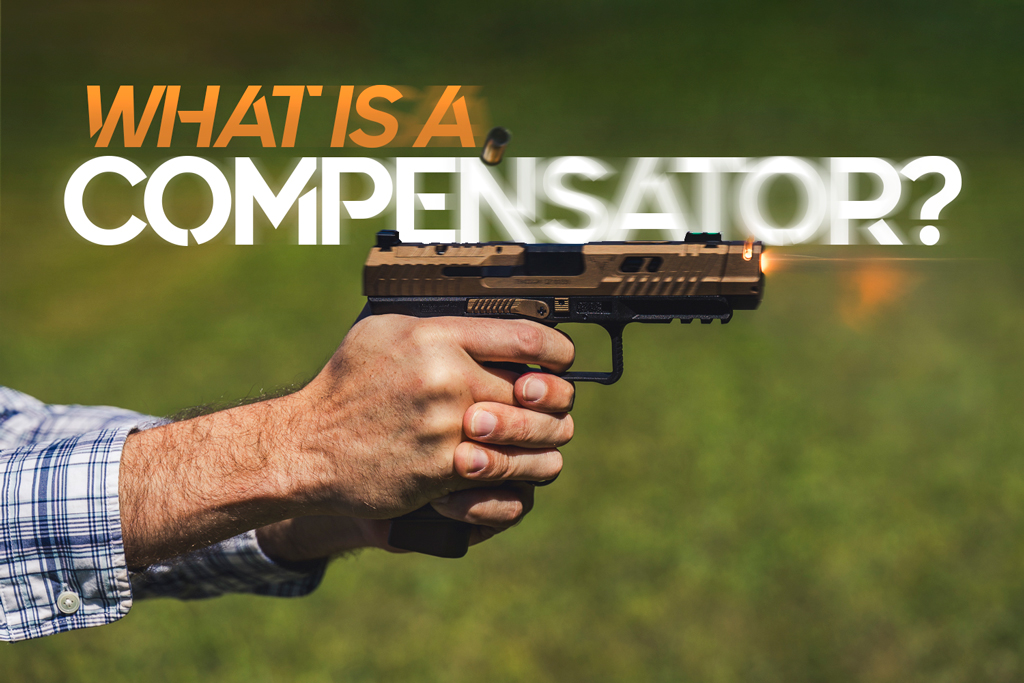
If you’ve been having trouble with muzzle rise, particularly during rapid fire, then a compensator might just be the solution you’re looking for. This article will answer the question: What is a compensator? We’ll also go into detail about different compensator variations and their pros and cons.
A compensator is a firearm attachment that mounts to the end of your gun’s barrel. The compensator’s main objective is to reduce muzzle flip (the phenomenon of the gun barrel “rising” with each successive shot). To accomplish this, the compensator redirects the explosive gases as they exit the barrel, “compensating” for the pressures that cause the muzzle to rise.
You might be thinking: Reducing muzzle rise sounds great! Why doesn’t every gun have one? Well, as it turns out, many blessings have hidden downsides. In the next few sections, we’ll give you both the good and the bad.
How Does a Firearm Compensator Work?
Let’s briefly discuss how compensators work, then talk about their benefits. Whether you choose to install a compensator on your firearm will depend on your goals and your experience with maintaining and tuning a firearm.
First, what does a compensator do? In essence, the compensator channels the “negative” recoil produced by the firearm and uses it to good effect. Have you ever been to a shooting range and seen someone small trying to fire a large gun? Then you’ve likely witnessed, in dramatic fashion, why we invented compensators.
When a smaller-framed, inexperienced person fires a large firearm, you’ll typically see two things. First, the sheer power of the gun pushes the person backward. Second, the power also pushes the barrel up. By the time your ears have stopped ringing from the blast, sometimes the tip of the firearm is pointing at the sky, or even further behind the shooter.
This tendency for the muzzle to flip back causes accuracy problems, but it can also be a real safety issue. The goal of the compensator is to redirect the gases of the firearm as they exit the barrel. This helps stabilize the muzzle, reducing the “flip” and making the gun easier to control.
What are the Benefits of Installing a Compensator on Your Firearm?
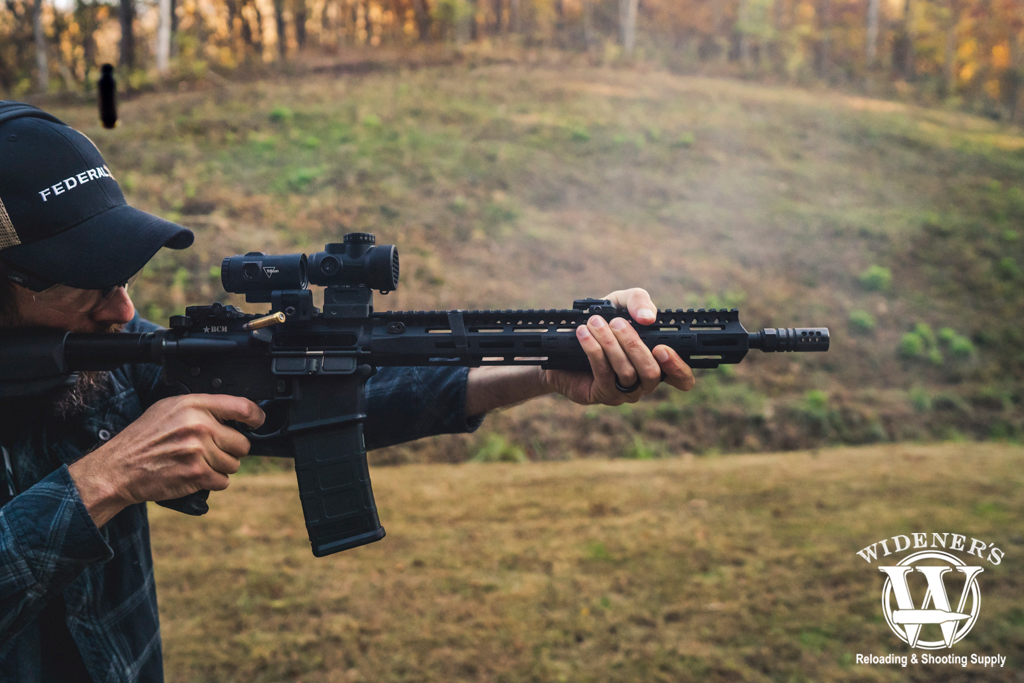
A compensator reduces muzzle flip, allowing you to put more follow-up shots on target faster.
Now that you know how a compensator works, let’s talk about the why. A compensator reducing barrel flip leads to a more controllable firearm, but what does this mean in practice?
First, the reduced muzzle flip means you can put more follow-up shots on target faster. The shooter has less to “recover from” when using a compensator and can better keep their sights on the target. Regarding this component of shooting, the compensator will give you some benefit, but in no way replaces training.
Second, the compensator might make an uncomfortable-to-shoot gun a little more manageable. This could mean that an experienced shooter has a bit more control with a particularly high-powered round, or that a relative novice is less intimidated by it. These are small changes, but they can make a difference.
Third, compensators will change the overall look and feel of your firearm. While some people will dismiss “looks” as irrelevant and “feel” as something immeasurable, these intangibles can make a difference at the range. If you don’t like how your firearm looks or feels, you may find less motivation to head out and practice.
Conversely, if you’ve been in a shooting slump, testing out a compensator might infuse some fun back into a day at the range.
How is a Compensator Different from a Muzzle Brake or Flash Hider?
With all this talk of muzzle brakes, compensators, suppressors, and flash hiders, things can get a little hazy at the end of a gun. There are a lot of nuances to these accessories, but we’re going to give you the no-nonsense definitions. That said, you will find products on the market that claim to do a little of each.
What’s the difference between a compensator and a muzzle brake? There’s a lot of overlap between the two, but fundamentally, the compensator reduces muzzle rise, while the muzzle brake reduces felt recoil, or “kick.”
What about a flash hider vs. a compensator? The flash hider does what its name implies: reduces the visual fireball at the end of the barrel after the gun is discharged. Some compensators can actually increase the muzzle flash, so that’s something to keep in mind as you’re testing different attachments.
What Are the Different Types of Compensators?
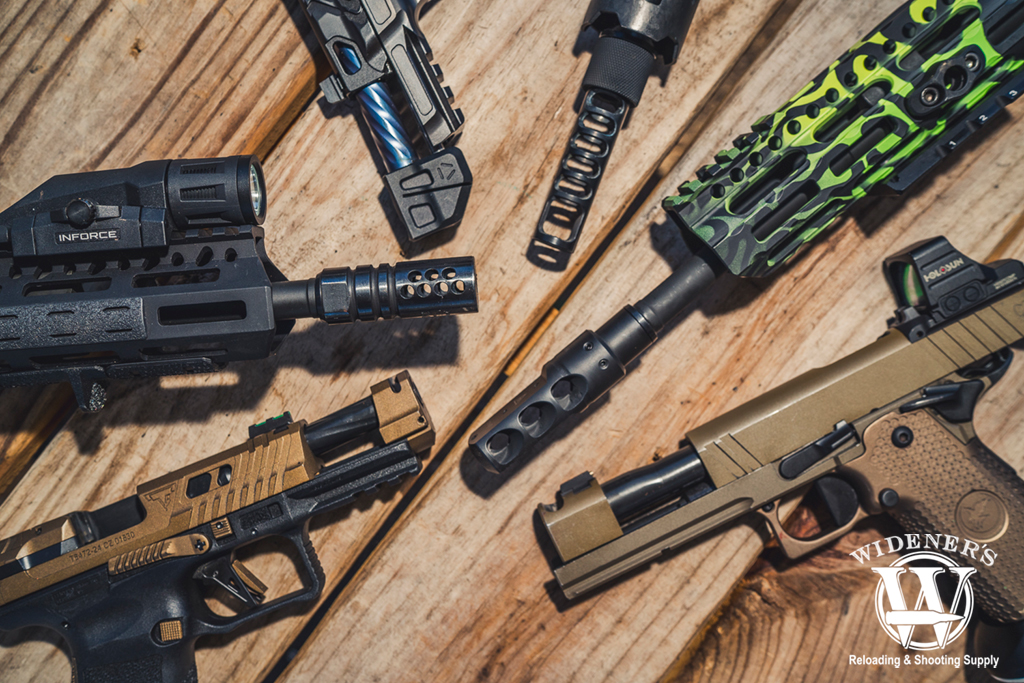
Adding a compensator or muzzle brake can improve performance on rifles and handguns, but it comes with some trade-offs.
In this section, we’ll outline a few categories of compensators and highlight some of their benefits. Even though we’re getting more specific, keep in mind that these categories are still relatively broad, especially given how different brands behave.
Be sure to test individual compensators before making a final choice on which kind is right for your setup.
Here are a few of the different types of compensators:
Radial Compensator
These compensators are the ones designed to reduce muzzle flip and felt recoil. They typically have ports on all sides. The downside to radial compensators is that, if you’re shooting in a group, gases (and very loud noises!) will go toward those standing to your left and right.
Linear Compensator
This linear compensator almost acts like a mini suppressor. These compensators launch all the gases back out the front, with their main goal being to reduce gases launched to the side while also controlling some muzzle flip.
External Compensators
An external compensator is anything installed after the gun is fully manufactured, allowing you to experiment with different types as needed or remove it depending on the situation. These will generally cost a bit more, but you have another layer of control.
Integrated Compensators
These compensators come built into the barrel. Often this is accomplished by special ports milled into the end of the barrel. The integrated compensator can certainly be nice on some firearms, but it also means that you might need to change the entire barrel if you ever want to remove or change it.
Here are the main questions to consider: how much recoil does your gun actually produce? Is it a rifle or a pistol? Is it a heavy or light round? For example, if you’re shooting some 5.56, chances are you don’t have that much recoil anyway, so maybe a linear compensator makes more sense than a radial.
What are the Downsides of Firearm Compensators?
Is a compensator really worth it? In the beginning, we mentioned the benefits of compensators, but now we need to discuss the downsides. While there is certainly a place for compensators, it might surprise you that (particularly when mounting them on handguns), there are some fairly serious downsides.
Here are a few downsides to compensators:
- They redirect gases in less desirable directions. If you’re installing a radial compensator and plan to shoot the gun in the presence of others, then you need to be considerate about who is standing to your left and right, as they may get some not-so-pleasant blast waves coming their way.
- Compensators increase the length of the firearm (without increasing power): Particularly for a pistol or carbine, the compensator offers a relatively significant increase in length, without any real increase in bullet velocity. So the argument goes: if the compensator adds an inch to your handgun’s barrel, why not just carry a larger handgun and get that power advantage?
- Compensators can cause reliability issues with lower-powered ammunition if you don’t know how to properly tune your firearm. You may find that your handgun has trouble cycling rounds unless you’re using higher-pressure ammo, or that you need to install a stronger recoil spring. Before you make a compensator part of your everyday carry, be sure you’ve properly matched the right ammunition to your setup.
- Compensators can make firearm breakdown more difficult, adding an extra step that can become tiresome, particularly with handguns. If you’re the type who likes to take your gun apart fast, make sure you practice this with a compensator in place.
Key Takeaway: Are Compensators Worth It for Your Firearm?
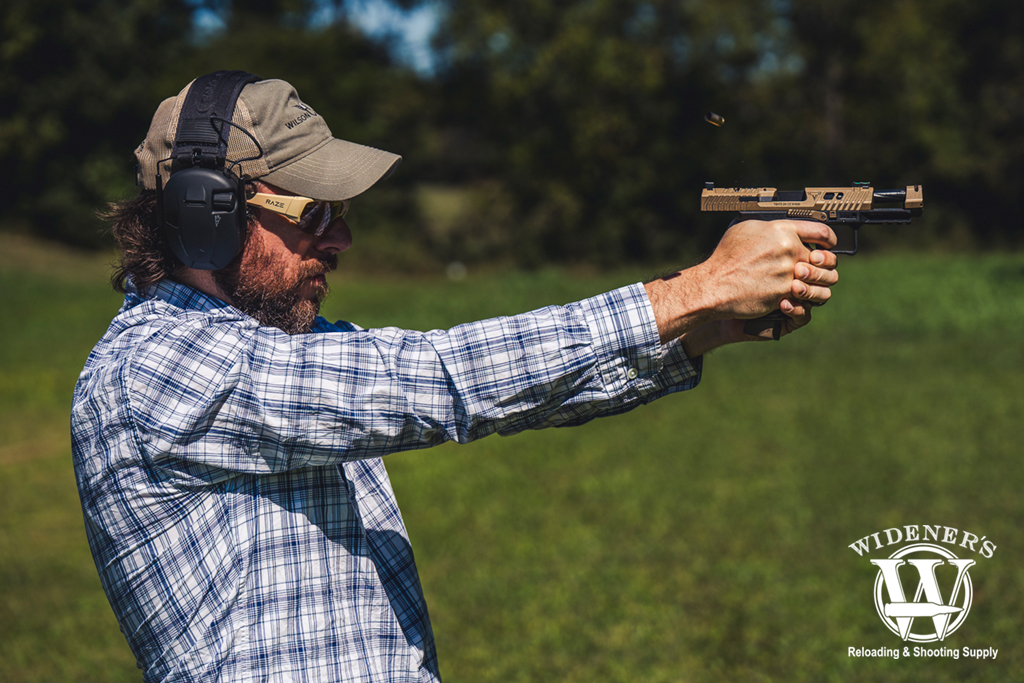
Compensators lower perceived recoil and stabilize the handgun during rapid-fire situations.
The compensator can reduce muzzle rise, improve control, and make the shooting experience more enjoyable. Some kinds of compensators, such as linear compensators, can reduce the blast wave that sometimes plagues fellow shooters at the range.
However, the compensator is not without downsides. You need to make sure the extra length to your firearm is truly worth it, that you’re not causing problems for yourself or fellow shooters by redirecting the blast wave, and that you have properly tuned the device to avoid malfunctions.
If this article was valuable to you, we hope you’ll continue this journey by reading our next article on how muzzle brakes work.