
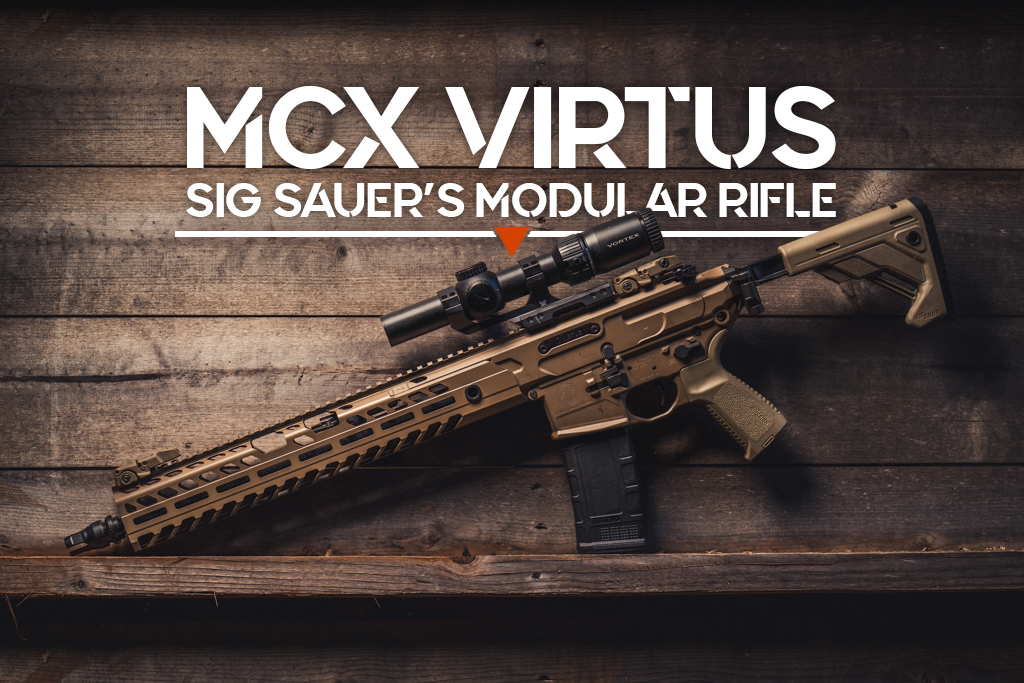
The SIG Sauer MCX Virtus has earned a reputation as one of the most versatile modern sporting rifles on the market. Designed with adaptability in mind, it provides owners with the ability to seamlessly change calibers. Depending on who you ask, it’s either one of the best modular platforms ever built or an expensive solution to a problem most shooters don’t have.
As with many firearms that push beyond the traditional AR-15 formula, opinions on the MCX Virtus tend to be strong. Some shooters appreciate its engineering, reliability, and suppressor-friendly design. Others question whether the real-world performance justifies the price tag.
In this article, you’ll get a complete overview of the SIG Sauer MCX Virtus in .300 Blackout, what it was designed to do, where it excels, where it falls short, and whether it’s worth adding to your collection.
An Overview of the SIG Sauer MCX Virtus
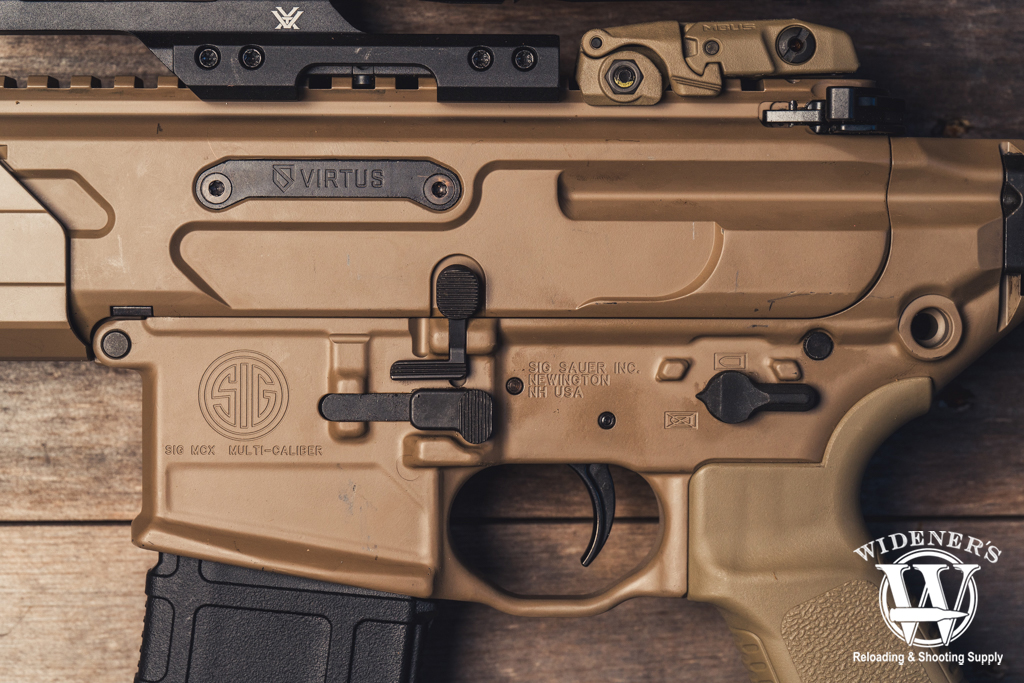
Take Your Pick: The MCX Virtus comes in a variety of centerfire calibers and convenient barrel lengths.
Before we dive into the details, let’s establish the goal of this review.
This isn’t a fanboy endorsement, nor is it an attempt to tear down a popular rifle. The purpose is to examine what the MCX Virtus was built to accomplish and how effectively it accomplishes those goals. After putting 600+ rounds through this rifle while working on various projects, I feel comfortable sharing some data and general thoughts on the platform.
The MCX Virtus represents SIG Sauer’s evolution of the original MCX platform. Rather than simply refining the AR-15, SIG redesigned many of the operating components around a short-stroke gas piston system and a recoil assembly that eliminates the need for a traditional buffer tube. The result is a rifle that offers greater flexibility in stock design, enhanced suppressor compatibility, and improved performance in short-barreled configurations.
While the platform is available in multiple calibers, many enthusiasts would argue that .300 Blackout is where the MCX Virtus truly shines.
History of the MCX Virtus
The original MCX platform was introduced by SIG Sauer as a modular rifle system capable of handling multiple calibers and barrel lengths while maintaining reliability in demanding conditions.
As military and law enforcement interest in suppressed firearms continued to grow, SIG recognized the need for a platform optimized for cartridges like .300 Blackout. The company refined the original MCX design and eventually released the Virtus variant.
Compared to the first-generation MCX, the Virtus featured a heavier-duty handguard, improved barrel profile, redesigned recoil system, and various durability upgrades intended to enhance accuracy and reliability.
At the same time, .300 Blackout was becoming increasingly popular among civilian shooters. Designed to perform well from short barrels and capable of using both supersonic and subsonic ammunition, the cartridge paired naturally with the Virtus platform.
The combination quickly became popular among suppressor owners, home-defense enthusiasts, hunters, and shooters looking for something beyond a traditional AR-15.
SIG Sauer MCX Virtus .300 Blackout Specifications
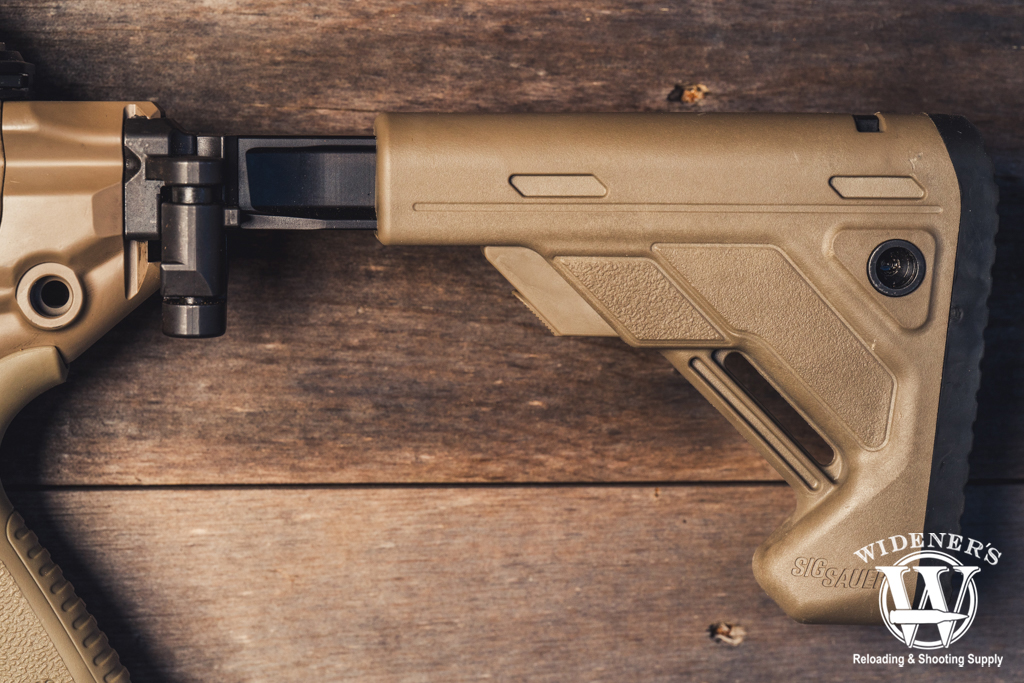
The unique folding-stock design of the MCX Virtus is made possible by eliminating the buffer tube.
Specifications can vary depending on configuration and production year, but most MCX Virtus rifles share the following characteristics:
- Caliber Options: 5,56×45 NATO, .300 AAC Blackout, 7.62x39mm (Not available in 9″ barrels)
- Operating System: Short-stroke gas piston
- Barrel Lengths: 9″ barrel, 11.5″ barrel, 16″ barrel
- Receiver Material: Aluminum alloy
- Handguard: Free-floating M-LOK design
- Stock: Folding and adjustable options available
- Magazine Compatibility: Standard AR-pattern magazines
- Thread Pattern: 5.56 NATO: 1/2 × 28 TPI, .300 Blackout: 5/8 × 24 TPI
- Ambidextrous Controls: Yes
One of the most significant design advantages is the elimination of the traditional AR buffer tube. This allows the rifle to utilize folding stocks without sacrificing functionality.
For shooters who value compact storage or transportation, that’s a meaningful benefit.
Why the MCX Virtus Works So Well with .300 Blackout
Any manufacturer can build a rifle chambered in .300 Blackout. The MCX Virtus feels like it was designed around it.
The cartridge was created to deliver reliable performance from short barrels while maintaining compatibility with standard AR pattern magazines and bolts. It also offers the unique ability to quickly switch between supersonic and subsonic ammunition with minimal changes to the firearm.
The Virtus complements those strengths through its two-position adjustable gas system and piston-driven operating mechanism.
With quality subsonic ammunition and a suppressor attached, the shooting experience is remarkably smooth. Recoil remains manageable, noise levels are significantly reduced, and reliability tends to remain strong even when conditions aren’t ideal.
For many shooters, this combination represents the primary appeal of the platform.
Accuracy & Shooting Performance
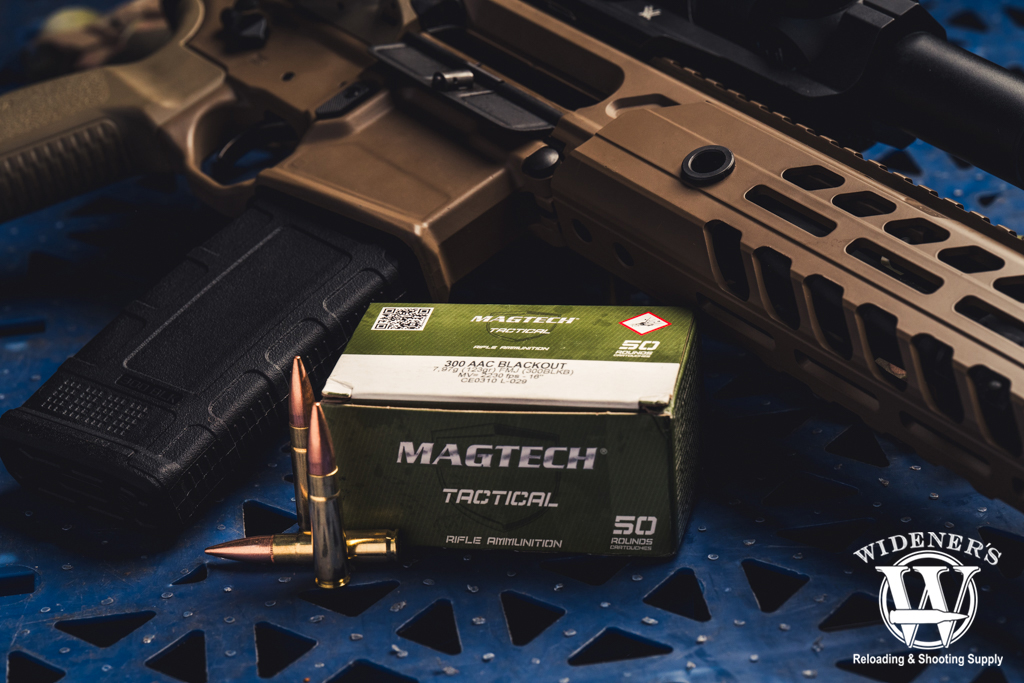
Feed My Frankenstein: The MCX Virtus is not picky about ammo; it ran every grain weight and bullet type I threw at it.
The MCX Virtus is not a precision rifle, but it is capable of producing excellent practical accuracy. With quality supersonic ammunition, groups around 1.5 to 2 MOA are common. I found that to be the case with both standard Magtech 123gr FMJ and advanced Hornady 110gr V-Max ammo at the range.
Where the Virtus really distinguishes itself is consistency. The platform handles a wide variety of ammunition, from lightweight supersonic loads to heavy subsonic projectiles. I had no issues running lightweight Barnes RangeAR 90gr, or heavy Hornady 208gr ELD-Match ammo through the rifle. The trigger break on my test rifle is right at 5.5 Lbs of pull, making it easy to stay on target for follow-up shots. (You can see all our top options for 300 Blackout ammo here.)
The rifle balances nicely, cycles smoothly, and feels exceptionally well-built. Even shooters who dislike the price have to pause and acknowledge that the overall fit and finish are impressive. It feels like a rifle platform from the near future, because it is.
Common Criticisms of the MCX Virtus
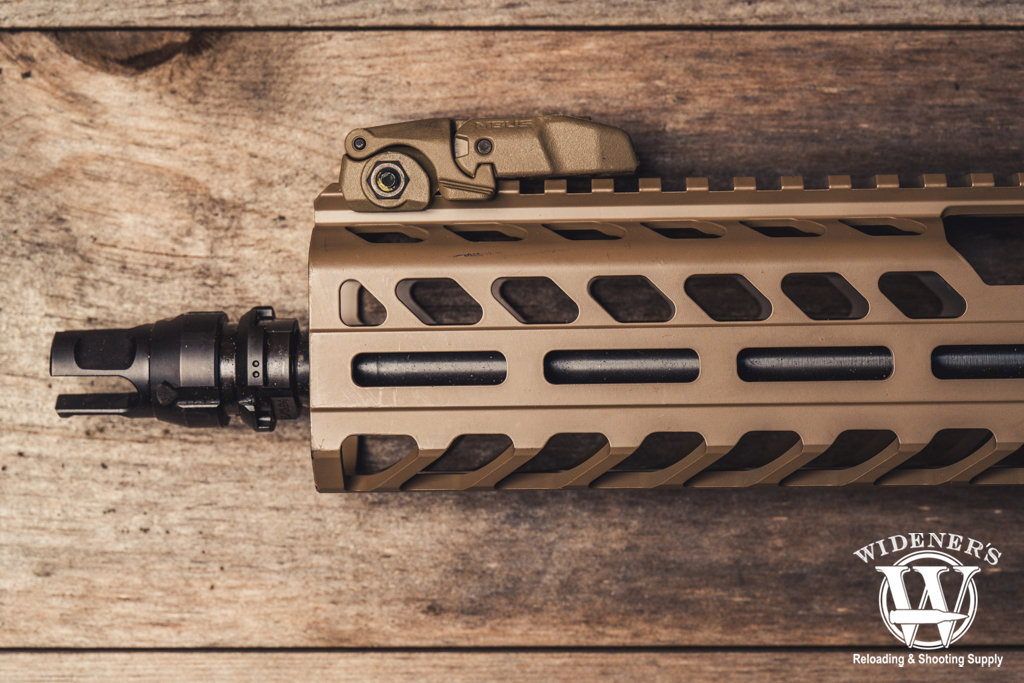
Custom Job: It’s pricey, it’s heavy, and it’s not compatible with a lot of common AR-15 parts and accessories.
No rifle is perfect, and the Virtus has received its share of criticism over the years. After a fair amount of time at the range with this rifle, I believe some of that feedback is valid. While some of those complaints have been addressed with the release of the updated SPEAR system, many curiously still remain. I’ll address those below with some critical thought exercises.
Price
The most common complaint about the MCX system is simple: cost.
The MCX Virtus typically commands a significantly higher price than many AR-15s chambered in .300 Blackout. For some shooters, the performance improvements justify the expense. For others, the law of diminishing returns becomes difficult to ignore. It’s a bit like the infamous distracted boyfriend meme: the Sig is a real beauty, but there are a lot of other attractive options.
If a suppressed SBR is a must-have for your needs, it’s hard to argue that a pistol-style AR option, like the Daniel Defense DDM4 PDW, or the Springfield Armory Saint Victor Pistol wouldn’t fit the bill. Neither is gas-piston driven, but they are suppressor-ready and priced at well under $2,000. With the MCX Virtus, you’re paying for the Sig brand name, and as they say, you pay for what you get.
Weight
Compared to lightweight AR builds and pistol-braced ARs, the Virtus can feel clunky and heavy.
The robust barrel profile, piston system, and reinforced construction contribute to durability but also add weight. Add a variable optic and a suppressor, and you’ll feel like you’ve been to the gym after an hour at the gun range. In-hand, you do appreciate the solid feel and robust construction, but after prolonged use, you’ll wish for a lighter rifle.
It’s not an apples-to-apples comparison. However, on my last range trip, I happened to have the Ruger PC Carbine with me, affixed with a Trijicon SRO. Even with a loaded Glock 33-round magazine installed, it felt like carrying around a toy gun, compared to the weight of the loaded MCX Virtus. One is obviously meant to be a battle rifle, while the other is a simple carbine, but on paper, they both check a lot of the same boxes for those looking for a reliable home defense weapon.
Proprietary Components
Although the Virtus accepts many AR accessories, several key components are proprietary. That means replacement parts, upgrades, and repairs may require SIG-specific components rather than widely available AR-15 parts. It also means you have to use the Sig Sauer website. Sigh.
I regret to inform you that at the time of writing this article, the Sig Sauer website search functionality still sucks. I gave up on using it years ago, and just call a friendly customer service agent anytime I need to order something from them. For shooters who enjoy extensive customization or finding replacement parts quickly, this process can be frustrating.
Availability
Depending on market conditions, certain Virtus models, barrels, and replacement parts can be difficult to find. Since the MCX line was replaced by the updated SPEAR line, many MCX replacement parts have been on indefinite backorder. This issue has improved over time, with some SKUs becoming available, but it remains a consideration for prospective MCX line buyers.
Suppressor Performance
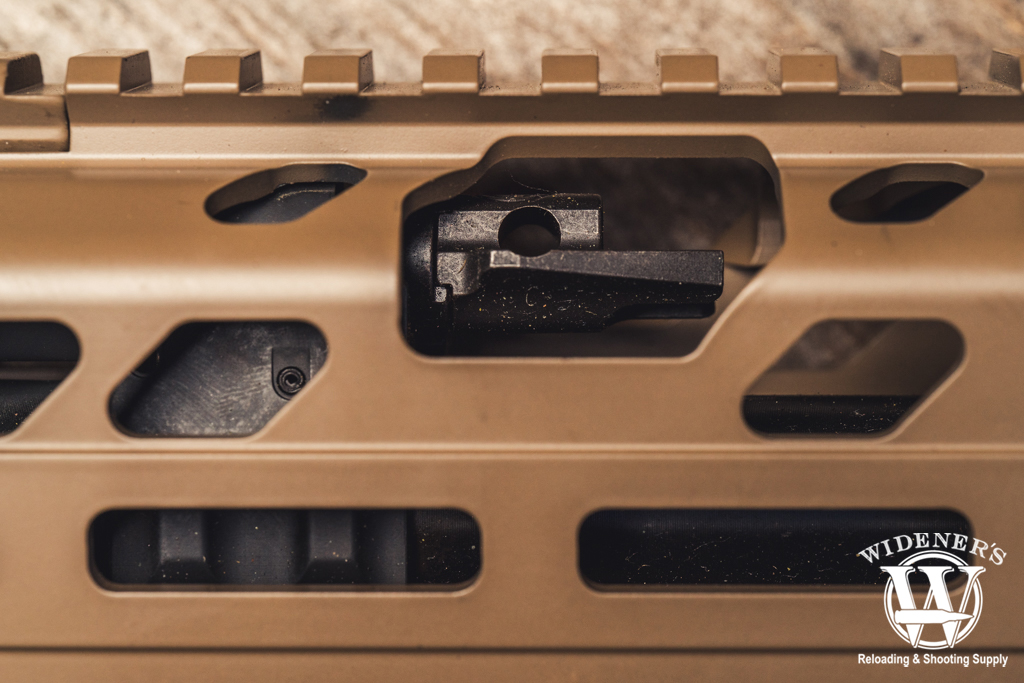
The two-position adjustable gas system makes attaching a suppressor and swapping to subsonic ammo a breeze.
Any discussion of the MCX Virtus in .300 Blackout would be incomplete without mentioning suppressors. This is arguably where the platform earns its reputation. The adjustable gas system helps manage backpressure, the piston operation runs cleanly, and the cartridge itself was designed with suppressed use in mind.
Once you figure out how to remove the factory-installed muzzle device, swapping suppressors on the rifle is a breeze. The .300 Blackout barrel has a 5/8 × 24 TPI thread pattern. This opens up suppressed compatibility for the platform with a wide array of .30-caliber silencers.
Sig Sauer does offer several compatible suppressor models, including the SLH300TI, and the Hexium. However, I found that the rifle favored the Surefire SOCOM300-SPS suppressor in my time with it at the range. While there are certainly less expensive rifles that can run suppressed effectively, few platforms integrate the experience as seamlessly as the Virtus.
For dedicated suppressor owners, this may be the single strongest argument in favor of the rifle.
Who Should Buy the SIG Sauer MCX Virtus?
The MCX Virtus isn’t for everyone.
If your goal is simply owning a reliable rifle for occasional range trips, a quality AR-15 may provide similar practical results at a lower cost.
However, the Virtus makes a compelling case for several types of shooters:
- Suppressor owners who prefer short-barreled rifles
- Shooters who prefer multi-caliber platforms
- Hunters using .300 Blackout
- Home-defense users seeking a compact platform
- Firearm owners who appreciate premium engineering and build quality
On the other hand, budget-conscious buyers or shooters heavily invested in the standard AR ecosystem may struggle to justify the premium.
Final Thoughts
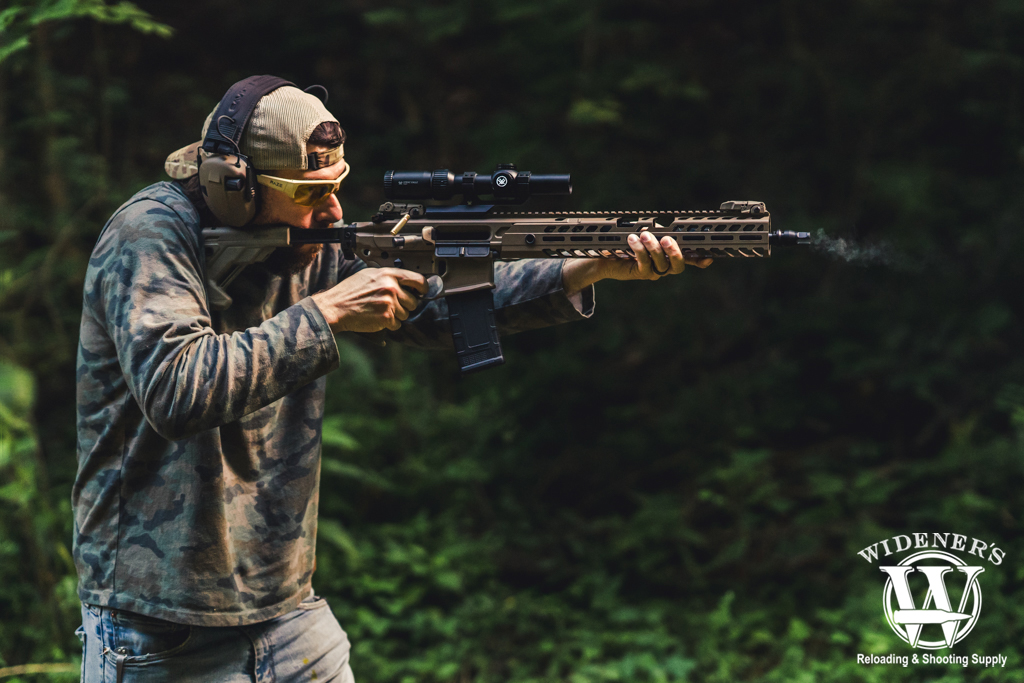
If a multi-caliber, suppressor-friendly, modular rifle system is on your radar, the SIG Sauer MCX Virtus is a great option.
The SIG Sauer MCX Virtus in occupies an interesting place in today’s firearms market.
It’s not the latest option, or the cheapest option. It’s not the lightest option. And it isn’t necessarily the right choice for every shooter.
What it does offer is a thoughtfully engineered platform that takes full advantage of what .300 Blackout was designed to do. The combination of a short-stroke piston system, folding-stock capability, suppressor-friendly operation, and proven reliability creates a rifle that feels purpose-built rather than adapted.
Is it worth the price? That depends on your priorities.
If you’re looking for the most affordable path into .300 Blackout, probably not.
If you’re searching for one of the most refined and capable .300 Blackout platforms currently available, the MCX Virtus remains a strong contender.